

The success of a custom home build is decided long before shovels hit the dirt. While most homeowners focus on the excitement of breaking ground, the critical engineering, permitting, and budgeting decisions made during this phase dictate whether a project stays on track or spirals out of control. Failing to prioritize this stage routinely leads to unexpected delays and costly budget overruns.
To protect your investment, you must first understand what is preconstruction and how it shapes your entire building journey. This comprehensive guide outlines the entire preconstruction process. It offers essential strategies for navigating the rigorous building regulations and complex site conditions unique to Washington State.
What Does Preconstruction Mean in Residential Construction?
In residential construction, preconstruction is the planning phase between the initial design concept and the start of physical building. It involves coordinating all major decisions before construction begins to reduce delays, budget overruns, and on-site issues.
Preconstruction typically includes design coordination, site evaluation, engineering review, budgeting, permitting, scheduling, feasibility analysis, and a practical custom home planning checklist to keep decisions organized. For custom homes, this process is highly site-specific and may also involve utility planning, structural engineering, and detailed cost estimation.
The goal of preconstruction is simple: resolve problems on paper before they become expensive issues during construction.
What Are Preconstruction Services?
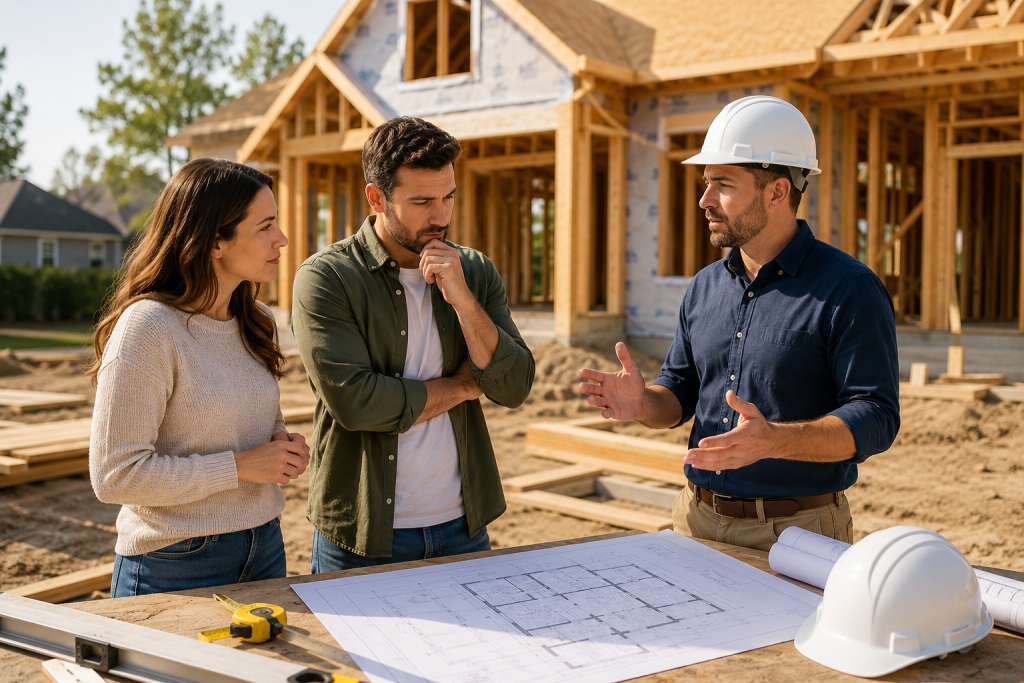
When a custom home builder provides preconstruction services, they help plan and coordinate all key decisions before construction begins, including clarifying builder and contractor roles. For a custom home, these services typically include:
Site evaluation
A site evaluation is a thorough assessment of your land’s soil, topography, drainage, utilities, and boundaries to determine buildability, site preparation costs, and what your land can realistically support. Skipping this step often causes major budget overruns due to unexpected conditions uncovered during excavation. A proper evaluation ensures your team has an accurate picture of the land before design decisions are locked in.
Budgeting and cost planning
Detailed cost modeling accounts for materials, labor, permitting, and contingencies to eliminate financial surprises mid-build. A realistic preconstruction budget reflects your actual site and design, not a generic square-footage estimate. It also establishes a clear financial baseline, ensuring transparent cost shifts during construction.
Permit coordination
Permit coordination covers researching, preparing, and submitting applications for building, grading, septic, and environmental approvals. An experienced builder starts this process early to prevent municipal reviews from delaying your construction start. Because building regulations vary significantly by county and city, local jurisdictional knowledge is critical to navigating this phase smoothly.
Utility planning
Mapping out water, sewer, electrical, and gas connections before final design prevents costly floor plan revisions and scheduling bottlenecks. Utility locations dictate home positioning and trenching costs, as running lines 400 feet costs significantly more than 40 feet. Coordinating this work early ensures utility expenses are accurately budgeted and integrated into the construction sequence.
Engineering review
Engineering review integrates geotechnical reports, structural engineering, and custom foundation design based on actual soil conditions. Because a foundation is only as reliable as the underlying soil data, skipping the geotechnical report is a high-stakes gamble. Failing to verify soil stability upfront can lead to severe foundation failures, expensive structural repairs, and an uninsurable home.
Scheduling and trade sequencing
Developing a realistic construction timeline accounts for permit approval windows, material lead times, and subcontractor availability. This schedule serves as a critical coordination tool to keep every trade working in the correct order. Without it, you risk costly project gaps where crews sit idle waiting for materials or inspections that should have been lined up weeks earlier.
Framing and structural planning
Coordinating with structural engineers upfront resolves load-bearing requirements, engineered lumber specifications, and sequencing on paper. Answering structural questions before framers arrive on-site prevents costly downtime. This planning ensures efficient, code-compliant framing and allows the physical build to proceed quickly and confidently.
What Happens During Preconstruction for a Custom Home?
Site evaluation and feasibility
Evaluating your land before design begins uncovers critical constraints involving slopes, drainage, utilities, easements, and septic capacity. Steep grades dictate foundation design and grading costs, while poor drainage planning risks future structural flooding.
In rural areas, septic feasibility is a strict boundary; a lot limited to a three-bedroom septic system cannot support a five-bedroom home. Discovering these environmental and regulatory limits on paper, rather than during excavation, prevents catastrophic delays and saves tens of thousands in change orders.
Budgeting and cost planning
A preconstruction budget provides a realistic cost estimate based on the home design, site conditions, material selections, current home design trends, and local labor costs, not a rough guess. It typically includes grading, utilities, permits, construction phases, and a 10-15% contingency reserve for unexpected expenses.
Although preconstruction services usually cost 1-5% of the total project budget, they help prevent far more expensive problems later. Finalizing materials, specifications, and structural details before construction begins reduces delays, avoids costly change orders, and gives homeowners greater cost certainty.
Permits, engineering, and planning
Homeowners frequently underestimate the complexity and timeline of municipal permitting. A custom build typically requires multiple overlapping approvals, including building, grading, septic, and stormwater permits. In When building a house in Washington, these county reviews can range from a few weeks to several months.
Concurrently, preconstruction engineering must integrate structural engineering, strict compliance with the Washington energy code, and geotechnical soil reports. Soil assessments require three to six weeks and dictate foundation modifications.
Submitting incomplete applications to fast-track approvals is a costly mistake. Administrative errors can entirely halt a project once construction begins, making thorough upfront compliance essential.
Framing and structural coordination
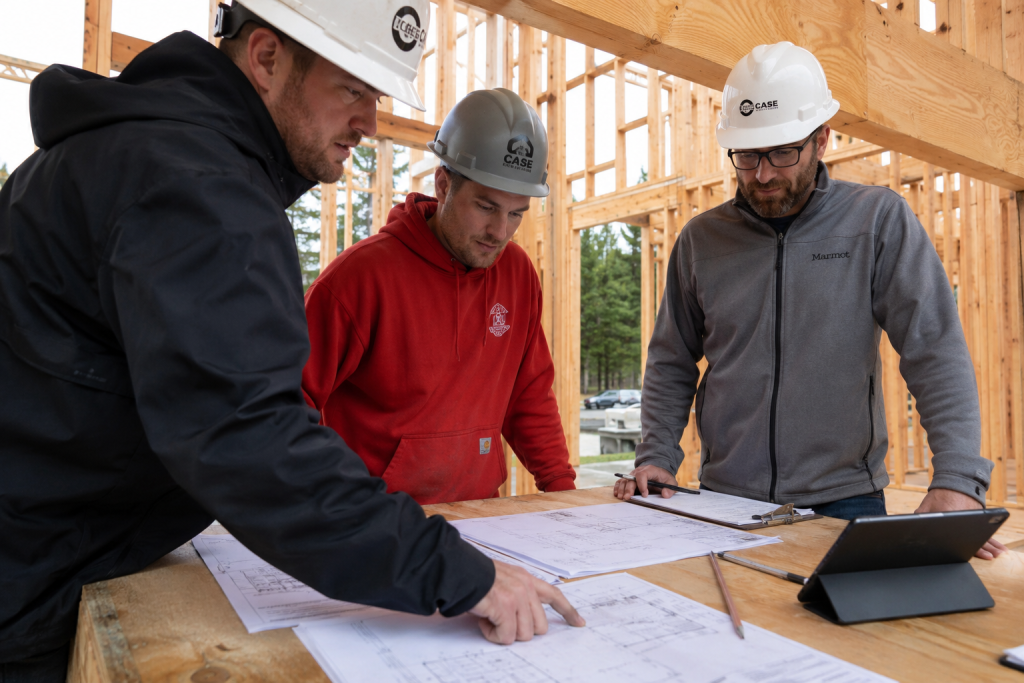
Before construction begins, the builder and structural engineer must coordinate framing plans in detail. This involves identifying load-bearing walls, specifying engineered lumber like LVL beams or I-joists, verifying window and door headers, and planning the trade sequence.
While this coordination is invisible to homeowners, it is critical to on-site efficiency. Skipping it forces framers to stop work while waiting for engineering answers, resulting in costly project delays.
Why Preconstruction Matters Before Building a Custom Home
The case for thorough preconstruction comes down to five practical realities:
- Prevents delays by starting permits, engineering, and utility coordination early.
- Reduces financial surprises by identifying site-related costs upfront.
- Uncovers site issues like drainage, soil, or septic limitations before construction begins.
- Improves scheduling by coordinating trades and material lead times in advance.
- Controls costs by resolving details early and minimizing change orders.
Common Preconstruction Mistakes Homeowners Make
- Underestimating permit timelines – custom home permits can take 2-6 months, not a few weeks
- Ignoring site conditions – drainage, soil, or water table issues should be identified before design is finalized
- Setting unrealistic budgets – incomplete site and development costs lead to major overruns
- Poor utility planning – well, septic, and utility placement must align with the floor plan to avoid costly redesigns
- Rushing into construction – skipping preconstruction planning leads to expensive delays and change orders later
Why Preconstruction Can Take Longer Than Expected
Preconstruction often takes longer than first-time custom home clients expect because multiple approval and engineering processes run in sequence and often require revisions. Permit reviews typically involve several departments, including planning, building, environmental, and health, each with its own queue. If changes are required, the review cycle restarts, adding significant time.
Engineering updates can also extend timelines, such as when soil reports require foundation redesigns that must be resubmitted for approval, sometimes adding 4-8 weeks alone. Utility coordination depends on external providers, not the builder’s schedule, and must align with civil engineering requirements for drainage and site planning before permits are approved.
In areas with complex regulations, such as rural Washington, county review times can be even longer for projects involving critical areas, shorelines, or stormwater management. The most efficient builders manage these timelines by starting multiple processes in parallel as early as possible, rather than waiting for each step to finish before beginning the next.
Washington-Specific Preconstruction Challenges
Building a custom home in Washington State comes with considerations that differ significantly from other markets.
Wet-weather planning
Washington’s wet season (October through April) creates real constraints on site preparation and foundation work. Preconstruction must plan around limited workable weather windows and ensure strict erosion-control measures are in place to meet permit requirements.
Stormwater management requirements
Most Washington jurisdictions require stormwater management plans for new construction. These plans must be designed, permitted, and built before the foundation phase begins, often including retention systems, detention systems, rain gardens, or engineered drainage solutions.
Septic system limitations
Septic system limitations are a key factor in rural Washington. A septic feasibility study determines what type and size of home a site can support, making it a required preconstruction step for any rural property in the state.
Sloped lots
Much of Western Washington’s residential land has significant topography. This requires more extensive geotechnical analysis, specialized foundation designs, and higher grading and retaining wall budgets than flat-lot builds.
Rural utility access
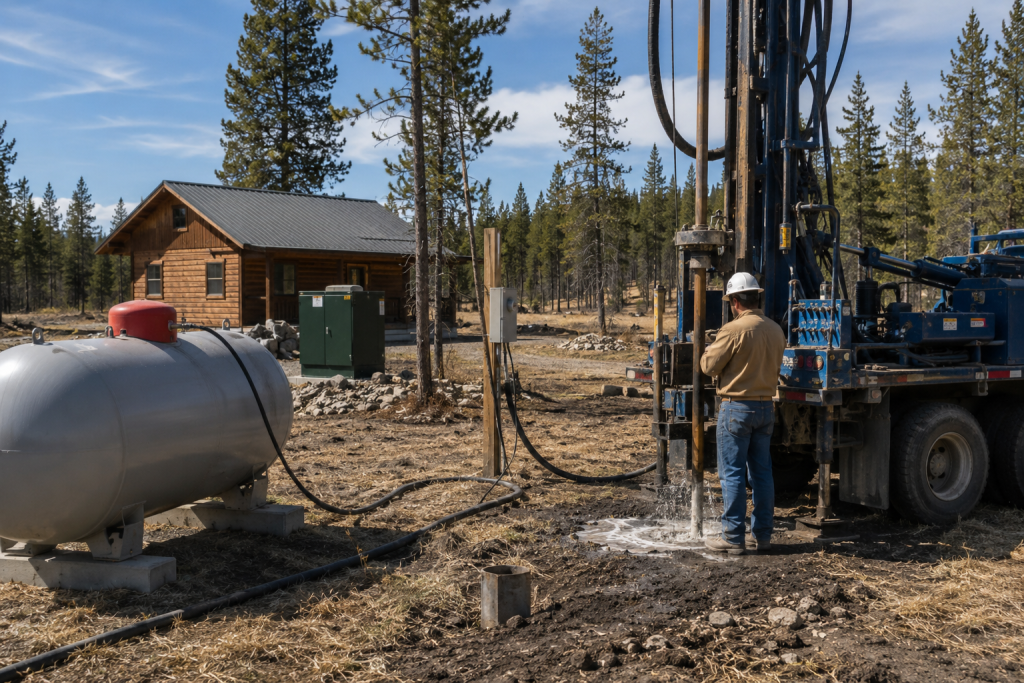
Properties outside served utility areas require well drilling, propane planning, and coordination of off-grid electrical systems. These systems involve permitting, lead times, and costs that must be accounted for during preconstruction before design is finalized.
Conclusion
Understanding what is preconstruction is essential to a successful custom home build. This phase determines whether your project stays on schedule and budget or runs into delays, surprises, and added costs.
The best builders treat preconstruction as a priority. They resolve engineering issues early, secure permits in advance, identify site costs upfront, and carefully plan construction sequencing. Choosing a builder who invests in strong preconstruction is the clearest indicator of a smoother, more predictable build. Before committing, ask specific questions before choosing a builder about permitting, site evaluation, engineering coordination, and cost controls.