

Building a house in Washington State is not just “harder” – it’s structurally different from building almost anywhere else in the U.S. Between aggressive energy codes, seismic requirements, complex land-use regulations, and a moisture-heavy climate, generic home-building advice simply does not work here.
Most guides gloss over these realities. This one doesn’t. Successfully navigating these variables requires experienced custom home building services in Washington State that account for energy code, land-use regulation, and climate from the outset.
This is not a checklist. It’s a Washington-specific reality check – designed to help you understand why costs, timelines, and decisions behave differently here, and how to avoid the mistakes that derail budgets and schedules.
By the end of this guide, you’ll understand:
- How to build a house in Washington State
- What truly drives cost when asking how much to build a house in Washington State
- Why land that looks affordable often isn’t buildable
- How permits and codes actually affect timelines
- What design decisions matter more in the Pacific Northwest than elsewhere
What Makes Building in Washington State Different
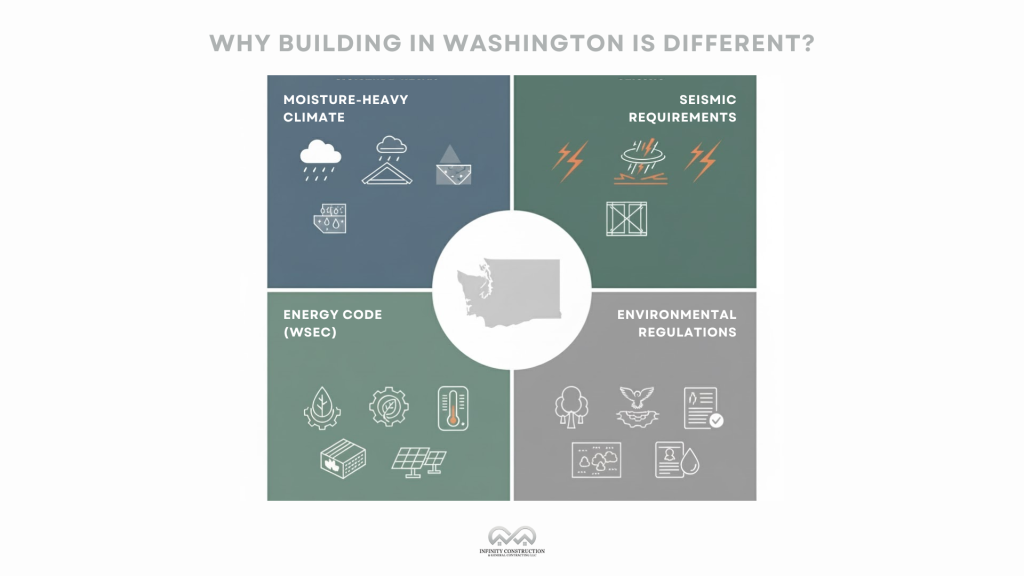
Climate-Driven Construction Realities
Washington’s long wet season isn’t just inconvenient – it fundamentally affects construction methods. Persistent moisture means:
- Higher emphasis on drainage, waterproofing, and air sealing
- More robust building envelopes
- Greater long-term maintenance considerations
Homes that perform well in drier climates often fail prematurely here.
Seismic Design Requirements
Much of Washington falls under elevated seismic risk. Structural systems, foundation design, and connection detailing must comply with state and local seismic standards—adding complexity and cost compared to national averages. Proper execution at this stage depends on disciplined custom home framing that meets seismic and load-path requirements without costly rework.
The Washington State Energy Code (WSEC)
Washington State Energy Code
Washington enforces one of the strictest residential energy codes in the country. Compliance often adds $30,000–$60,000+ to build costs depending on size and system choices. These costs are unavoidable and must be addressed early in design.
Environmental and Land-Use Restrictions
Wetlands, buffers, shorelines, and critical areas are tightly regulated. Entire buildable areas can disappear once environmental constraints are mapped.
Understanding these constraints early is essential, which is why a structured planning approach – like a custom home building checklist – is critical before committing to land or design decisions.
Why National Averages Fail Here
Most “average build cost” figures ignore:
- Energy code upgrades
- Site work intensity
- Permit delays
- Utility extension costs
That’s why Washington projects routinely exceed national estimates – even for modest homes. For a deeper breakdown, see our analysis of the average cost to build a house in Washington State and what those numbers actually include.
Is Your Land Actually Buildable in Washington?
Zoning vs. Buildability
Zoning only tells you what’s allowed. It does not tell you what’s possible. Buildability depends on:
- Critical area overlays
- Setbacks and buffers
- Soil conditions
- Access and utilities
Wetlands, Buffers, and Critical Areas
In Washington, wetlands don’t just reduce lot size – they can eliminate buildable footprints entirely. Buffers often extend 50–200 feet or more.
Slope, Soil, and Geotechnical Requirements
Sloped lots frequently require:
- Geotechnical reports
- Retaining walls
- Specialized foundations
These can add tens of thousands of dollars before construction even begins.
Septic vs. Sewer Realities
Septic systems are regulated by the state and county health departments. Lot size, soil percolation, and reserve drain fields all affect feasibility – and timeline.
Utility Access and Hidden Costs
Extending power, water, or sewer in rural areas can cost $10,000–$50,000+, often overlooked in early budgets.
Bottom line: Cheap land in Washington is often expensive land in disguise.
Permits, Agencies, and Approval Timelines in Washington State
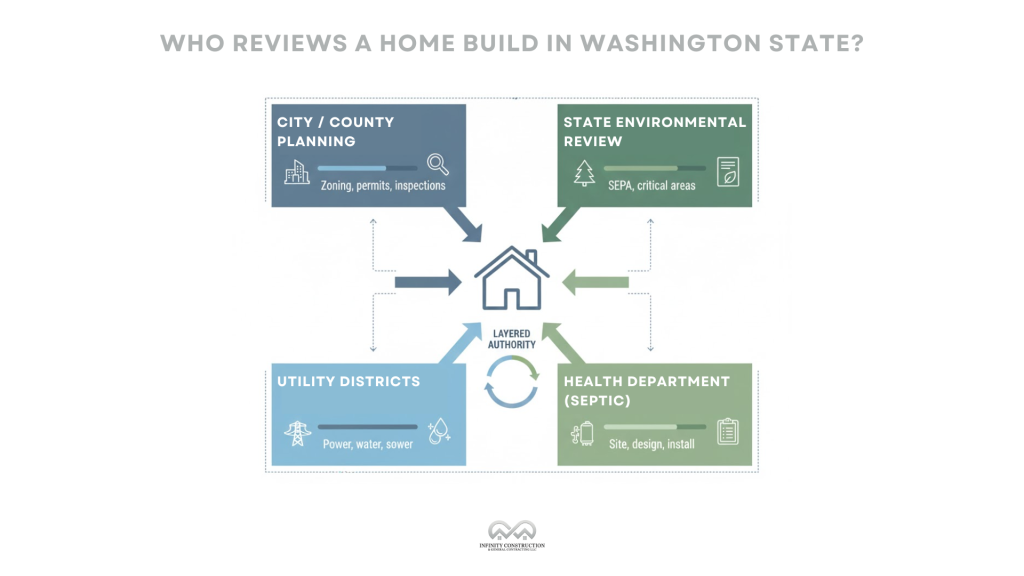
Layered Authority
Permits may involve:
- City or county planning departments
- State agencies
- Utility districts
Each has independent review timelines.
What Actually Slows Approvals
Not permit volume – coordination. Delays usually stem from:
- Incomplete or inconsistent plans
- Environmental review triggers
- Utility conflicts
- Revisions required mid-review
Why Timelines Vary So Widely
Some jurisdictions process residential permits in weeks. Others take months. Urban counties like King County or Pierce County are typically more complex than rural areas.
The Real Strategy
Speed comes from early coordination, not rushing submissions.
How Much Does It Cost to Build a House in Washington State?
Washington-Specific Cost Drivers
- Energy code compliance
- Skilled labor shortages
- Intensive site work
- Utility extensions
Realistic Cost Ranges (2024–2025)
- Entry-level / rural: $225–$275 per sq ft
- Suburban custom: $275–$350 per sq ft
- Urban / high-end: $350+ per sq ft
These ranges exclude land.
Urban vs. Rural Cost Behavior
Urban builds face higher permit and labor costs. Rural builds often incur higher site work and utility expenses. These cost pressures also affect larger multi-family framing projects, where coordination and inspection sequencing become even more critical.
Why Online Averages Mislead
Most averages exclude:
- Site development
- Code-driven upgrades
- Contingency
Contingency Expectations
In Washington, a 10–15% contingency is not conservative – it’s realistic.
Design Decisions That Matter More in Washington Than Elsewhere
Moisture Management & Building Envelope
Poor envelope design leads to rot, mold, and premature failure. High-performance walls and proper ventilation are essential.
Roof Design
Complex roofs increase:
- Cost
- Leak risk
- Maintenance
Simple rooflines perform better in heavy rain environments.
Windows and Glazing
Higher-performance windows are often required to meet energy code – but placement and sizing affect both cost and comfort.
HVAC and Ventilation
Heat pumps and balanced ventilation systems are common and often mandatory. These choices should be integrated early – not added later.
Construction Timeline Reality in Washington State
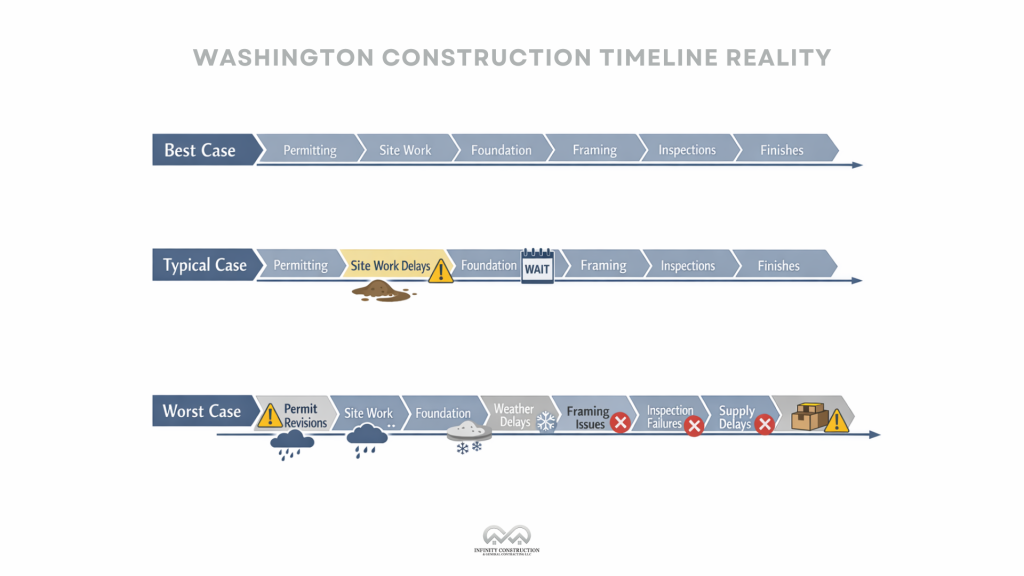
What Adds Time Here
- Permitting delays
- Weather impacts
- Inspection sequencing
- Trade availability
Typical Ranges
Once permits are approved – and that distinction matters – timelines generally fall into predictable bands:
- Best case: ~9 months
This assumes a simple design, flat lot, no structural surprises, strong preconstruction decisions, and zero rework. It’s possible, but not common. - Typical: 11–14 months
This is the realistic range for most custom homes in Washington. Minor delays, normal weather, standard inspection pacing, and average trade availability are all baked in. - Complex builds: 16+ months
Sloped sites, custom structural systems, high-end finishes, or indecision during construction push projects here. At this point, the timeline isn’t slipping – it’s reflecting complexity.
The Truth About Timelines
Most schedule overruns are not caused by construction speed. They’re caused by decisions – or lack of decisions – made before construction starts.
Every unresolved detail in preconstruction becomes a pause later. Every late design change ripples through permitting, inspections, and trade coordination. The clock is effectively set long before the foundation is poured.
If you want a shorter build, the leverage isn’t pushing the builder harder mid-project. The leverage is locking scope, design, and specifications early – and resisting the urge to “figure it out later.” Later is where time goes to die.
Choosing the Right Builder for Washington State
Why Local Experience Matters
Washington experience means understanding:
- Energy code pathways
- Environmental constraints
- Jurisdictional expectations
Questions That Expose Competence
Before you sign anything, use these questions to ask custom home builders to confirm they understand Washington’s energy code, permitting process, site constraints, and inspection expectations.
- How do you handle WSEC compliance?
- What’s your process for land feasibility?
- Which jurisdictions do you work in most?
Red Flags
- Quoting national averages
- Avoiding energy code discussions
- Skipping feasibility studies
Common Mistakes When Building in Washington
- Buying land before land feasibility analysis
- Underestimating site work costs
- Ignoring energy code impacts early
- Designing before understanding jurisdictional limits
- Assuming national averages apply
Conclusion
Success in Washington isn’t about building faster – it’s about building informed. The state’s complexity rewards preparation and punishes shortcuts, especially for anyone learning how to build a house in Washington State for the first time.
At Infinity Construction, projects succeed because decisions are grounded in Washington-specific realities, not national averages or generic advice that doesn’t survive local permitting, labor, and code requirements.
If this guide saved you from even one bad assumption, it did its job. Share it with anyone considering building in Washington – and help them start smarter, not later.