Building a custom home is one of the biggest financial and emotional decisions you’ll ever make—and most “checklists” barely scratch the surface. They list steps but ignore consequences. They calm you down instead of preparing you.
This guide is different.
At Infinity Construction GC, we’ve seen where custom home projects actually go wrong—and more importantly, where they go right. This custom home building checklist merges best practices, real-world construction sequencing, cost-awareness, and decision-risk clarity into one authoritative resource. Our custom home building services are structured around risk management and structural-first planning rather than reactive problem solving.
By the end of this guide, you’ll understand:
The true steps to building a custom home (in the right order)
Which decisions matter most—and which are distractions
Where homeowners lose money, flexibility, or leverage
How to reduce stress by making fewer irreversible mistakes
This isn’t just a checklist. It’s a decision framework.
Why Most Custom Home Building Checklists Fail
Most articles focus on what happens instead of what can go wrong. They treat all decisions equally—even though some lock in 80–90% of your long-term cost, comfort, and regret.
According to the National Association of Home Builders, the majority of cost overruns and homeowner dissatisfaction stem from early-phase planning errors, not construction execution.
Translation: Stress doesn’t come from missing steps. It comes from making the wrong choices at the wrong time.
That’s why this guide is structured around decision weight, not just process.
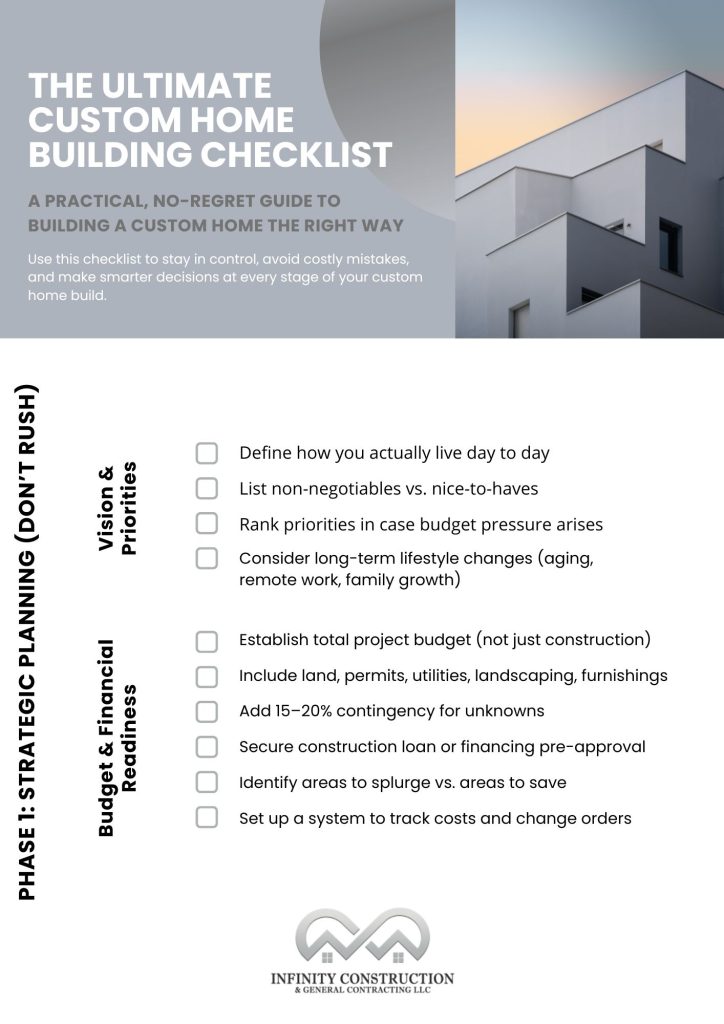
Phase 1: Strategic Planning (Where 90% of Outcomes Are Decided)
1. Define Your Vision—With Constraints
Every project starts with a vision—but vision without constraints is fantasy.
Instead of asking “What do I want?”, ask:
How do I actually live day to day?
What will matter more in 10–20 years than today?
What am I willing to compromise when costs rise (because they will)?
Pro tip: Rank your priorities into:
Non-negotiables
Flexible preferences
Nice-to-haves
This hierarchy will save you when emotions and budgets collide.
The Consumer Financial Protection Bureau recommends construction contingencies because “change orders and unforeseen conditions are common in custom builds.”
Reality check: Most budget blowouts come from:
Design changes after drawings are finalized
Upgrades to systems (HVAC, electrical, glazing)
Finish selections made without cost awareness
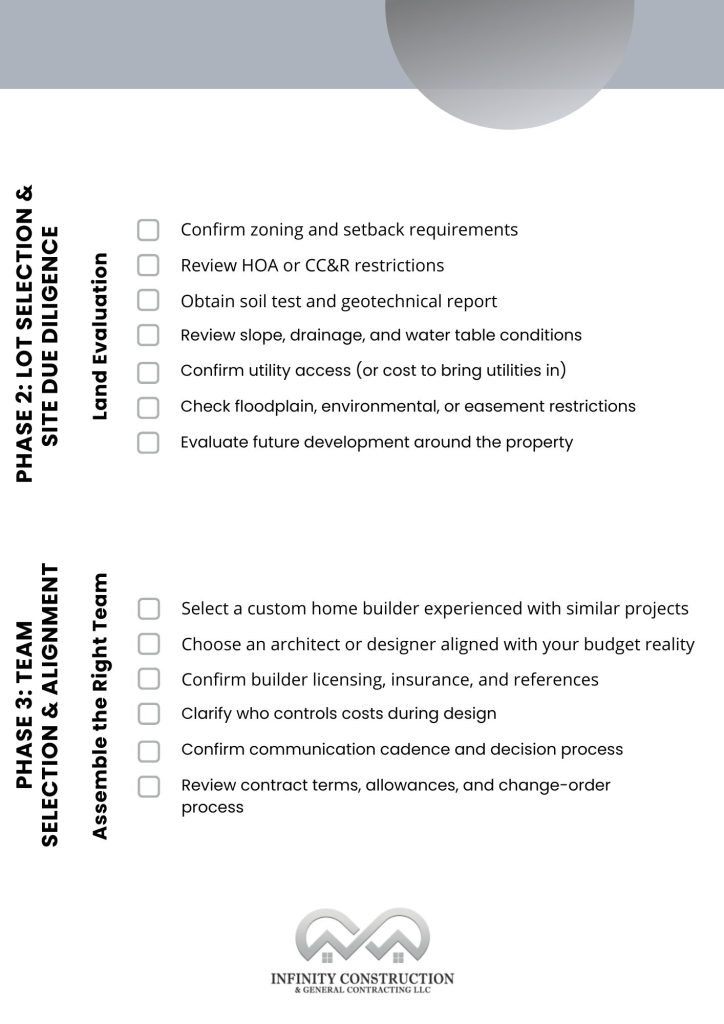
3. Choose the Right Lot (This Shapes Everything)
Land isn’t neutral. It dictates:
Foundation type
Drainage solutions
Utility costs
Permitting complexity
Floor plan limitations
Before buying, confirm:
Zoning and setback rules
Soil conditions and slope
Utility availability (or lack of it)
HOA or CC&R restrictions
Floodplain or environmental constraints
Phase 2: Team, Design, and Risk Alignment
4. Assemble the Right Team (Not Just the Nicest One)
Your builder, architect, and consultants will shape every outcome.
Who has experience with your lot type and local codes?
A qualified general contractor should act as a risk manager, not just a scheduler.
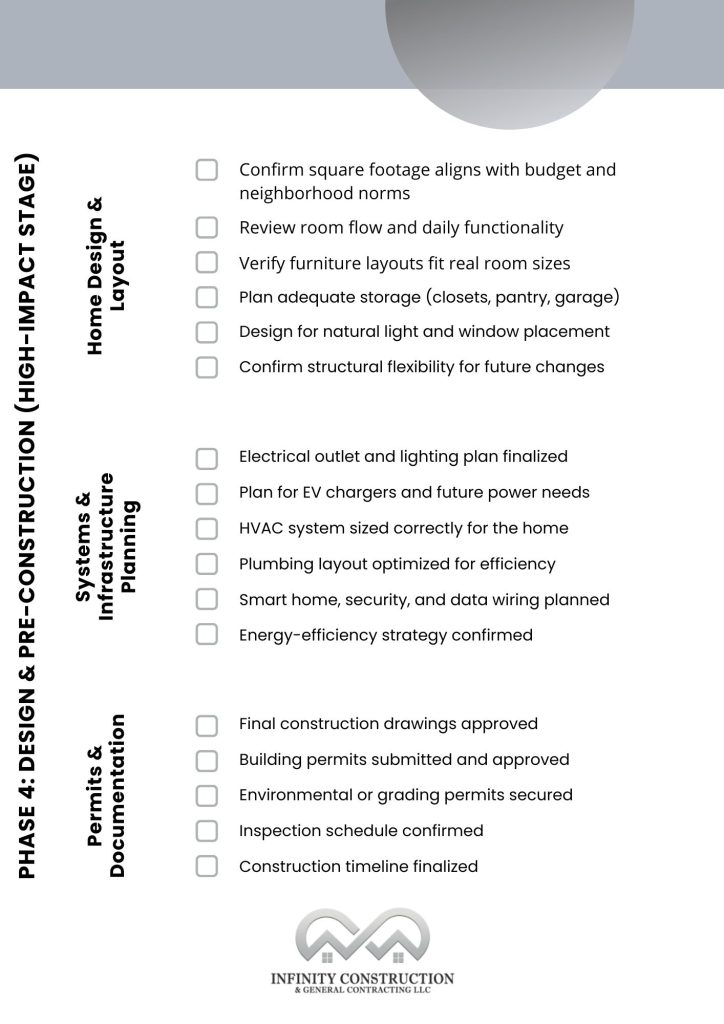
5. Design Your Home With Flexibility in Mind
Design is where budgets quietly explode.
Focus on:
Room adjacencies that match real life
Storage where it’s actually needed
Window placement that works with furniture
Structural allowances for future changes
Avoid over-customizing elements that:
Can’t be easily changed
Don’t add long-term value
Exceed neighborhood norms
According to the AppraisalInstitute, over-customization is one of the top reasons homes underperform on resale.
6. Plan Systems Early (Cheap Now, Expensive Later)
Your electrical, plumbing, HVAC, and technology systems are the skeleton behind the walls.
Plan ahead for:
EV chargers
Home offices
Smart home infrastructure
Zoning and airflow
Energy efficiency
The ENERGY STAR reports that properly designed systems can reduce energy use by up to 20–30% over time.
Phase 3: Pre-Construction & Permits
7. Permits, Approvals, and Documentation
All approvals must align with current Washington state building codes, which often exceed national minimum standards and directly impact cost, energy requirements, and inspection timelines. Before construction:
Foundation issues are among the most expensive problems to fix post-construction.
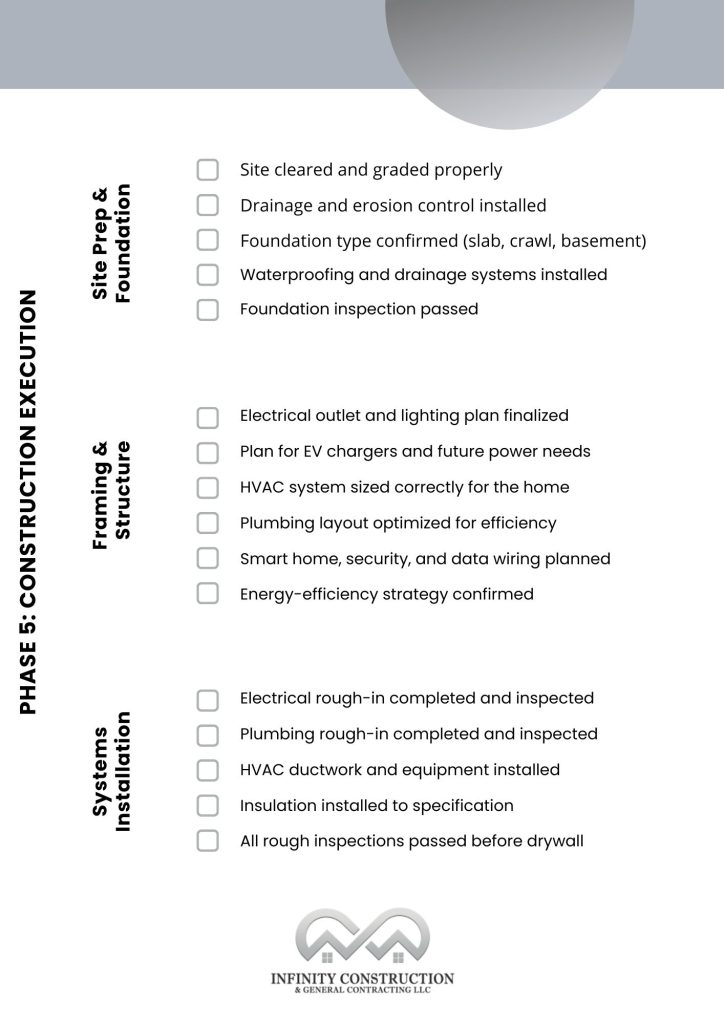
9. Framing & Structural Work
In Western Washington’s wet climate, properly executed custom home framing and disciplined dry-in timing directly affect long-term durability and moisture performance. This is the last chance to verify:
Room sizes
Window heights
Door swings
Sightlines
Walk the structure before drywall. Changes later are costly.
10. Systems Installation
During rough-ins:
Verify outlet locations
Confirm HVAC runs and returns
Inspect plumbing access points
Review insulation coverage
Inspections check minimum code—not performance. Be proactive.
Phase 5: Interior, Exterior, and Finalization
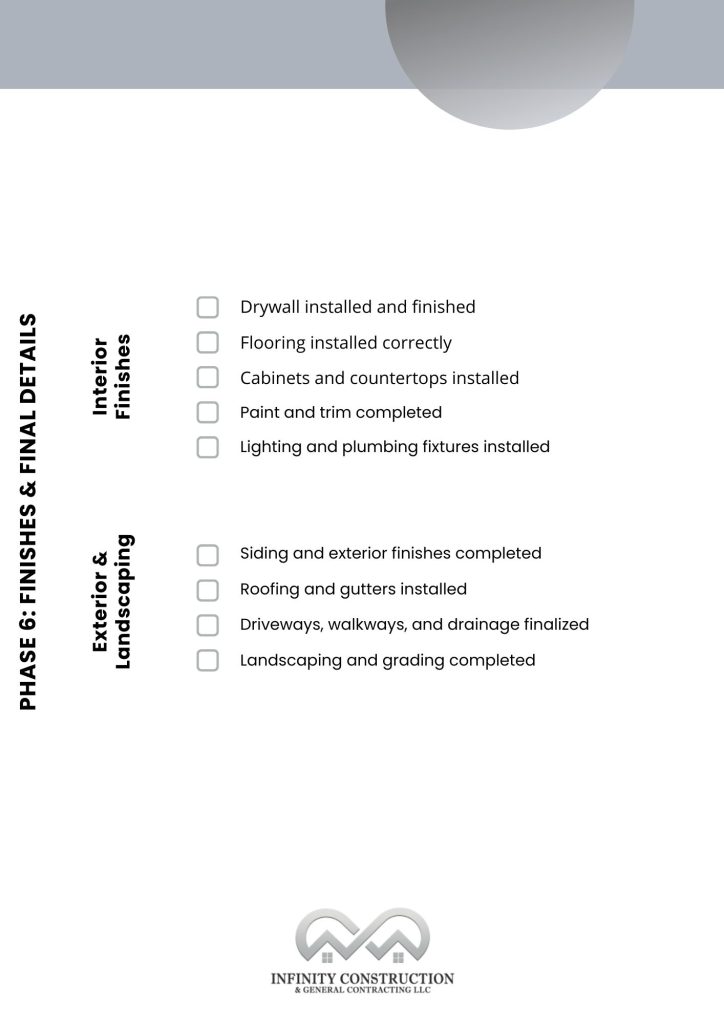
11. Interior Finishes & Fixtures
Choose finishes based on:
Durability
Maintenance
Timeless appeal
Mix investment pieces with cost-effective accents.
12. Exterior & Landscaping
Your exterior affects:
Curb appeal
Maintenance costs
Energy performance
Plan drainage, grading, and plantings with long-term upkeep in mind.
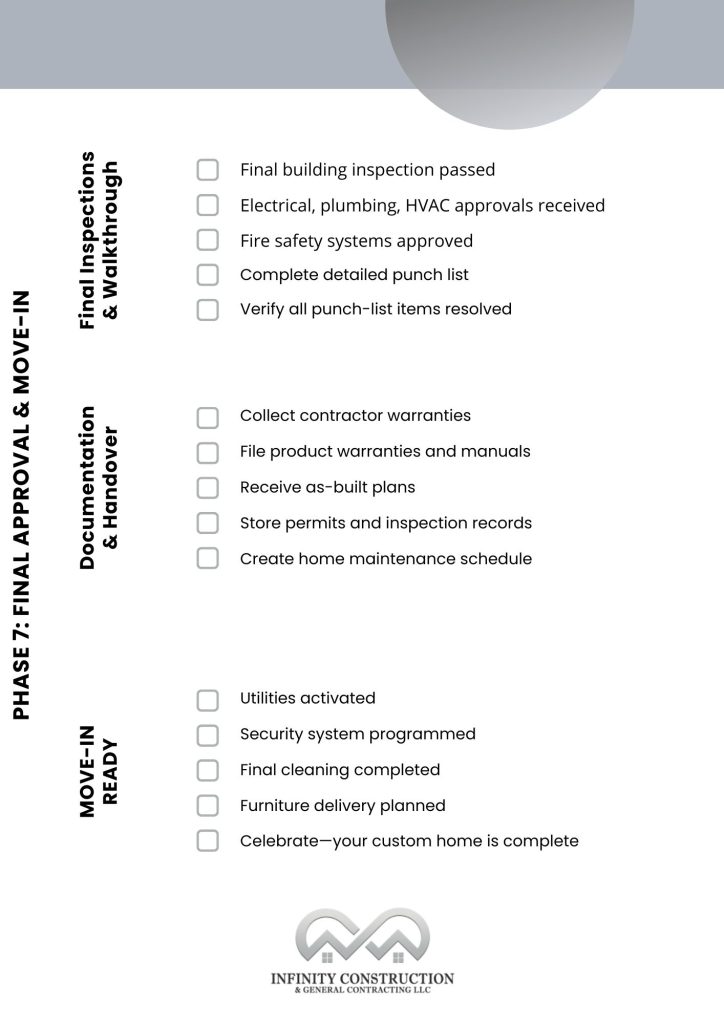
13. Final Walkthrough, Inspections & Handover
Before move-in:
Complete final inspections
Create a detailed punch list
Collect warranties and manuals
Document finishes and systems
Do not rush this phase. Your leverage is highest before final payment.
Download the Custom Home Building Checklist (PDF)
This printable checklist distills the full guide into a clear, phase-by-phase decision framework you can reference before meetings, during design, and throughout construction. It highlights the choices that lock in cost, risk, and flexibility—so you don’t rely on memory, assumptions, or advice that comes too late.
A successful custom home isn’t about perfection—it’s about making informed decisions at the right time.
This custom home building checklist is designed to do more than outline steps. It gives you clarity when choices matter most, awareness of where risks actually live, and the confidence to move forward without second-guessing every decision.
If this guide helped you think more clearly about your build, keep it close. Share it with someone planning a home of their own, revisit it as decisions arise, and speak with an experienced custom home builder in Western Washington when you’re ready to take the next step.
Building custom should feel empowering—not overwhelming. And when the process is done right, it does.