

If you’re searching for the average cost to build a house in Washington State, you’ve probably noticed something frustrating: every source gives you a different number. Some say it’s affordable. Others imply it’s wildly expensive. Most are wrong—or incomplete.
This guide cuts through the noise.
What follows is a data-backed, Washington-specific breakdown that merges real construction cost studies, builder-verified data, and on-the-ground regulatory realities. No national averages pretending to apply here.
Quick Answer
- Average construction cost: $250–$550 per square foot
- Typical total build (excluding land): $500,000–$1,000,000+
- Median new home construction cost (2024): $309 per sq ft
- Regulatory costs: ~29.5% of final home price
- Typical timeline: 9–12+ months after permits
If that range feels wide, that’s not an error—it’s the reality of building in Washington. These numbers represent full-scope construction projects similar to the custom home building contractors in Washington State that require coordinated planning, permitting, and structural execution.
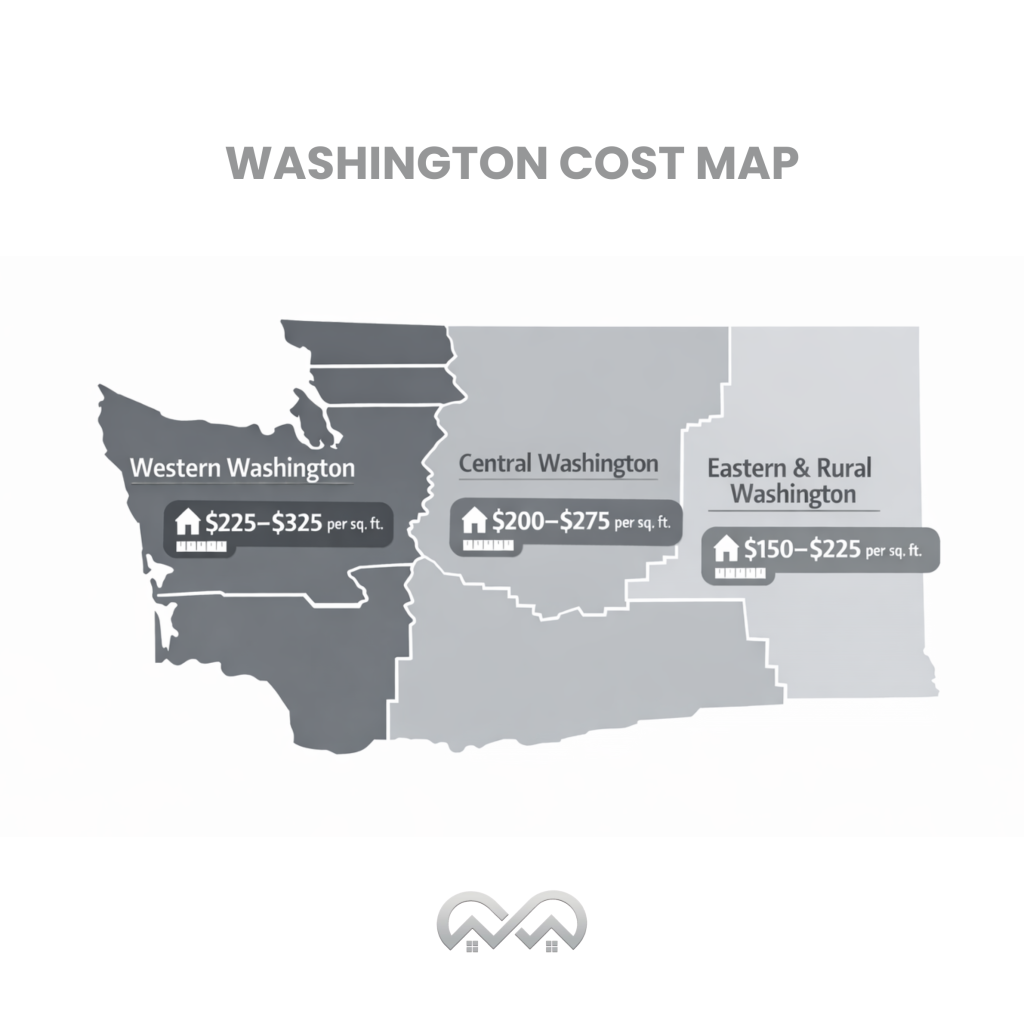
Why “Average Cost” Is Misleading in Washington State
Statewide averages fail here more than almost anywhere else in the country.
Urban vs. Suburban vs. Rural Distortion
A home built in King County does not exist in the same cost universe as one built in rural Eastern Washington. Labor markets, permit timelines, impact fees, and land scarcity create entirely different pricing realities.
Regulatory Layering Skews Comparisons
Washington adds overlapping state, county, and municipal requirements that don’t show up in national “cost per square foot” calculators. Two identical homes can differ by six figures purely due to jurisdiction.
“Per Square Foot” Hides the Real Pain
Per-square-foot numbers typically exclude:
- Permits and impact fees
- Utility extensions
- Site grading and stormwater systems
- Financing carry during delays
Those costs don’t scale neatly with size—but they absolutely scale with complexity and regulation.
Verified Construction Costs
The most reliable Washington-specific construction data comes from industry surveys and housing research—not consumer real estate blogs.
According to the National Association of Home Builders and regionally verified data from the Washington Center for Housing Studies:
- Single-family detached homes: ~$309 per sq ft (2024 median)
- Townhomes: ~$404 per sq ft
- Median home size: 2,505 sq ft
- Median sale price of new homes: $690,701
Why townhomes cost more per square foot: the calculation applies to the entire structure, not individual units. Per-unit costs are lower due to shared walls, foundations, and land.
The Real Cost Breakdown (Where the Money Actually Goes)
Hard Construction Costs (Labor + Materials)
These are the visible costs most people focus on:
- Site work & foundation: excavation, footings, concrete
- Framing: lumber, trusses, structural labor
- Roofing & exterior finishes: siding, windows, doors
- Mechanical systems: HVAC, plumbing, electrical rough-ins
- Interior finishes: drywall, flooring, cabinetry, paint
Together, these typically account for 55–65% of the final cost before land.
Soft Costs Most Homeowners Underestimate
This is where budgets quietly break.
- Architectural & engineering design
- Permits, plan reviews, inspections
- Utility connections (water, sewer, power, internet)
- Financing interest during construction
- Temporary housing while waiting for completion
These costs don’t feel “physical,” but they are very real, and unavoidable.
Regulatory Costs — The Hidden 29.5% Tax on New Homes
This is the most ignored, and most important, part of the equation.
Based on Washington-specific market data, approximately 29.5% of the final price of a new home is driven by regulatory requirements. That’s significantly higher than the national average.
What drives this regulatory burden?
- Impact fees for schools, traffic, parks, and fire facilities
- Energy and building code layers that exceed national baselines
- Environmental, shoreline, and critical areas reviews
- Permitting delays, which inflate financing and labor costs
Oversight and standards are not inherently bad—but complexity has a price.
Primary regulatory bodies influencing cost include the Washington State Building Code Council and market dynamics tracked by the Northwest Multiple Listing Service.
Every month a permit is delayed, the home gets more expensive—even if no materials change.
Land Costs by Region (Why Location Matters More Than Design)
Western Washington (King, Pierce, Snohomish, Thurston)
- Median raw land cost: ~$286,996 per lot
- Infill and teardown projects dominate urban areas
- Utility access exists—but regulatory and demolition costs soar
Land frequently rivals or exceeds construction cost in total impact.
Rural & Semi-Rural Counties
- Lower purchase prices
- Higher volatility in site prep costs
- Septic systems, wells, access roads, and grading add risk
Cheap land is not the same as cheap building.
County-Level Cost Reality (What No Calculator Tells You)
- King County: highest fees, longest timelines, densest inspections
- Pierce County: moderate costs, improving timelines
- Thurston County: fewer transactions, but rising land pressure
Permit duration alone can shift total cost by tens of thousands due to financing and labor re-mobilization.
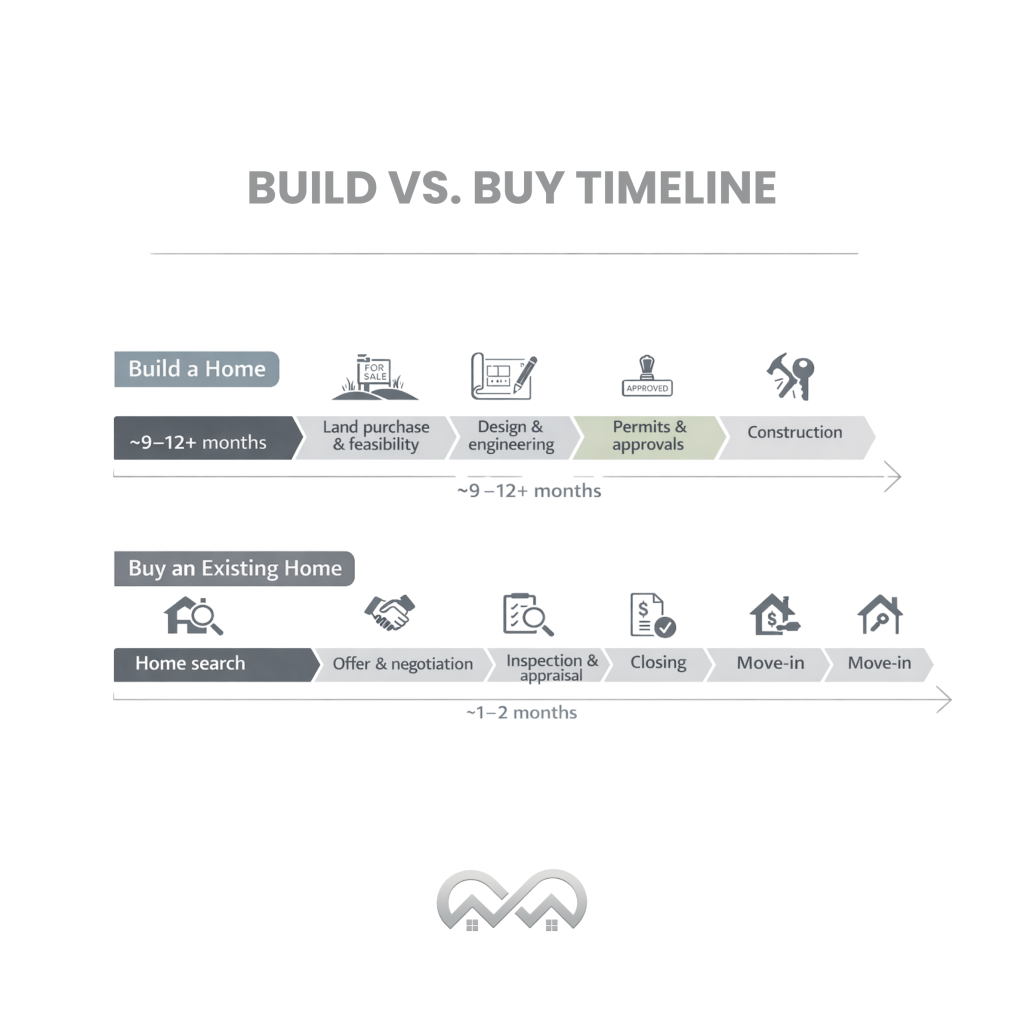
Build vs. Buy in Washington
- Median resale home price: ~$637,600
- Median new construction price: ~$690,701
Buying is often cheaper up front and faster to occupy. Building offers customization, energy efficiency, and lower long-term operating costs—but demands more capital and patience. This isn’t a lifestyle choice. It’s a math problem.
Financing a New Build in Washington State
- Construction-to-permanent loans: most common, single close
- Construction-only loans: higher risk, refinancing required
- FHA & VA construction options: limited but possible
Key truth: Delays directly increase total cost. Financing is time-sensitive.
The Costs That Blow Up Budgets (Reality Check)
- Unrealistic allowances
- Utility distance assumptions
- Unexpected soil or slope conditions
- Inspection-triggered change orders
- Inadequate contingency funds
If your budget has no buffer, it isn’t a budget—it’s a guess.
How to Use These Numbers Correctly (Not Emotionally)
- Use averages for early feasibility, not final decisions
- Replace estimates with site-specific pre-construction analysis
- Plan for time, not just materials
- Accept that Washington pricing reflects policy, not popularity
Good planning routinely saves six figures.
Key Takeaways
- Washington is structurally expensive, not just desirable
- Regulations materially affect affordability
- Land and permits often outweigh finishes
- Cheap estimates fail because they ignore time and compliance
If you understand why homes cost what they do, you’re already ahead of most buyers—and many builders.
Conclusion
The average cost to build a house in Washington State is high not because of materials or design choices alone, but because of land scarcity, regulatory complexity, labor constraints, and time-related costs. These factors often matter more than square footage or finishes.
The biggest budgeting mistakes come from relying on oversimplified cost estimates that ignore permits, delays, utilities, and financing carry. In Washington, those “hidden” costs can add hundreds of thousands of dollars to a build.
If you’re planning to build, success comes from realistic expectations and site-specific planning—not chasing low averages, that’s why you need an experienced custom home builder in Western Washington.