

Choosing a custom home builder is the most consequential decision of your home-building journey. Get it right, and you secure a durable dream home delivered on time and on budget. Get it wrong, and you face devastating cost overruns, construction delays, and years of regret.
While most homeowners spend hours obsessing over cosmetic finishes like countertop materials, few properly understand the difference between a builder versus contractor before vetting the person overseeing hundreds of critical daily decisions. This lack of preparation creates a dangerous information gap regarding build processes, cost guarantees, and error resolutions. Knowing the right questions to ask a custom home builder before breaking ground is the only way to protect your investment.
This guide closes that gap. Synthesizing insights from industry organizations and licensed builders, it provides a comprehensive vetting checklist organized by project phase so you can interview candidates with absolute confidence.
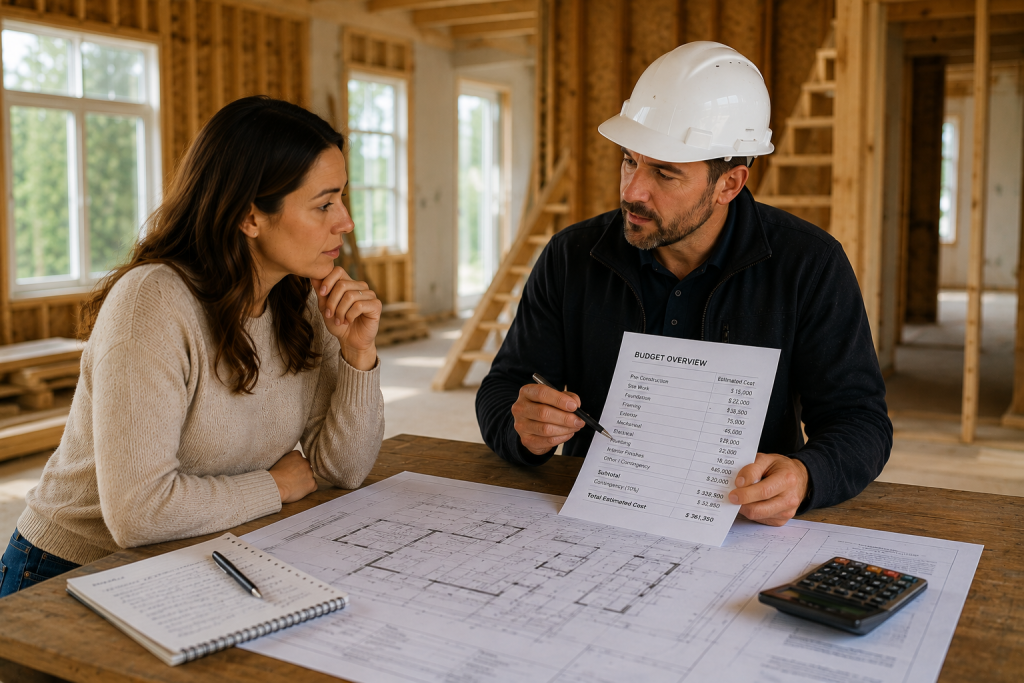
Questions to Ask a Home Builder About Budget and Pricing
Money surprises kill custom home projects. The goal of these questions is to establish complete cost transparency before you commit to anything.
What is included in the base estimate, and what isn’t?
The base estimate often excludes critical hidden costs. Many builders present a low initial price that omits site preparation, drainage, utility hookups, excavation, engineering, permits, and surveys. Always demand a detailed, written list of exclusions to calculate your true total budget.
How do you handle change orders?
A written change order process prevents future financial disputes. Custom builds inevitably require modifications, and reputable builders will clearly define how changes are priced, approved, and documented. Vague answers or a “no big deal” attitude are major red flags.
Do you use fixed-price contracts or cost-plus pricing?
These models handle financial risk differently. Fixed-price contracts lock in your total cost upfront, while cost-plus arrangements mean you pay actual expenses plus a builder’s margin, which can quickly escalate. Ask for full transparency through “open-book” pricing to see true costs.
When will the final price be confirmed, and what can change it?
Some builders don’t finalize pricing until well into the design phase. Ideally, your builder confirms the final price before construction begins so you can plan financing accordingly.
What allowances are included, and are they realistic?
Allowances are budget placeholders for items like appliances, lighting, and flooring. Builders often use low allowances to make estimates look deceptively competitive. Ask for the typical actual spend in homes like yours to ensure these placeholders are realistic.
Questions to Ask About Timeline and Delays
Custom home construction timelines are estimates, not guarantees. Your job is to understand what drives those estimates and what derails them.
What is a realistic timeline from groundbreaking to move-in?
The actual timeline depends entirely on the complexity of your home. On average, custom homes take roughly 12 to 18 months from permitting to completion. Be highly skeptical of any builder promising a significantly faster timeline without a compelling explanation.
How often do your projects finish on or near schedule?
This is a critical accountability question requiring specific project data. Builders who consistently hit deadlines will answer confidently, whereas underperforming builders will pivot to blaming outside factors. Look for a track record of reliability, not excuses.
What are the most common causes of delays on your projects?
Weather, permits, material delays, scheduling, and late homeowner decisions are common culprits. A prepared builder will have clear mitigation strategies to manage these risks effectively. Vague answers suggest poor project oversight.
How will I be notified of schedule changes?
Set communication expectations early. Ask if you will receive weekly updates, access to a project portal, or direct milestone alerts. Clear protocols on who communicates what, and when, prevent anxiety and misunderstandings throughout the build.
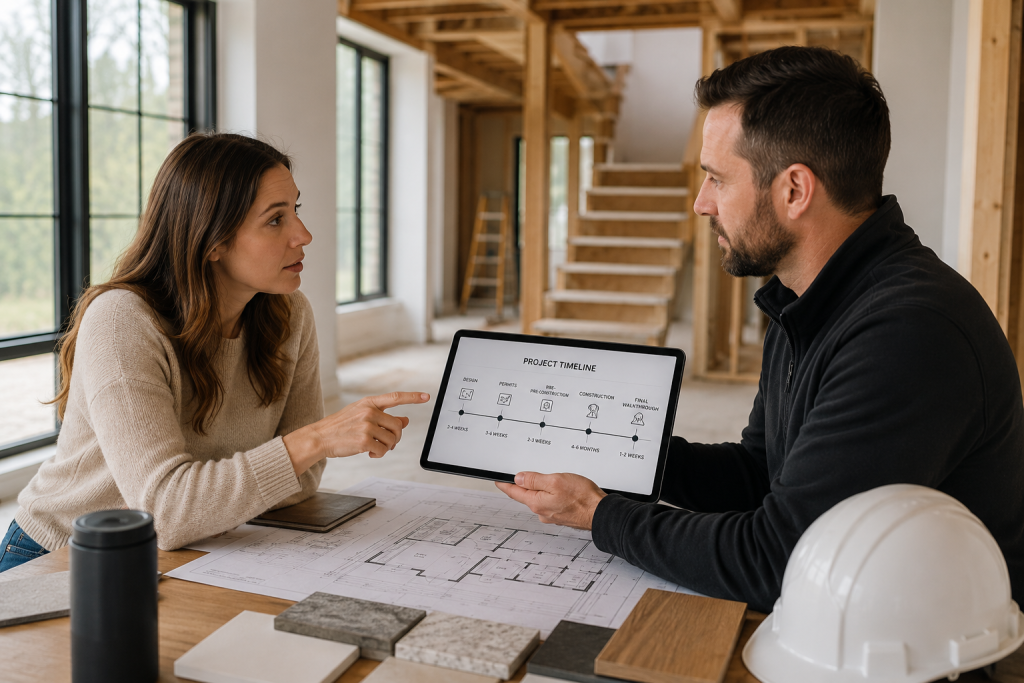
Questions to Ask Builder at a Pre Construction Meeting
The preconstruction meeting determines whether a project is set up for success or failure before any work begins. Use it to clarify expectations and reduce issues from the start.
Who handles permits, engineering, and inspections, and are those costs included?
A professional builder handles all permitting when building a house in Washington. If a builder asks you to pull your own permits, treat it as a serious red flag. It may indicate they’re unlicensed, uninsured, or trying to avoid accountability for code compliance.
What decisions need to be finalized before construction starts?
Experienced builders front-load decisions to prevent costly mid-construction changes and delays. Request a complete list of materials, fixtures, structural selections, and design trends worth prioritizing before breaking ground.
How is the project schedule created and maintained?
Ask to see a master schedule with defined milestones. A documented build roadmap demonstrates organizational maturity and serves as a reference point for tracking progress throughout the project.
Who is my primary point of contact, and how accessible are they?
You need one named person responsible for your project, not a general office number. Understand their availability, preferred communication method, and typical response time before you sign.
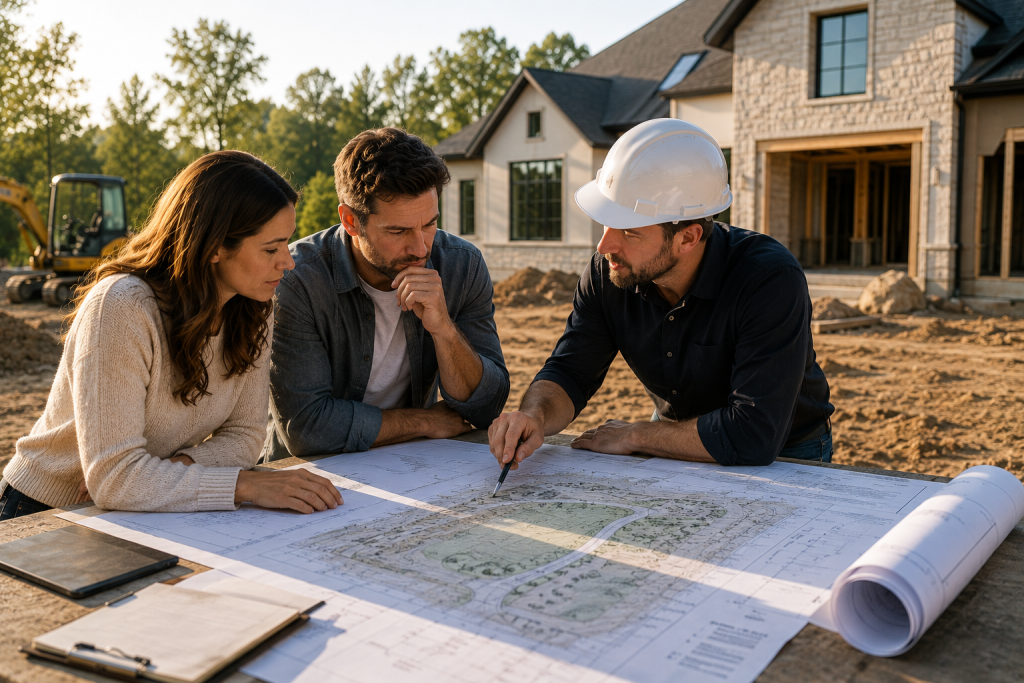
Questions to Ask About Site Conditions and Land Feasibility
Site conditions are one of the most important due diligence areas and are often overlooked by homeowners when evaluating what your lot can support. They can significantly impact cost, timeline, and whether a build is even feasible.
Has the lot been evaluated for drainage and grading issues?
Poor drainage can require extensive regrading, French drains, or retaining walls, adding tens of thousands of dollars to your project. Ask whether a site assessment has been completed and what it revealed.
Will the property require significant excavation?
Rock ledge, buried debris, high water tables, and unstable soils all require specialized excavation, and none of it is cheap. If your lot hasn’t been assessed, insist on it before finalizing your budget.
Are there septic, well, or utility limitations on this property?
Properties lacking municipal connections require septic systems and well drilling. Both involve complex permitting, engineering, and highly variable costs. The distance from existing infrastructure can also add tens of thousands of dollars in utility extension fees.
Could slopes, floodplains, or stormwater requirements affect the project?
Steep slopes often require engineered retaining walls, while flood zones demand expensive elevation certificates and specialized construction. Additionally, strict local stormwater rules can heavily restrict your building footprint and inflate site drainage costs.
Are there any soil tests, surveys, or environmental reports available for this lot?
A reputable builder will either have this information or will help you obtain it. Building without it is flying blind.
Questions to Ask About Framing and Construction Quality
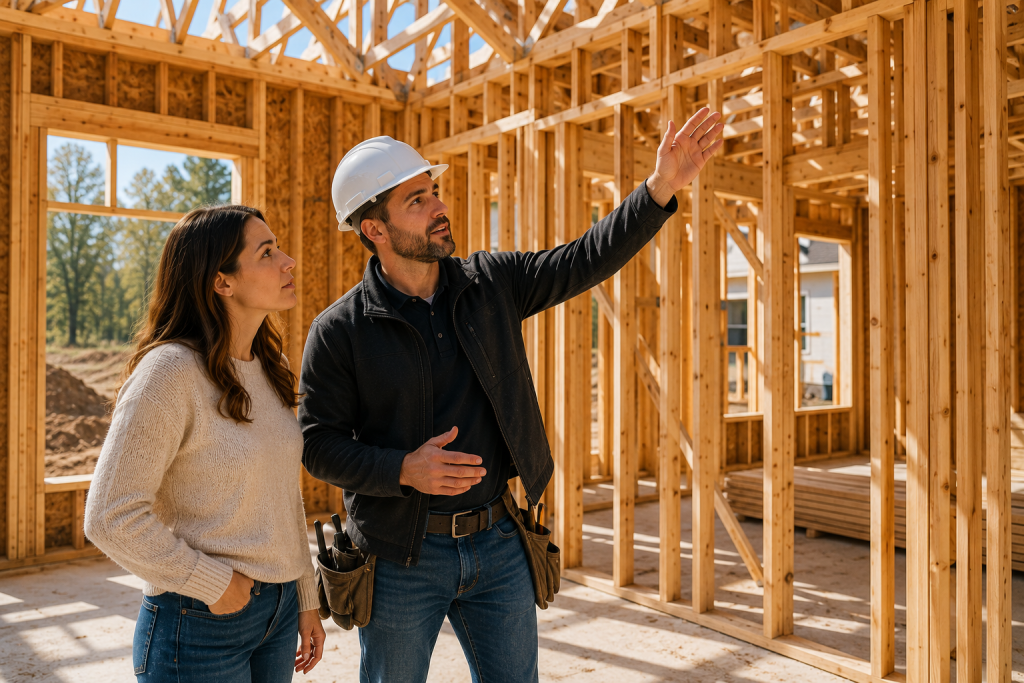
The finishes are what you see. The framing is what you live in. Don’t let aesthetics distract you from structural quality.
What framing methods and structural systems do you use?
Ask whether they build with 2×4 or 2×6 exterior framing (2×6 allows for better insulation), and how they handle structural engineering coordination. For high-end builds, ask about advanced framing techniques or engineered lumber systems.
How do you manage moisture during framing?
Moisture intrusion during construction, before the building envelope is closed, is a leading cause of mold, rot, and structural problems. Ask what weather barrier systems, drying protocols, and subfloor protection methods the builder uses.
What is your quality control process at each construction phase?
Quality builders have a documented inspection process at every major milestone: foundation, framing, rough mechanical, insulation, and final. Ask whether they use third-party inspectors in addition to their own site supervisors.
Do you coordinate directly with structural engineers throughout the build?
Direct collaboration with structural engineers ensures design intent is safely executed. It separates production builders from true custom builders. This ongoing coordination guarantees that field adjustments or unexpected site conditions comply with structural safety standards.
Who will be on-site supervising the work daily?
Know whether a dedicated project manager or foreman is present during active construction phases. Unsupervised subcontractor work is one of the most common sources of quality problems on residential builds.
Questions to Ask About Communication During Construction
A custom home build lasts 12 to 18 months. Communication systems that work in month one need to still work in month fourteen.
How often will I receive formal progress updates?
Weekly written updates are a reasonable baseline expectation. Some builders use project management software that gives clients real-time visibility into scheduling, photos, and milestone completions.
How are design changes and field decisions documented?
Every change, no matter how small, should be captured in writing with a cost and schedule impact clearly stated. Verbal agreements on a job site tend to be remembered very differently by the parties involved.
How often can I visit the construction site?
Scheduled site visits give you visibility into build quality, especially “behind the walls” progress that’s invisible after drywall goes up. Ask whether you can tour an active job site during the interview phase, not just a finished model home.
What happens if I have concerns about the quality of work?
Understand the process for raising and resolving quality issues before they arise. A builder with a clear, non-defensive process for handling concerns is significantly more trustworthy than one who takes feedback personally.
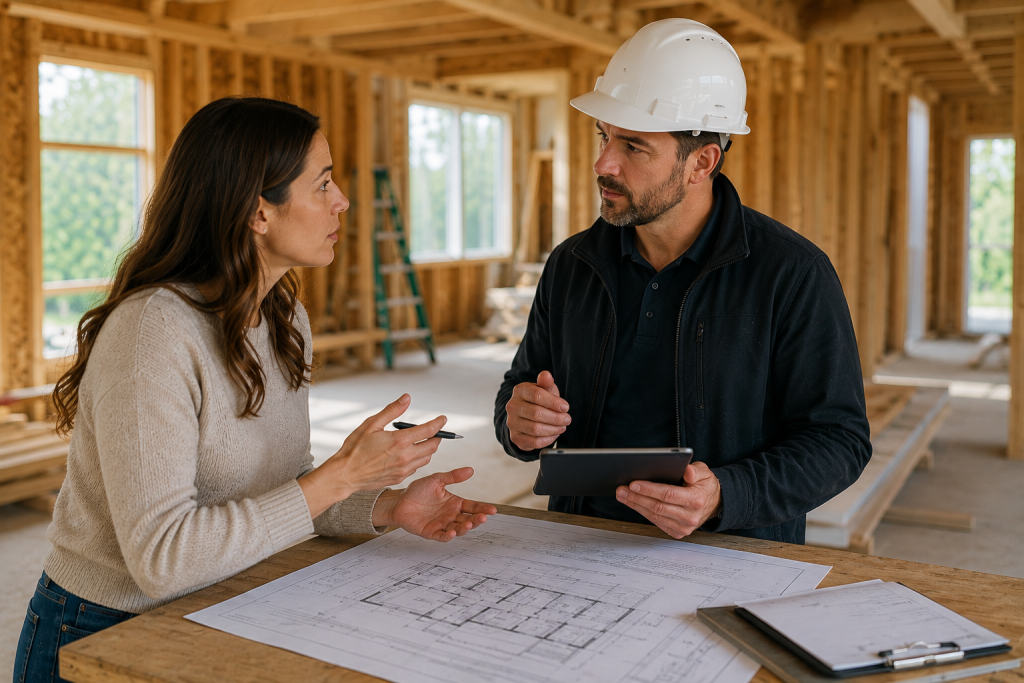
Common Mistakes Homeowners Make When Hiring a Builder
Even prepared buyers make predictable errors. The most costly include:
- Choosing based on price alone – Low bids often exclude scope or use lower-quality materials, leading to change orders.
- Skipping site assessment – Soil, drainage, slope, and utilities can add 10%-30% to costs if discovered late.
- Not reviewing the contract carefully – Key terms like allowances, exclusions, and warranties are often buried; review with a real estate attorney before signing.
- Underestimating preconstruction time – Design, permitting, and engineering can take 3-6 months.
- Poor communication planning – Lack of clear communication leads to major project dissatisfaction.
Conclusion
The questions detailed above aren’t just checkboxes; they form the foundation of a 12-to-18-month relationship and your life’s largest financial commitment.
The best builders welcome this scrutiny. Anyone who becomes defensive or vague about permits, budgets, or warranties is showing you how they will behave when problems arise mid-construction. Use these questions alongside a checklist for planning a custom home as your interview framework. Ask them about every candidate, document the answers, and compare the data.
At Infinity Construction GC LLC, we’re prepared to answer every question on this list, and to ask you a few important ones in return. Contact us to start the conversation.