
Choosing the right type of home involves more than finding a floor plan you like. The spec home vs custom home comparison highlights important differences in design flexibility, planning requirements, and move-in timelines. With a spec home, the builder has already made many major decisions, while a custom home allows buyers to shape the design around their needs and preferences.
This guide compares both options in terms of total costs, financing, construction timelines, and control over the lot and design. It also explains how to evaluate construction quality and outlines the key factors to consider before choosing the option that best fits your budget and priorities.
Spec Home vs Custom Home
A key difference between spec vs custom homes is how much control buyers have over design and construction decisions. With a spec home, the builder has already established much of the design. Whereas with a custom home, you work with the design and construction team to develop a home around your needs.
The table below compares how these differences affect the choices that matter most to buyers.
| Decision | Spec Home | Custom Home |
| Lot Choice | Limited to the available property | Buyer may own or select the lot |
| Floor Plan | Usually established before purchase | Developed around the buyer’s needs |
| Finish Choices | Depend on construction stage and contract | Selected during design, subject to budget |
| Time to Move In | Depends on how far construction has progressed | Includes planning, approvals, and construction |
| Price Certainty | Purchase terms are clearer once agreed | Final cost depends on contract terms, allowances, and changes |
| Buyer Involvement | Generally fewer decisions | More decisions throughout planning and building |
Neither option is automatically better, since the importance of each difference depends on what the buyer needs.
Spec vs Custom Homes Definitions
What is a spec home?
A spec home, short for speculative home, is a house a builder starts without a committed buyer. The builder selects the lot, develops the floor plan, and chooses the finishes based on what potential buyers might want. The home may be marketed for sale before construction is complete.
The stage of construction when you purchase a spec home affects what you can change. A completed home may be ready for immediate occupancy, while one still under construction might offer some flexibility. For example, if certain finishes haven’t yet been ordered or installed, the builder may let you choose flooring, paint colors, or fixtures. These options depend on what the builder allows and what the purchase agreement includes.
Although the terms sometimes overlap, spec, tract, and move-in-ready describe different things. A spec home starts without a committed buyer, while a tract home is built within a larger development using standard floor plans. Move-in-ready means the home is finished and available for occupancy. A single house can fit all three descriptions.
What is a custom home?
A custom home is planned and built for a particular buyer and property. You work with a designer, architect, or builder to develop the layout, select materials, and establish specifications. These decisions help shape the home around your needs and the characteristics of your lot.
However, choosing a custom home doesn’t mean you have unlimited options. Site conditions, including slope, soil, and drainage, can affect what can be built. Local building regulations, engineering requirements, your budget, and the construction contract also set limits on design decisions.
For buyers who want more design flexibility than a spec home offers, semi-custom homes provide a middle ground between spec and fully custom construction. They allow buyers to modify certain layouts and finishes within the available options.

Custom Home vs Spec Home Cost – What Should Buyers Compare?
Understanding the cost of a spec house
The purchase price is the starting point for a spec home, but it may not cover every expense. Check which appliances, flooring selections, and landscaping features are included or offered as upgrades. Closing costs and planned changes after moving in should also be part of your budget. Buyers typically finance completed spec homes through traditional mortgages.
For a Washington State spec house cost reference, selected new-construction listings range from approximately $370,000 to over $1 million. These are advertised asking prices, not a typical spec home price range. Prices vary by location, size, and included features.
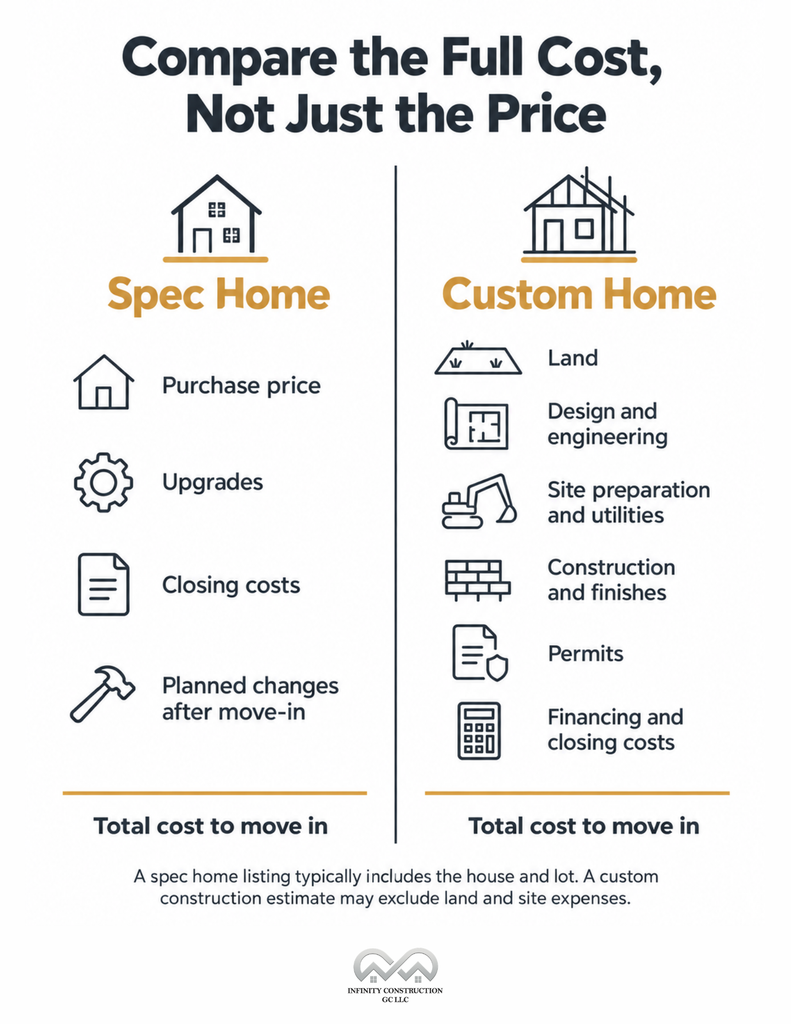
However, a spec home’s listing price cannot be fairly compared with a custom builder’s construction-only estimate. The listing price typically includes the house and lot, while a construction estimate may exclude land, site preparation, and other expenses. Comparing these figures directly can make a custom home appear less expensive than it actually is.
Accounting for the full cost of a custom home
Building a custom home involves expenses beyond construction, including land, architectural design, engineering, site preparation, utility connections, permits, financing, and finishes. Reviewing the average cost to build a house in Washington State can help buyers plan their budgets.
According to HomeGuide’s Washington State construction cost guide, custom homes are estimated at $350 to $550 or more per square foot, excluding land and site preparation. For a 2,000-square-foot home, that translates to approximately $700,000 to $1.1 million or more in construction costs. Actual pricing depends on location, design complexity, materials, and project requirements.
Financing and contract terms also affect the final budget. Construction loans typically release funds as work progresses, while construction-to-permanent loans can transition into regular mortgages after completion. Contracts may include allowances for flooring or fixtures, and exceeding these amounts or requesting changes during construction can increase costs.
Comparing the two on equal terms
These price ranges provide useful reference points but represent different costs. For a fair comparison, consider homes in similar locations with comparable lot sizes and finished square footage. Check what each price includes, such as site preparation, driveways, and landscaping, along with insulation, windows, and heating and cooling systems.
Next, calculate the total cost to move in. For a spec home, include the purchase price, upgrades, closing costs, and planned changes. For a custom home, account for land, design, construction, financing, site preparation, and applicable closing costs. Comparing these totals helps identify the actual cost differences between the two options.
How Do Timelines Differ?
Buying a completed spec home
Buying a completed spec home is usually the quickest path to moving in. Since construction is finished, the remaining steps include the purchase agreement, inspections, financing, and closing. Your move-in date depends on how quickly these steps are completed and whether the home is approved for occupancy.
Buying a spec home under construction
Buying a spec home during construction means your move-in date depends on when the remaining work is completed. The construction schedule can change because of weather, material delays, or inspections. Ask for an estimated completion date and clarify how delays are handled in the purchase agreement. If you can choose finishes, those decisions may have deadlines as well.
Building a custom home
A custom home starts with planning, not construction. If you already own a lot, the process moves through design, engineering, and permit approvals before construction begins. Otherwise, you must also find and buy suitable land. These preliminary stages extend the overall timeline for building a custom home, making it typically the more time-consuming option from initial planning to move-in.
Does a Custom Home Have Better Construction Quality?
Whether a home is a spec build or a custom build doesn’t guarantee its quality, as either type can be constructed well or poorly. The plans, specified materials, and workmanship all influence the finished result. Inspections can identify problems, while required corrections must be addressed before the affected work is approved.
To evaluate either home, start with the construction documents. Review the plans and specifications to understand the materials and building methods required. Check site preparation and drainage details, since poor water management can cause moisture problems around the foundation. Also request records of construction changes and completed inspections, including any independent inspection reports.
Next, read the warranty terms. Check which components are covered, how long coverage lasts, and how to submit a claim. For a spec home still under construction, ask whether supervised site visits are permitted so you can review progress. With a custom home, request updates and documentation throughout construction rather than waiting until the project is complete.
Which Home Gives You the Right Level of Control?
The amount of control you have depends on when you enter the building process. Here’s how your options change at each stage:
- Before design approval – Custom buyers can help choose the lot, floor plan, and materials. Spec builders typically make these decisions before finding a buyer.
- During construction – Moving a wall after framing may require extra work, engineering review, and a change order affecting cost or schedule. Spec buyers’ options depend on the building stage and builder approval.
- After completion – Either type of home can be renovated, but alterations may require permits and could affect warranty coverage.
The spec home vs custom home tradeoff comes down to whether you want to evaluate an existing design or help shape one before construction begins. A spec buyer can assess a completed or partially built home before purchasing.
In contrast, a custom buyer has more say in the design but must make important decisions before seeing the finished result. A custom home building checklist can help you plan those decisions and track the steps from initial design through construction.
Which Option Fits Your Situation?
When weighing spec house vs custom house options, start by identifying which requirements you cannot compromise on. Compare available properties against your needs for location, layout, budget, and move-in timing.
When to choose a spec home
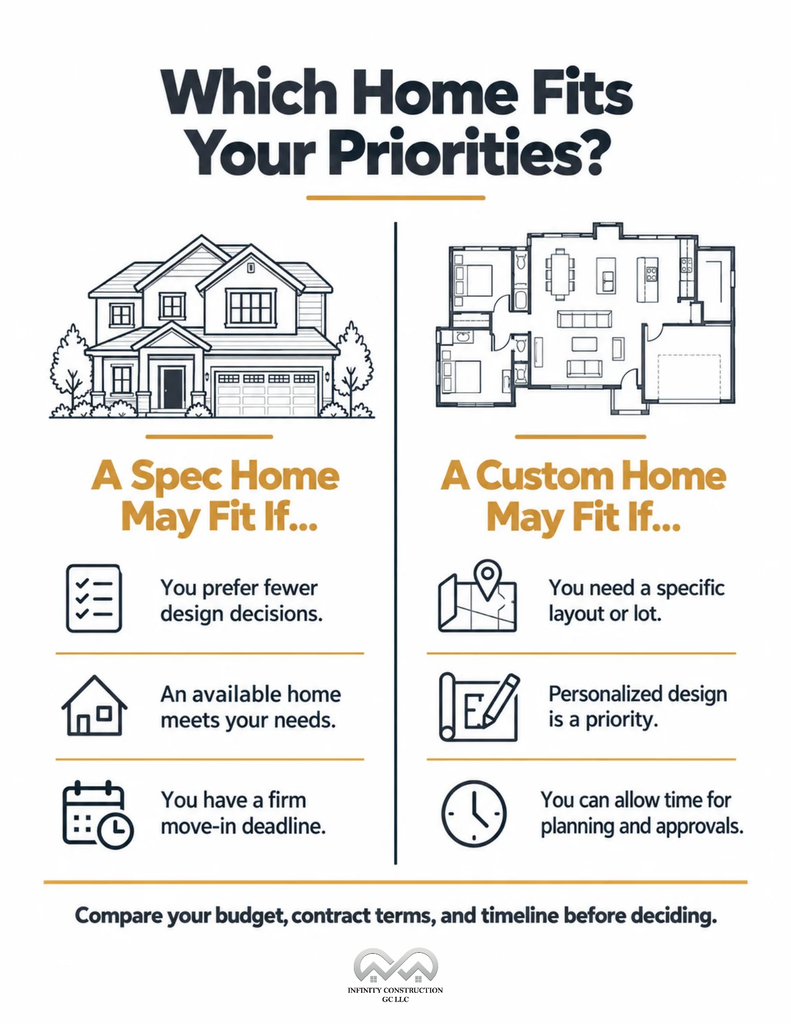
A spec home fits when an available property meets your location and layout needs, especially if you have a firm move-in deadline. If you’re relocating for work or your lease is ending, a completed or nearly finished home may be more practical. With a completed spec home, you can walk through the rooms and inspect the finished work before committing to the purchase.
When to choose a custom home
A custom home fits when available properties cannot meet your requirements. You might need a specific lot, a floor plan the market doesn’t offer, or accessibility features like step-free entry, wider doorways, or a main-floor bedroom. However, this approach requires more design decisions and additional time for planning and approvals before construction begins. If you can take on that process, talk with custom home builders about your lot, budget, and goals.
Frequently Asked Questions
Can you buy a spec home before it is listed for sale?
Yes, in some cases. Builders may offer spec homes to buyers before listing them publicly. Contact local builders and ask about upcoming projects that aren’t yet advertised. Buying early doesn’t guarantee more customization, so confirm what you can still choose before you sign.
Can you sell a custom home after it is built?
Yes. A custom home can be sold like any other residential property. Highly personalized features, such as an unusual layout or a specialty room, may appeal to fewer buyers. If you plan to sell in the future, ask a local real estate agent how these choices could affect resale prospects in your area.
Can you negotiate the price of a spec home?
Builders may negotiate the price of a spec home, depending on market conditions and how long the property has been listed. For completed homes, they may lower the asking price or offer incentives such as upgrades and assistance with closing costs. Compare the dollar value of each offer and whether it covers something you would otherwise pay for.
Can you hire your own architect for a custom home?
It depends on the builder. Some work with architects hired directly by their clients. Others offer design-build services or set requirements for outside designers. Before you hire an architect, ask whether the builder accepts independent plans and how design coordination and revisions are handled.
Conclusion
The choice between a spec home vs custom home ultimately depends on what each option can deliver within your specific budget and timeline. Rather than relying on the type of home alone, review the full costs, contract terms, and construction documentation. Plans, specifications, inspection records, and warranty details can help you understand what you’re committing to.
With these factors in mind, you can determine which option best meets your needs, priorities, and budget while identifying where compromises may be necessary. If you’re considering a custom build, consult with Infinity Construction GC LLC about your lot, design plans, and goals to explore your options and discuss the next steps in the building process.