

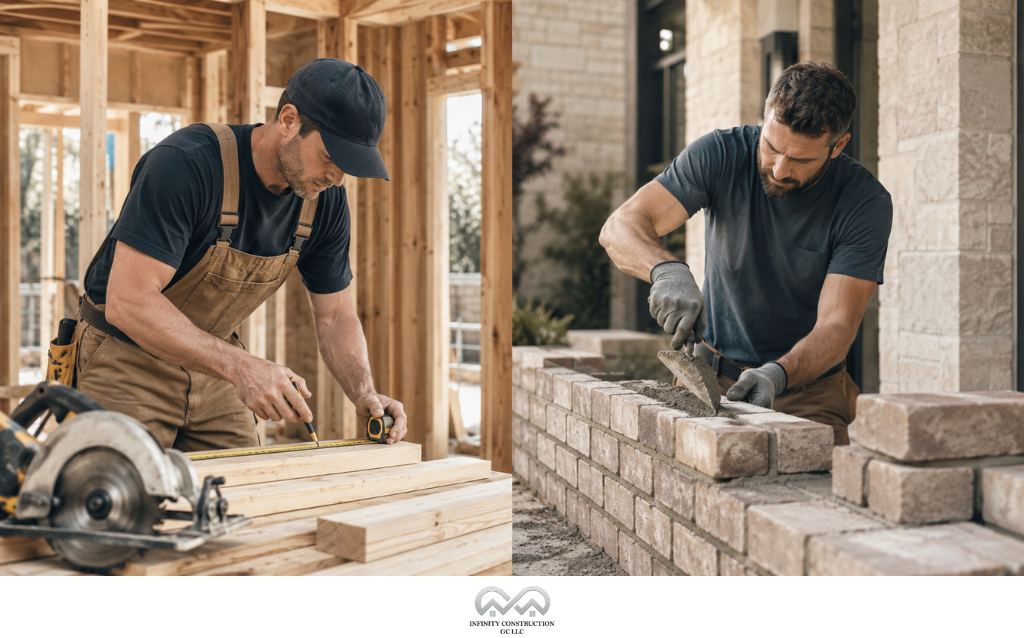
Walk through any construction site, and you’ll see two distinct worlds at work. One trade shapes wood into frames, floors, and finished details. The other stacks brick, stone, and concrete into walls that outlast generations. Carpentry vs masonry, two crafts that share the same job site but rarely get compared properly. Most homeowners don’t think about the difference until they’re mid-project and suddenly unsure who to call. That confusion is more common than you’d think.
This guide breaks down both trades clearly, including materials, methods, durability, and finished results. You’ll learn exactly when to hire a carpenter, when to call a mason, and why the best projects often need both.
Carpentry vs Masonry at a Glance
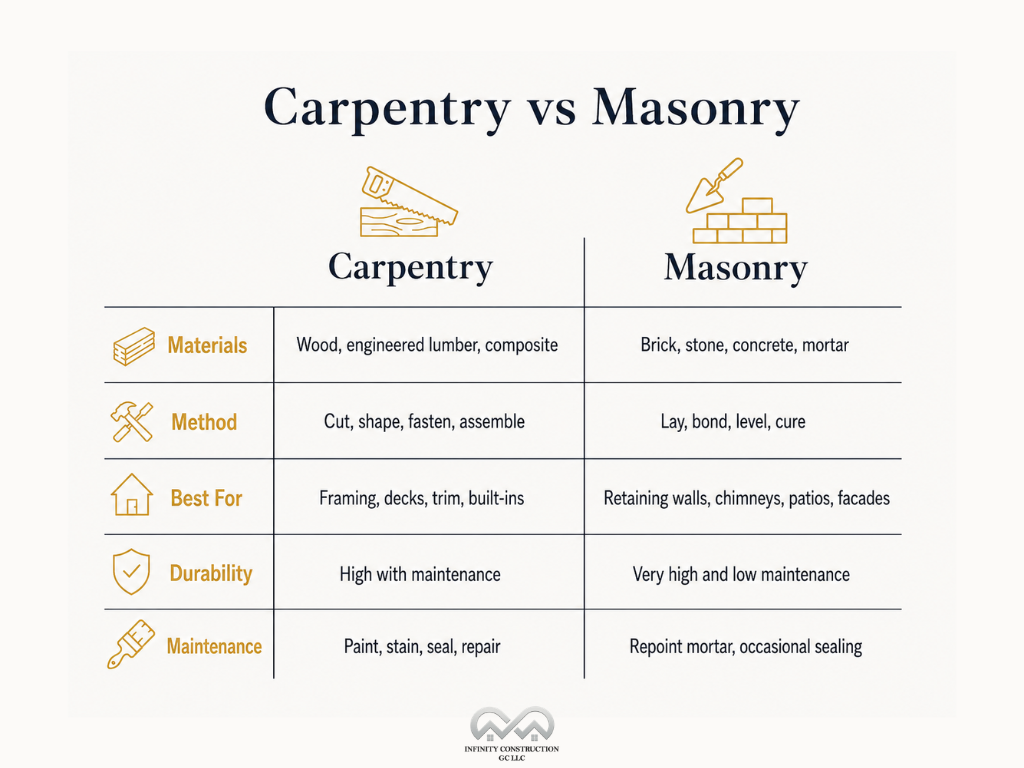
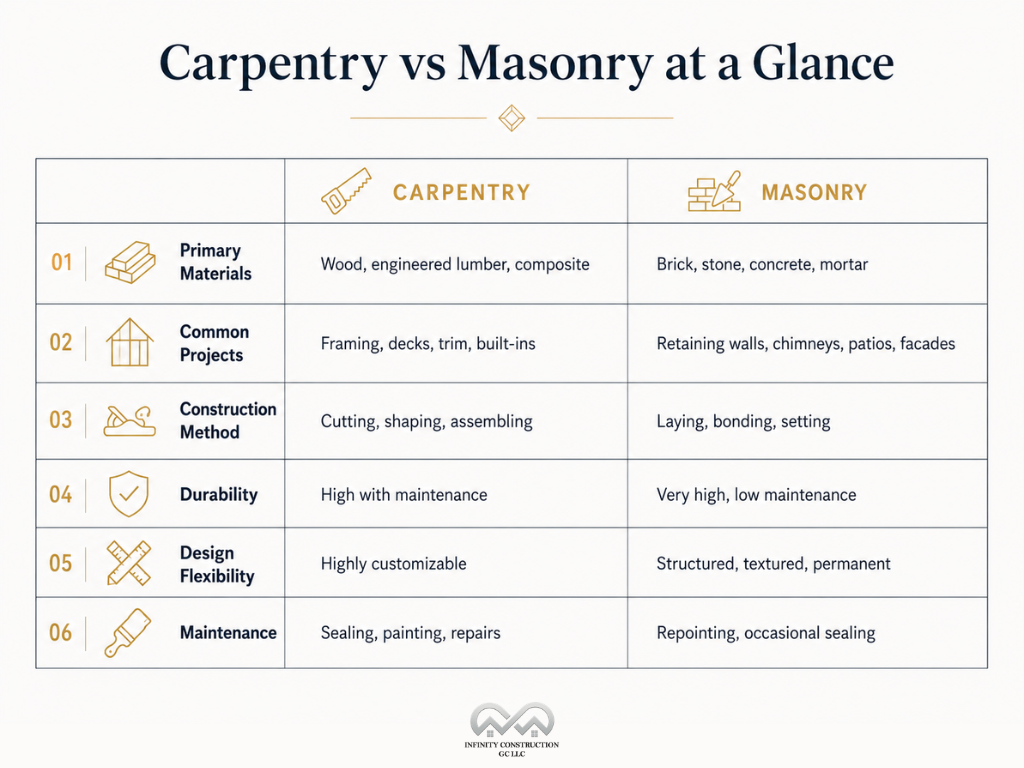
Quick comparison table
| Aspect | Carpentry | Masonry |
| Primary Materials | Wood, engineered lumber, composite | Brick, stone, concrete, mortar |
| Common Projects | Framing, decks, trim, built-ins | Retaining walls, chimneys, patios, facades |
| Construction Method | Cutting, shaping, and assembling | Laying, bonding, and setting materials |
| Durability | High – with proper maintenance | Very high – low maintenance over time |
| Design Flexibility | Highly customizable | More structured, but rich in texture |
| Maintenance | Periodic sealing, painting, or repair | Occasional repointing; very low upkeep |
What Is Carpentry?
Working with wood and other building materials
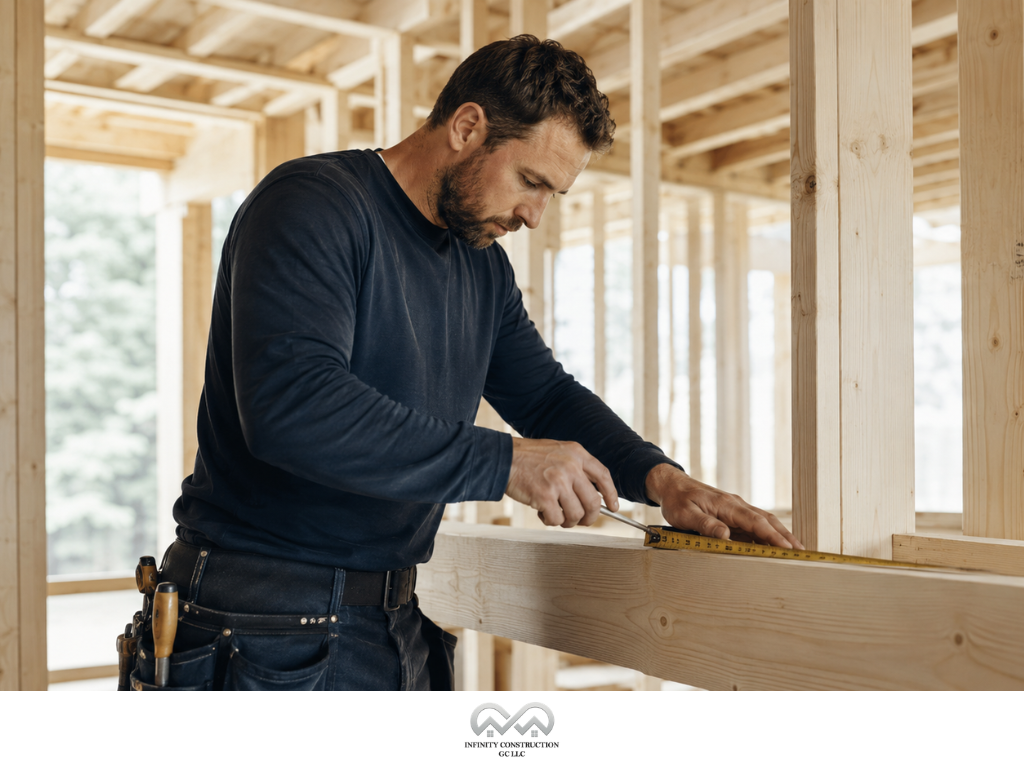
Carpentry is the skilled trade of cutting, shaping, and assembling wood and wood-based materials to build structures. Carpenters work across every phase of construction, from the initial structural wood framing of a home to the final decorative trim that defines a room’s character.
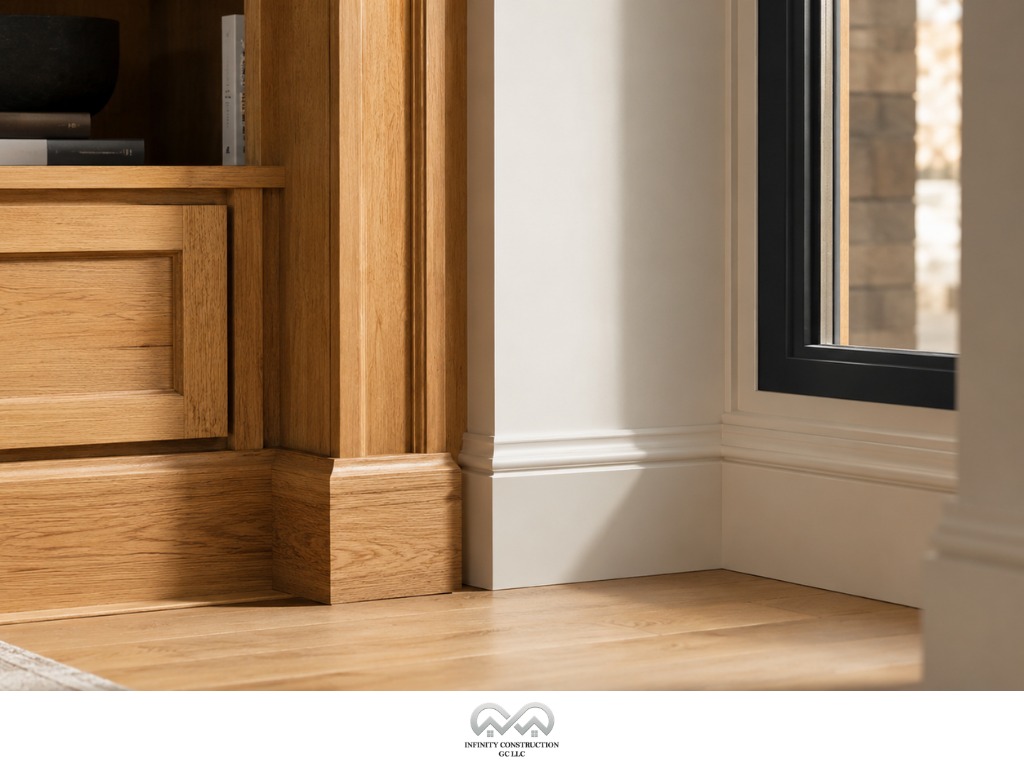
The trade breaks into two broad categories of carpentry: rough carpentry (structural work such as light-frame construction, sheathing, and subfloors) and finish carpentry (detail work such as crown molding, baseboards, built-in shelving, and custom cabinetry). Both demand precision, a strong grasp of building codes, and an eye for how materials behave over time.
Common carpentry projects
- Home framing – the structural skeleton of any wood-frame building
- Deck construction – outdoor platforms built with treated lumber or composite materials
- Trim and molding installation – the details that define interior style
- Custom built-ins – shelving, entertainment centers, and cabinetry
- Home additions – expanding existing structures with new framed spaces
What Is Masonry?
Building with brick, stone, and concrete
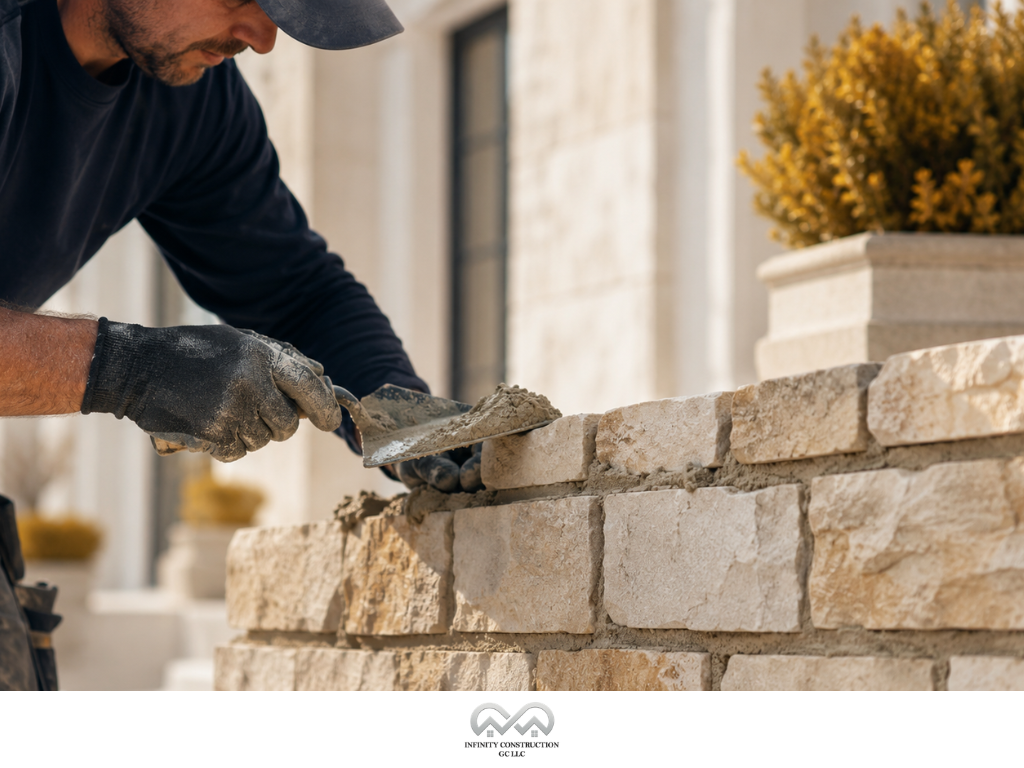
Masonry is the trade of constructing structures using unit materials such as brick, stone, or concrete block, bonded together with mortar or other agents. While carpentry builds up, masonry tends to anchor structures such as foundations, walls, retaining walls, and fireplaces.
Skilled masons work with natural stone, manufactured brick, concrete masonry units (CMUs), and poured concrete. The trade demands physical precision because mistakes in masonry are both expensive and structurally significant since every course of brick must be level and every joint properly tooled.
Common masonry projects
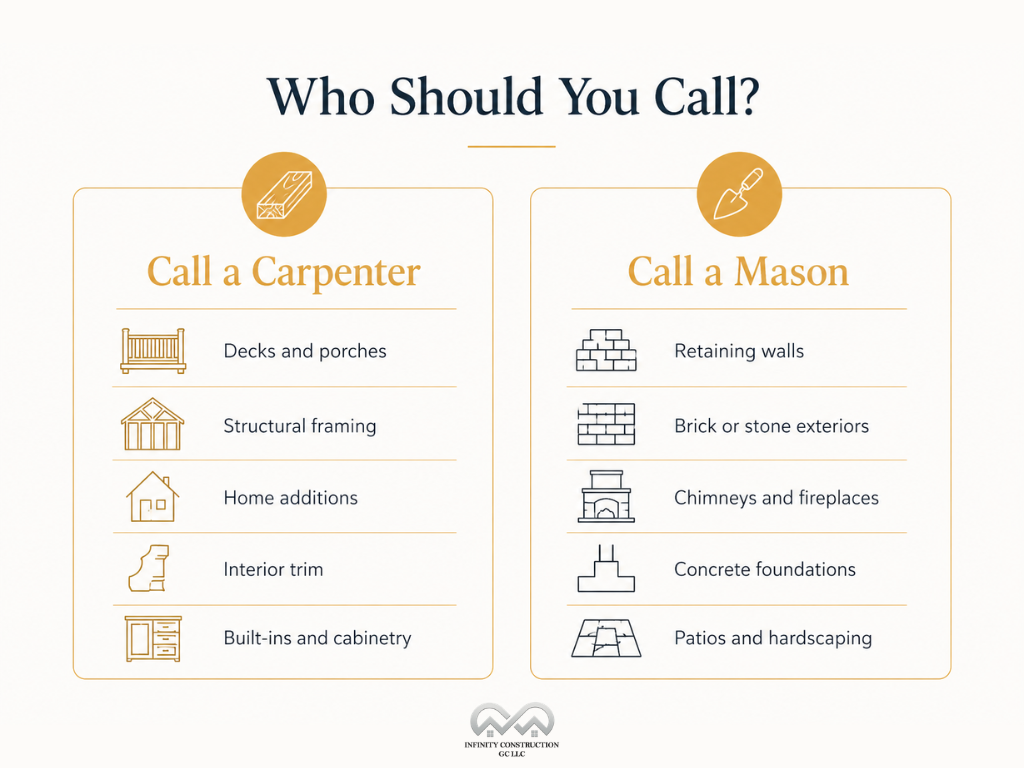
- Retaining walls – holding back soil and managing grade changes
- Brick facades – exterior cladding for curb appeal and weather resistance
- Stone patios – durable outdoor surfaces with natural texture
- Chimneys and fireplaces – fire-resistant structural elements
- Concrete block structures – foundations and load-bearing walls
Difference Between Masonry and Carpentry
Materials used
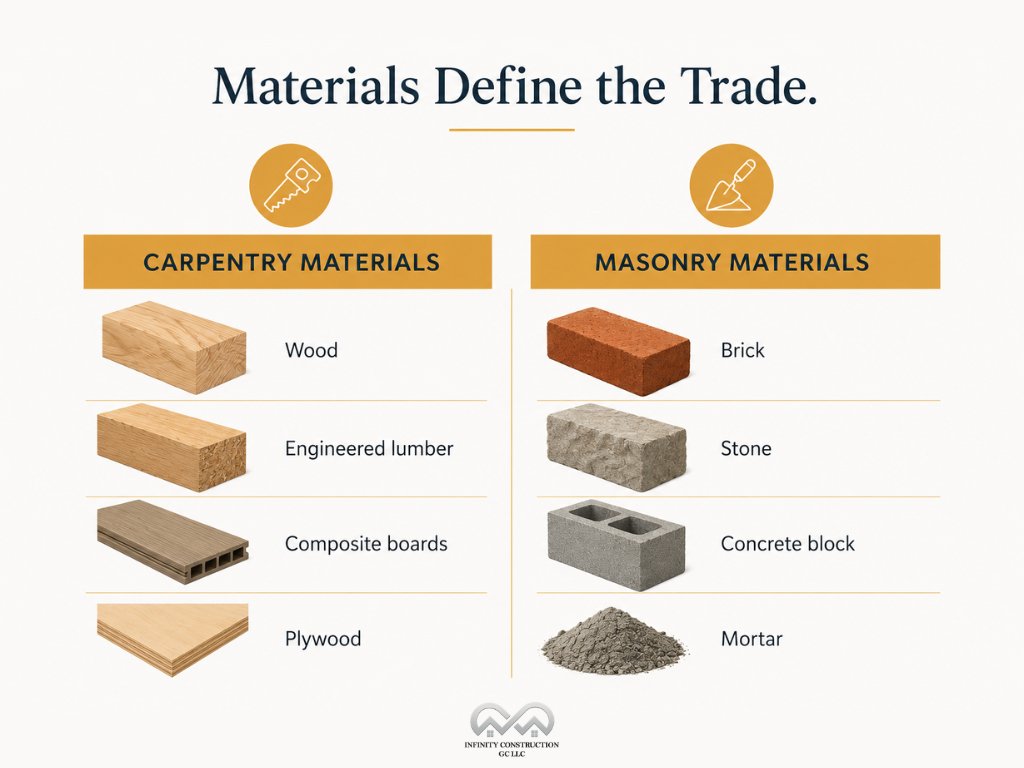
The most fundamental distinction is that carpenters work with wood while masons work with masonry units like brick, stone, and concrete. Wood is lighter, easier to modify, and renewable. Brick, stone, and concrete are heavier, more permanent, and naturally resistant to fire, moisture, and pests.
Construction methods
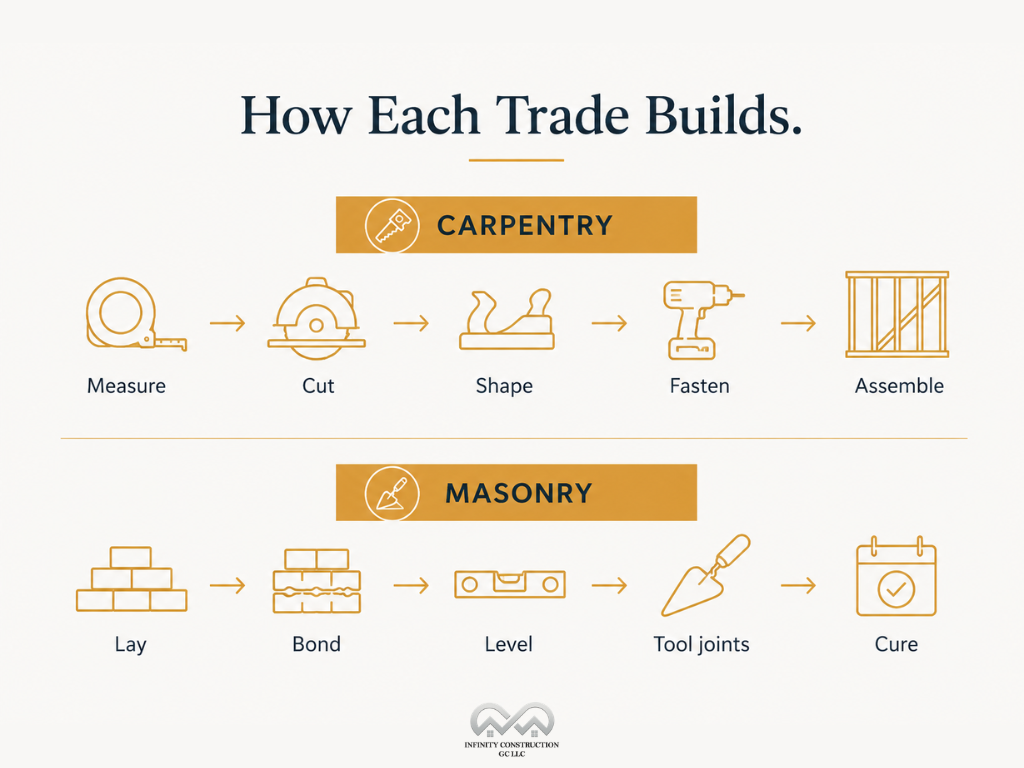
Carpenters cut, measure, and fasten as their workflow centers on precision assembly using saws, drills, and fasteners. Masons lay, bond, and set because their workflow centers on coursing materials with mortar and ensuring structural integrity through level, plumb, and proper curing.
Design flexibility
Carpentry wins for customization. With new home building trends constantly shifting toward open layouts and personalized spaces, wood’s adaptability becomes a real advantage. It’s easy to cut, shape, stain, or repaint, making it ideal for projects where design may evolve. Masonry offers a wide range of textures through material selection (limestone vs. granite vs. red brick), but once set, changes are costly.
Durability and longevity
Masonry structures routinely outlast the buildings around them. Brick walls from the 1800s still stand across American cities. Wood structures are durable with proper treatment, but they’re more vulnerable to moisture, insects, and fire without ongoing maintenance.
Maintenance requirements
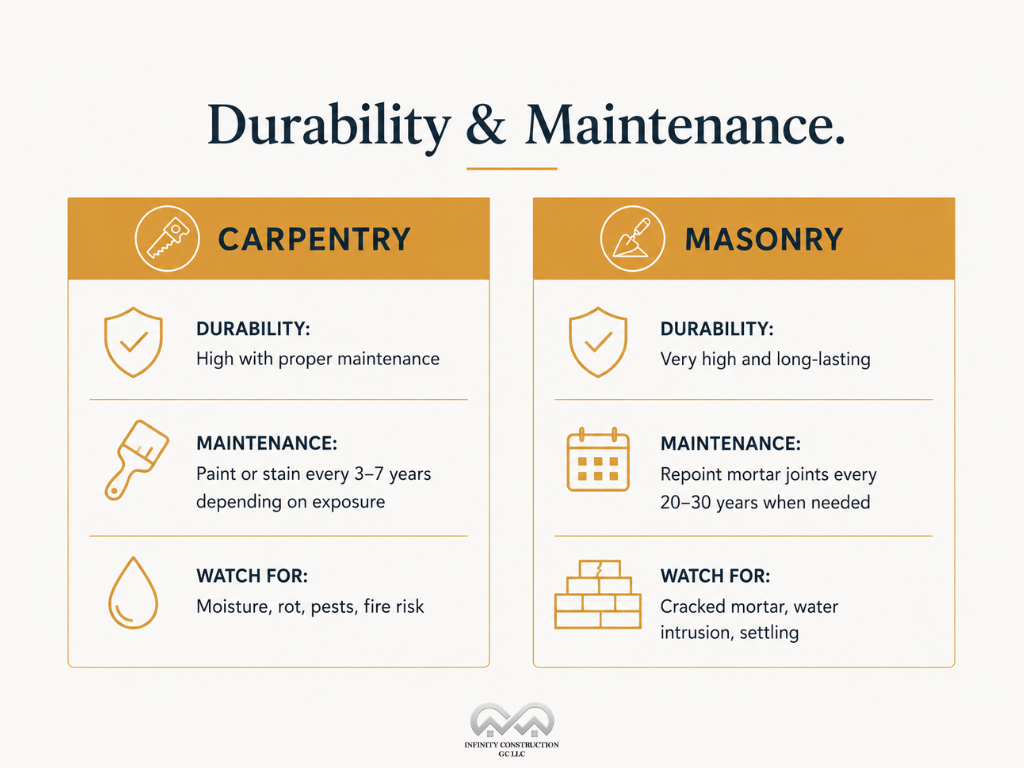
Masonry requires repointing of mortar joints every 20 to 30 years and occasional sealing of porous stones. Wood needs more frequent attention, including painting or staining every three to seven years, depending on exposure, plus periodic inspection for rot or pest damage.
Similarities Between Carpentry and Masonry
Both require skilled craftsmanship
Both trades demand years of hands-on training. Carpenters and masons alike rely on precise measurement, material knowledge, blueprint literacy, and adherence to building codes. Most professionals enter through apprenticeships lasting 3-4 years.
Both support structural integrity
Neither trade is decorative-only. Framing carries roof loads; foundations support everything above. Each trade contributes directly to a building’s structural performance and long-term safety.
Both can be functional and decorative
A stone fireplace surround is structural and a design centerpiece. A custom built-in bookcase is functional storage and finish carpentry that defines a room. The line between utility and aesthetics blurs in both trades.
Masonry vs Carpentry – How the Finished Results Differ
The look and feel of carpentry projects
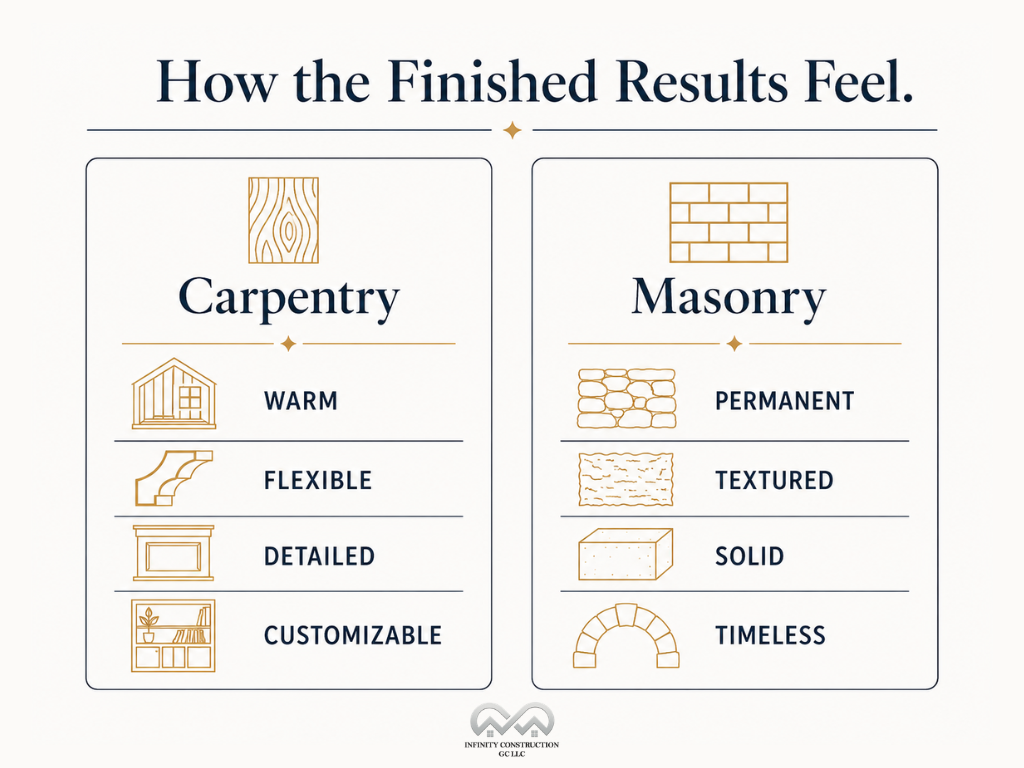
Carpentry brings warmth. Wood grain, natural variation, and the ability to be stained in hundreds of tones make carpenter-built elements feel organic and personal. Finish carpentry in particular, such as detailed trim work, coffered ceilings, and custom cabinetry, signals quality and craftsmanship instantly.
The look and feel of masonry projects
Masonry brings permanence and texture. A dry-stacked stone wall, a herringbone brick patio, or a hand-laid fieldstone chimney communicates solidity and timelessness in a way no other material matches.
Choosing the right material for your project
Neither trade is universally “better”. The right choice comes down to four factors: your project’s location and climate, its structural requirements, your design vision, and your long-term maintenance appetite.
How Carpenters and Masons Work Together
Foundations and framing
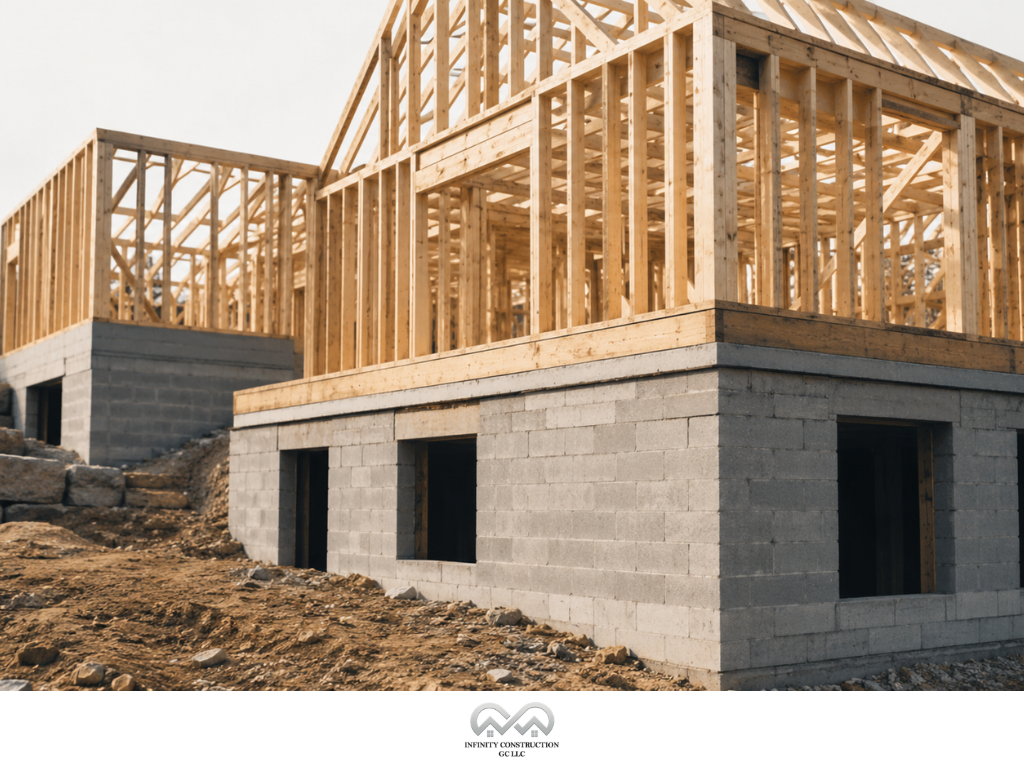
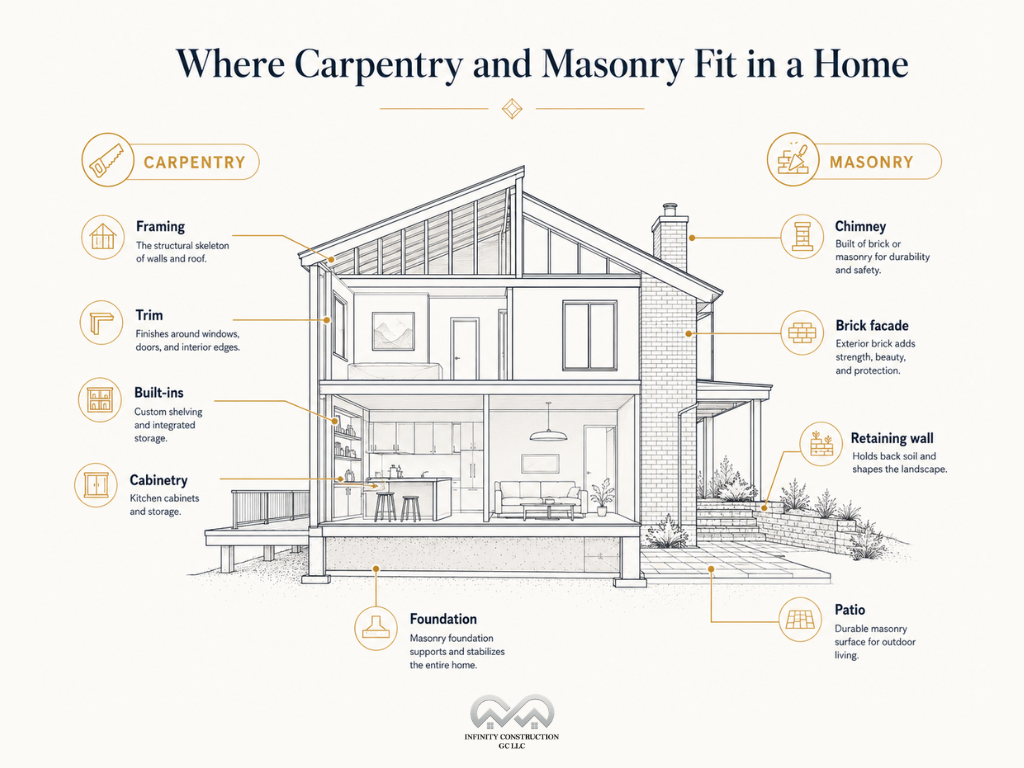
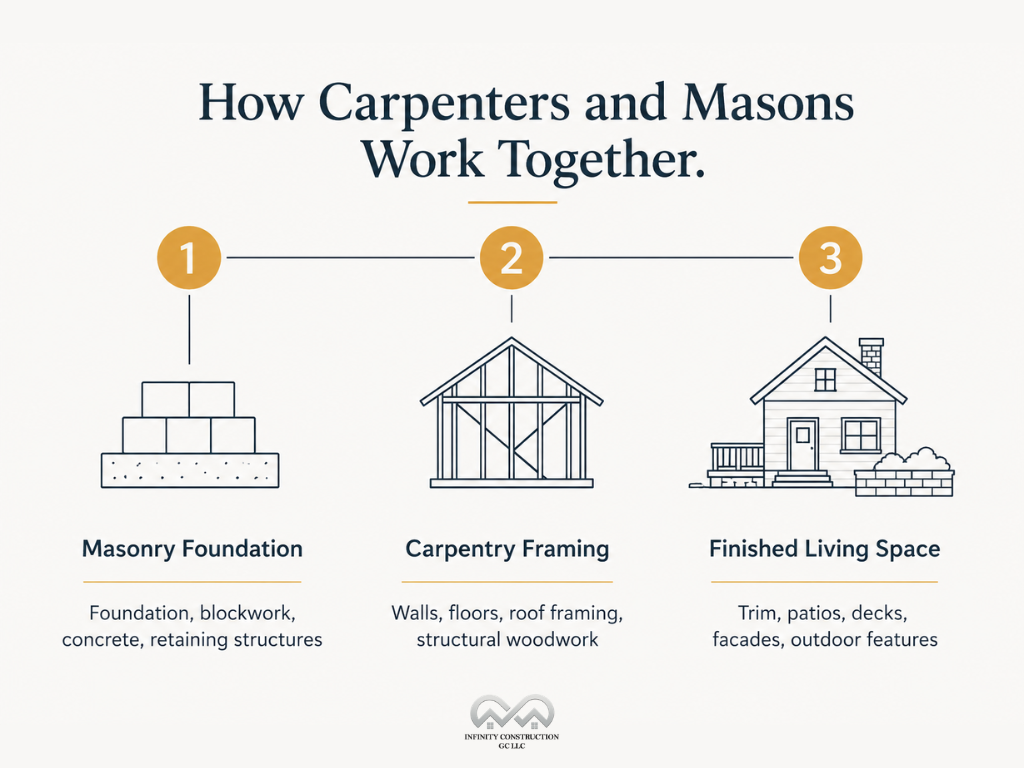
On virtually every new home, masons pour and lay the foundation while carpenters frame the structure above. The two trades hand off to each other seamlessly; masonry first, carpentry second.
Outdoor living spaces
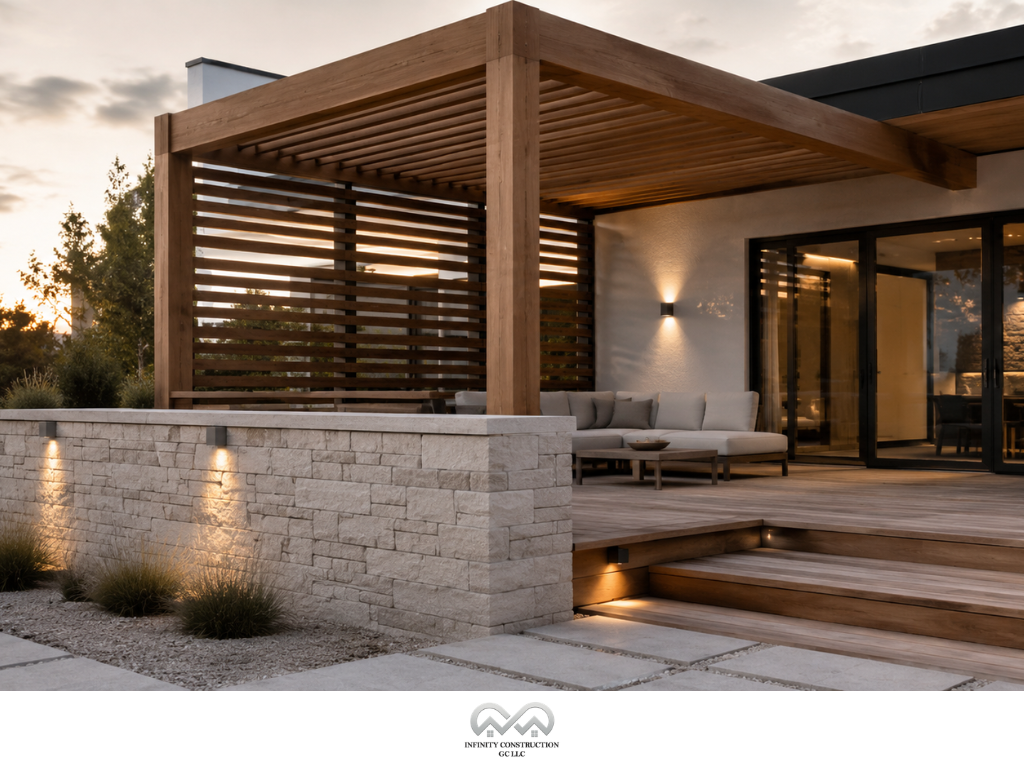
A well-designed outdoor living area almost always combines both – a mason-built stone patio or retaining wall paired with a carpenter-built pergola, deck, or privacy fence.
New home construction and renovations
Major residential projects like custom homes, additions, and whole-home renovations, require both trades working in coordination. The structural decisions made by each directly affect the other’s work.
Do You Need a Carpenter or a Mason?
Projects that typically require a carpenter
- Deck and porch construction
- Structural framing and additions
- Interior trim, millwork, and built-ins
- Custom cabinetry and shelving
Projects that typically require a mason
- Retaining walls and hardscaping
- Brick, block, or stone exterior work
- Chimney construction or repair
- Concrete foundations and flatwork
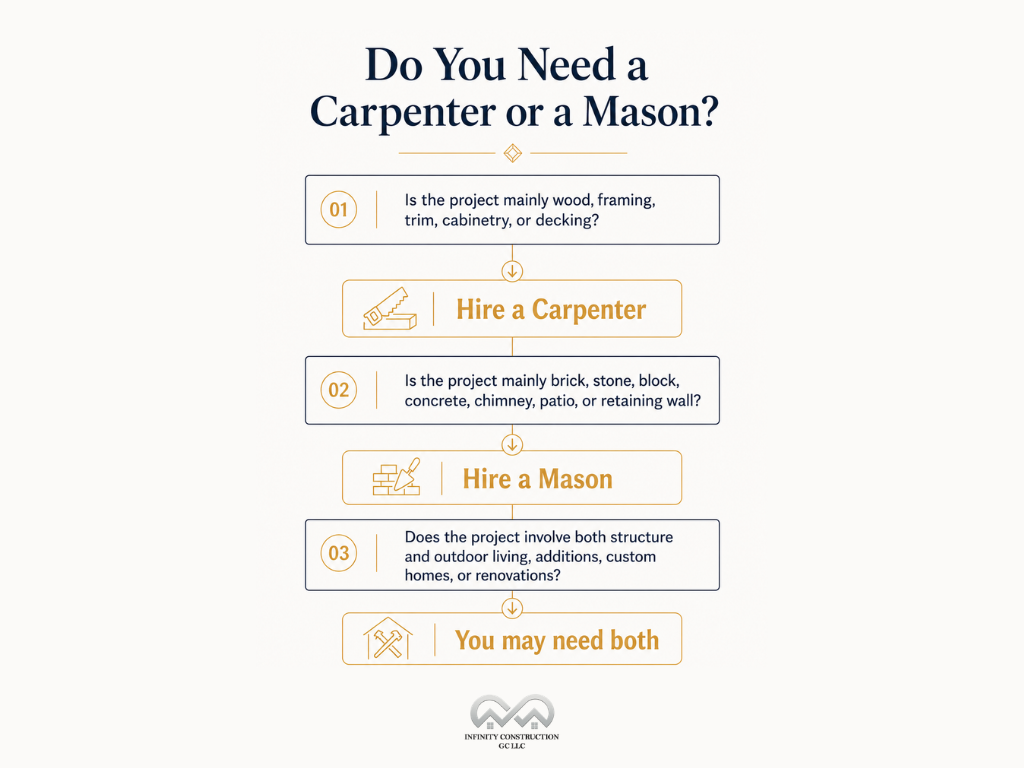
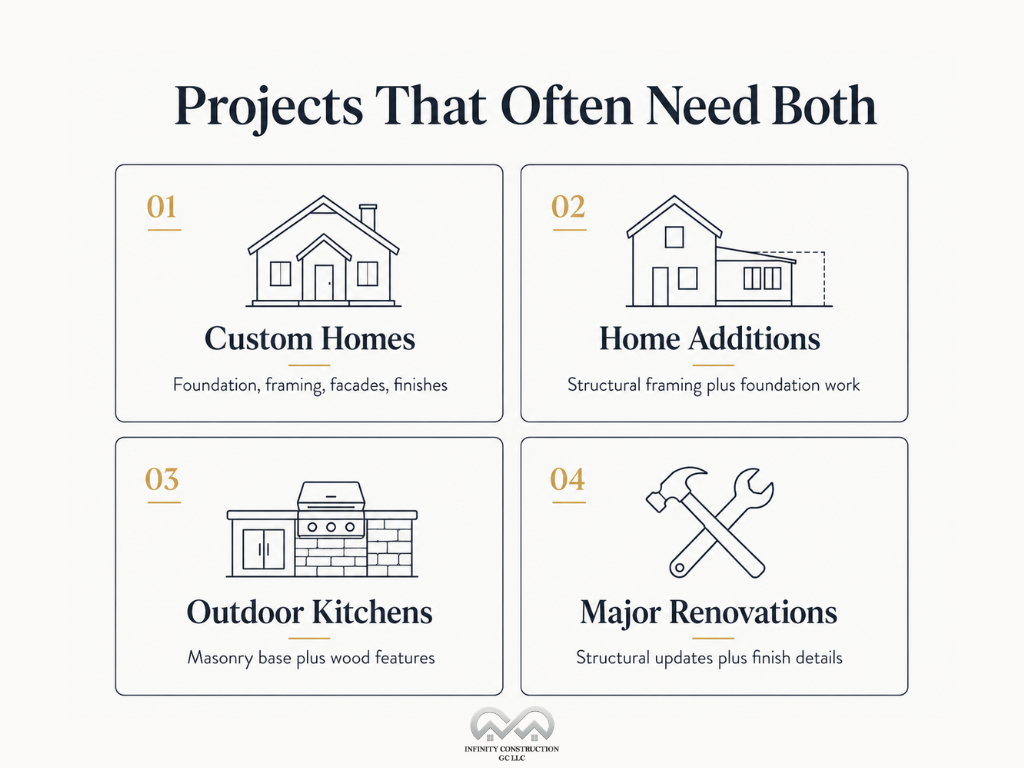
Projects that often require both
- Custom home construction
- Home additions with outdoor living elements
- Major kitchen or bathroom renovations with stonework
- Outdoor kitchens, fire pits, and entertainment areas
Conclusion
Ultimately, carpentry vs masonry isn’t a competition; it’s a collaboration. Each trade brings something the other can’t replace. Masonry lays the groundwork with strength and permanence. Carpentry builds on top of it with warmth, detail, and flexibility. Together, they shape the spaces where people actually live and work.
By understanding what each trade does best, you make smarter decisions from the start. Whether you’re building a custom home, adding an outdoor living space, or tackling a major renovation, the right tradespeople make all the difference. Know what each brings to the table, and your project will be better for it.