

Building a custom home is exciting, but it often leads to major money stress. Your success depends on your team, yet many people start without knowing who handles what. Misunderstanding these jobs causes big planning gaps, unbuildable plans, and massive budget problems before work even begins.
Mastering the architect vs builder dynamic is your best defense against these costly mistakes. The following sections will compare how these pros handle drawing the plans versus doing the actual construction work. This guide breaks down exactly what an architect does, what a builder does, where an engineer fits in, and, most importantly, who to talk to first based on your specific project.
Architect vs Builder
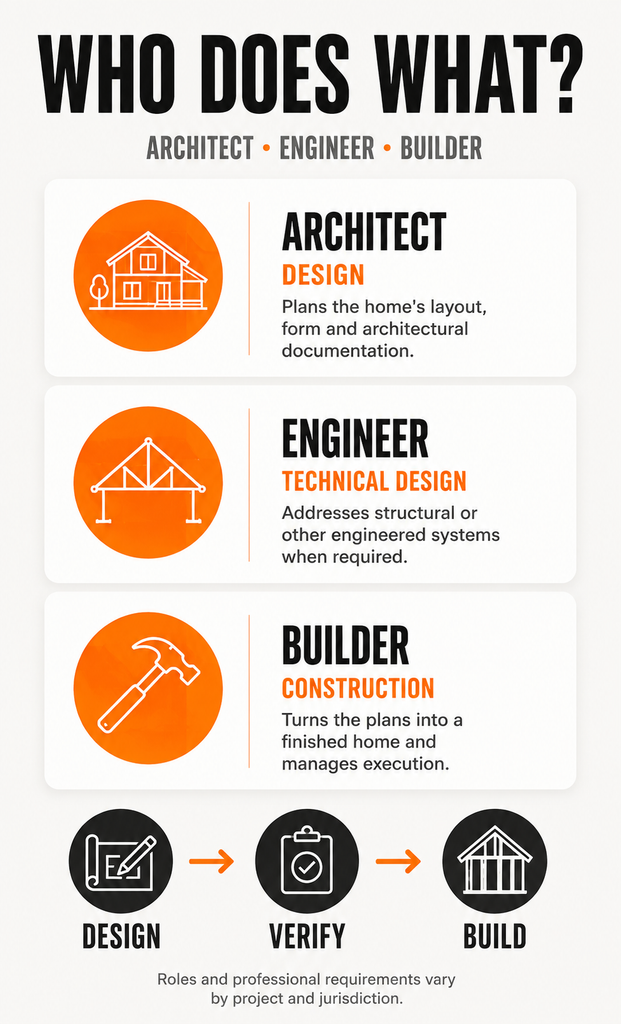
An architect is your design visionary. They focus on the big picture by translating your lifestyle needs into creative spatial layouts, aesthetic floor plans, and functional blueprints. They act as your creative guide, mapping out everything on paper to ensure your home looks and flows exactly how you imagine.
Once those plans are drawn, a builder steps in as your boots-on-the-ground executor to turn that vision into a physical reality. They manage the actual construction site, order raw materials, and hire trade subcontractors like plumbers and electricians. Consequently, while the architect focuses on what is visually possible, the builder focuses on what is physically and financially practical to construct.
What Does an Architect Do?
An architect is the professional responsible for turning an idea into a buildable design. Their work happens almost entirely before a shovel touches the ground, though many stay involved through construction to protect the design intent.
Core responsibilities include:
- Creating the design concept – Translating your lifestyle, site, and goals into an initial spatial layout
- Developing floor plans and elevations – Refining that concept into room-by-room, wall-by-wall detail
- Preparing construction drawings – The technical documentation a builder will actually price and build from
- Balancing layout, function, light, and style – Orienting rooms for natural light, planning traffic flow, and shaping the home’s aesthetic identity
- Meeting code requirements – Ensuring the design satisfies local building codes, zoning, and setback rules
- Coordinating with engineers and consultants – Looping in structural, mechanical, or civil expertise where the design demands it
An architect’s value is highest when a project is genuinely unique, such as a challenging lot or an unusual layout like multi-generational living or a steep grade. They are also essential when striking architectural distinction is simply the main point of your custom build.
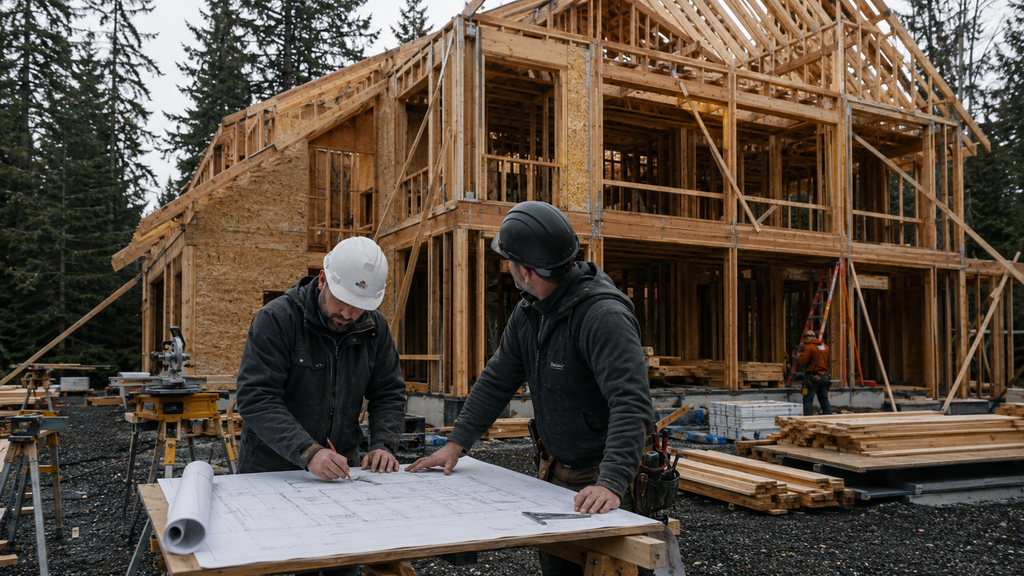
What Does a Builder Do?
Home builders are responsible for execution, converting drawings and specifications into a physical, code-compliant, livable home. Where the architect’s work is front-loaded, the builder’s work spans the entire construction timeline and beyond.
Core responsibilities include:
- Managing construction – Running the day-to-day site operation from groundbreaking to final walkthrough
- Scheduling subcontractors – Sequencing framers, electricians, plumbers, HVAC, and finish trades so work doesn’t stall or collide
- Ordering materials – Procuring everything from lumber to fixtures, often managing long lead times
- Coordinating inspections – Scheduling and passing the required municipal inspections at each construction stage
- Controlling quality – Catching and correcting workmanship issues before they’re buried behind drywall
- Managing budget and timeline – Tracking spend against the contract and keeping the project on schedule
- Solving buildability issues – Flagging and resolving conflicts between the design and real-world construction constraints
A good builder isn’t just executing someone else’s vision passively. They’re actively protecting your budget and timeline by catching problems the drawings alone can’t reveal.
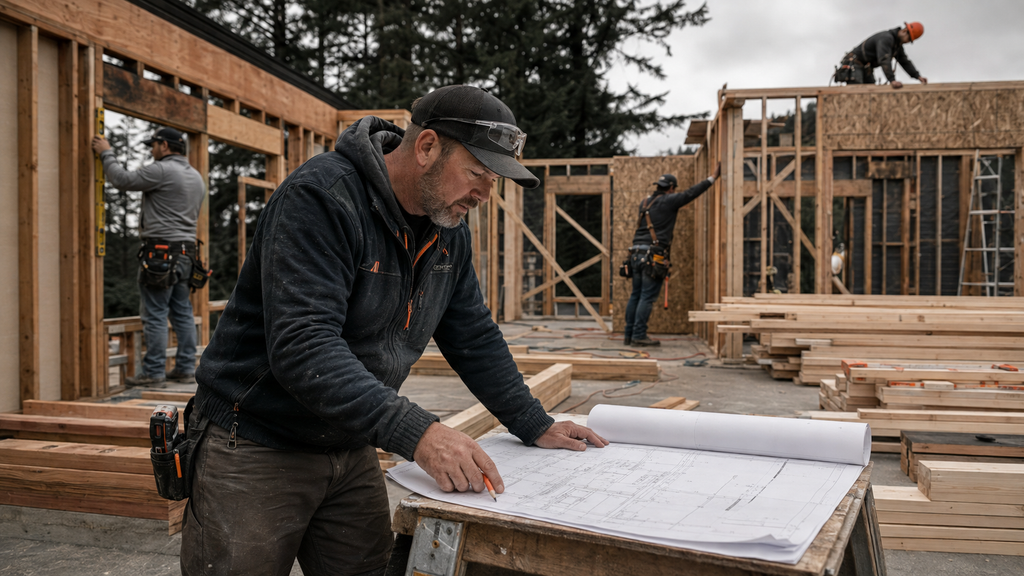
Architect vs Builder vs Engineer
The comparison most homeowners actually need isn’t just architect vs builder. It’s a three-way split, because engineers handle a distinct technical layer that neither architects nor builders are qualified to sign off on.
| Role | Main Responsibility | When They Matter Most |
| Architect | Designs the home and prepares plans | Early design, layout, style, permit drawings |
| Engineer | Verifies technical or structural requirements | Foundations, beams, drainage, loads, complex sites |
| Builder | Builds the home and manages construction | Preconstruction through final walkthrough |
Architects design how the home should be. Engineers confirm whether it can safely stand and function that way. Builders use a constructability review to help make sure it actually gets built that way, on budget, on schedule.
On straightforward projects, one engineer consultation may be all that’s needed. On complex sites, such as steep slopes, poor soil, large spans, flood zones, engineering input shapes the design from day one, not as an afterthought.
Who Should You Hire First?
Neither path is wrong, but the homeowners who report the smoothest builds are usually those who get both perspectives involved early, even informally, rather than treating design and construction as two separate phases.
When to hire an architect first
Hire an architect first if you want a highly custom design, prioritize style or layout over cost certainty, or have a site that requires a careful design response because of factors such as slopes, views, tight lots, or heritage constraints. An architect may also be the better starting point if you need complete architectural drawings before soliciting builder bids.
When to talk to a builder early
Talk to a builder early if you need realistic cost guidance before committing to a design, want to assess buildability before plans are finalized, or are comparing budgets across different design options. Early builder involvement can also reduce surprises and redesigns during construction, particularly if you’re considering a design-build model or builder-led preconstruction services.
Why Builders Should Be Involved Before Plans Are Final
Real-time cost control
Reviewing the design early allows a builder to provide realistic cost guidance and rough budget ranges so you can adjust the home’s size before it is too late. This early check avoids the stressful cycle of designing a house, discovering it is way over budget, and paying to redesign and re-price it.
Construction and site reality
Builders quickly spot design details that look great on paper but are physically impossible or wildly expensive to build. They also check site preparation and site access constraints early, ensuring heavy construction equipment and delivery materials can physically reach your specific lot.
Materials and scheduling
Early involvement lets the builder check if your chosen materials are in stock, backordered, or discontinued. They also flag long-lead items with extended manufacturing times, so you can order them months in advance and prevent project delays.
Smoother execution
Builders catch sequencing conflicts between trades, like plumbers and framers, while these mistakes are still cheap to fix on paper. Ultimately, pressure-testing the blueprints before signing a contract results in far fewer expensive mid-build change orders.
The budget data
Late builder involvement is the most preventable cause of custom home budget overruns. Factoring construction reality into early design decisions eliminates expensive surprises. In fact, industry data shows early builder collaboration keeps final costs within a tight 1.4% margin of the original estimate.
Common Mistakes Homeowners Make
- Hiring based only on price – The cheapest quote often means the least detailed scope, not the best value
- Getting plans designed without budget input – Leading to a design that has to be re-worked once real costs come in
- Assuming the builder and architect do the same job – They don’t, and gaps between their responsibilities are where problems fall through
- Waiting too long to involve the builder – Locking in a design before anyone has tested its buildability
- Not asking who manages permits, drawings, selections, and inspections – Leaving ownership of these tasks unclear until something is missed
- Making major changes after construction starts – The most expensive time in the entire project to change your mind
Final Takeaway
For a custom home, the best result comes from early teamwork between your professionals. The architect shapes the creative design, while the engineer checks all safety and technical rules. Meanwhile, the builder keeps the project buildable, watches the budget, and manages the construction timeline while handling the actual construction work.
Mastering the architect vs builder dynamic means treating these experts as partners working together at the same time. Avoid treating design and building as separate steps to clear one at a time. This joined approach is your best defense against blown budgets and timeline delays.