

Every custom home starts the same way, not with a foundation, but with land that isn’t ready for one yet.
Before a single footing gets poured, a raw lot has to be evaluated, cleared, graded, drained, and made accessible to crews and equipment. That work is site preparation, and how well it’s done quietly determines whether the rest of your build goes smoothly or turns into a string of change orders.
This guide covers what is site preparation in construction, what it includes, how long it takes, and why it deserves more attention than most homeowners give it before they break ground.
What Is Site Preparation in Construction?
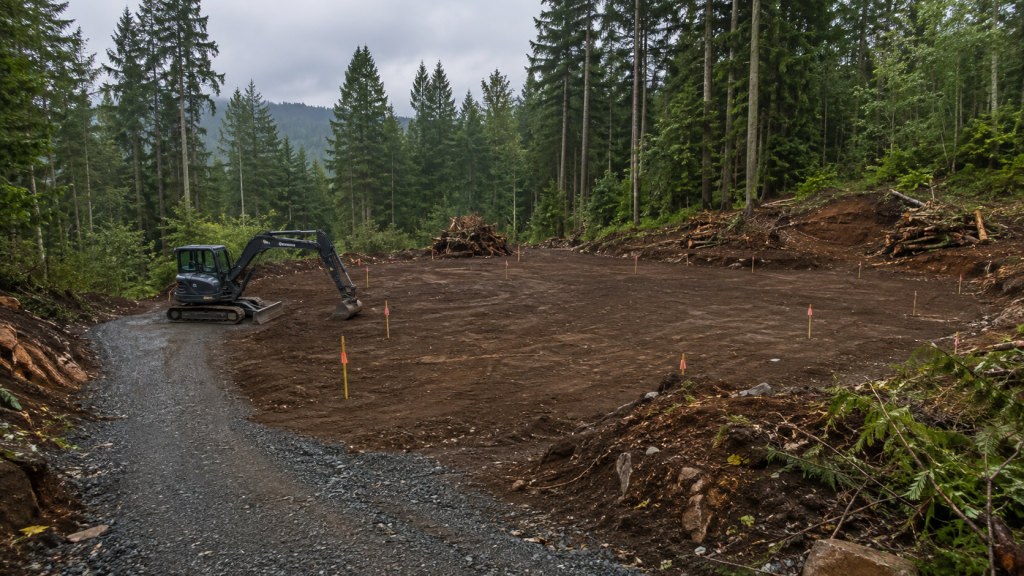
Site preparation is the work done to make land ready for construction before the foundation starts. It’s the process of turning a raw, uneven, wooded, or undeveloped lot into a build-ready site. One that can safely support a home, drain water away, and give crews the access they need.
For a custom home, site preparation is one part of the broader preconstruction process, where site conditions and project requirements are worked out before construction moves forward.. Depending on the property, it can involve clearing vegetation, grading and excavation, soil review and compaction, drainage and erosion control, and establishing utility and equipment access, all before anyone thinks about pouring concrete.
It’s easy to treat this phase as a formality. It isn’t. This is where a lot’s real conditions like soil, slope, drainage, and buried surprises get identified and addressed, or ignored at your own risk.
Why Site Preparation Matters Before Building a Custom Home
Before building a home, you need to understand that site preparation touches nearly every phase that follows it. Done right, the rest of the build has a stable, predictable foundation to work from. Done poorly, problems tend to surface later, when they’re far more expensive to fix.
Proper site prep directly affects foundation stability, drainage, access for crews and equipment, utility installation, inspection readiness, the construction schedule, and the home’s long-term durability.
When it’s rushed, the consequences rarely stay hidden for long. This includes standing water, soil movement, foundation cracking, erosion, mid-project delays, and unplanned excavation costs. All of them are cheaper to prevent up front than to fix later.
What Does Site Preparation Include?
Site preparation isn’t one task. It’s a sequence of steps, and which ones apply depends heavily on the lot itself. Here’s what the process typically covers, in order.
Site evaluation
The property is assessed, including topography, boundaries, existing structures or debris, and any underground utilities. Soil is typically tested here too, since its composition determines what kind of foundation the site can support.
Surveying and layout
A professional survey establishes exact boundaries and marks where structures, access points, and utilities will go – the reference point for everything downstream.
Clearing and tree removal
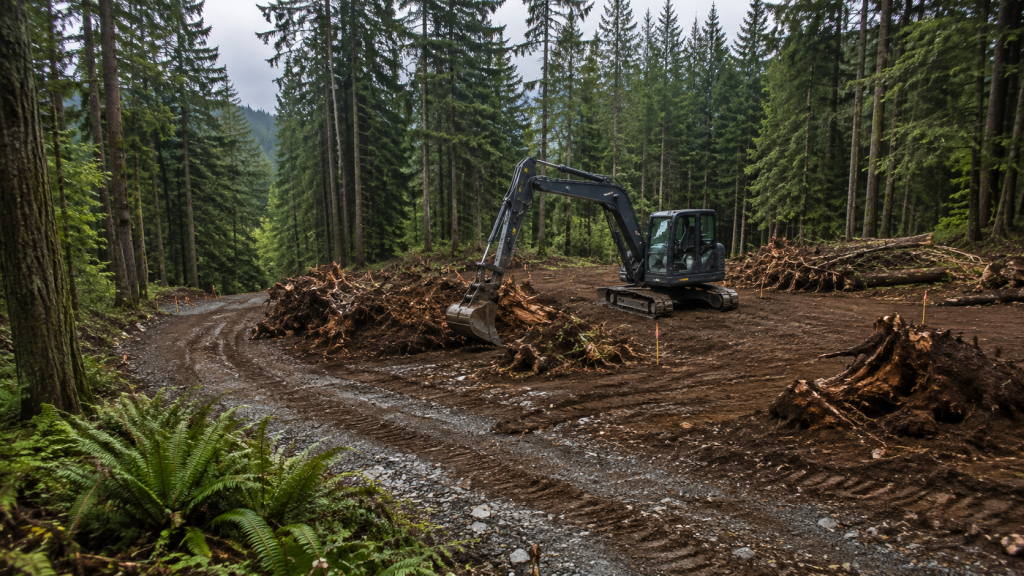
Trees, brush, stumps, and existing debris are removed to open up a workable building area. On wooded lots, this is often the most time-consuming single step.
Grading and excavation
The land is cut, filled, or leveled to create the elevation and slope the design calls for. Excavation digs out areas needed for foundations, basements, and utility trenches.
Drainage and erosion control
Drainage systems, silt fencing, and erosion controls keep water moving away from the site and prevent soil from washing out during and after construction. This step matters more in some regions than others.
Soil preparation and compaction
Once grading is complete, soil is compacted to create a stable base for the foundation. Skipping compaction is a common cause of later foundation settlement.
Utility access
Water, sewer, gas, and electrical service need a clear path to the home, involving trenching and rough-in work ahead of construction.
Driveway and equipment access
Heavy equipment and delivery vehicles need a way onto the site throughout the build. Establishing stable access early prevents delays later.
How Long Does Site Preparation Take?
In general, site preparation takes anywhere from a few days to several weeks, but larger, sloped, wooded, wet, or utility-challenged lots can take considerably longer.
The real timeline depends on lot size, tree cover, soil conditions, slope, drainage issues, weather, permit requirements, and how easily equipment and utilities can reach the site. Because these variables compound, the only honest way to estimate your own timeline is a direct site evaluation rather than a generic average.
Site Preparation in Western Washington
Site conditions aren’t universal, and Western Washington presents challenges that don’t show up the same way in drier or flatter regions. Lots here often need extra attention paid to rainfall and wet soil, engineered drainage paths, erosion control, slope stability, driveway access across uneven terrain, careful utility trenching, and foundation moisture protection before framing begins.
The goal isn’t just to prepare a site. It’s to protect the future home from water-related problems before they start. A dry, stable, accessible site makes every subsequent phase faster and more predictable.
What Can Delay Site Preparation?
Even well-planned site prep can hit obstacles like:
- Heavy or sustained rain
- Poor soil quality or steep slopes
- Drainage issues requiring a redesign
- Buried debris or old foundations
- Permit holds or unclear property lines
- Utility lines or tree removal restrictions
Most of these can’t be eliminated entirely, but a thorough site evaluation up front can catch several, like buried debris, unclear boundaries, and soil problems, before they become surprises that affect the overall construction timeline.
Site Preparation vs. Foundation Work
| Site Preparation | Foundation Work |
| Prepares the land | Builds the structural base |
| Clearing, grading, drainage, access | Footings, forms, concrete, waterproofing |
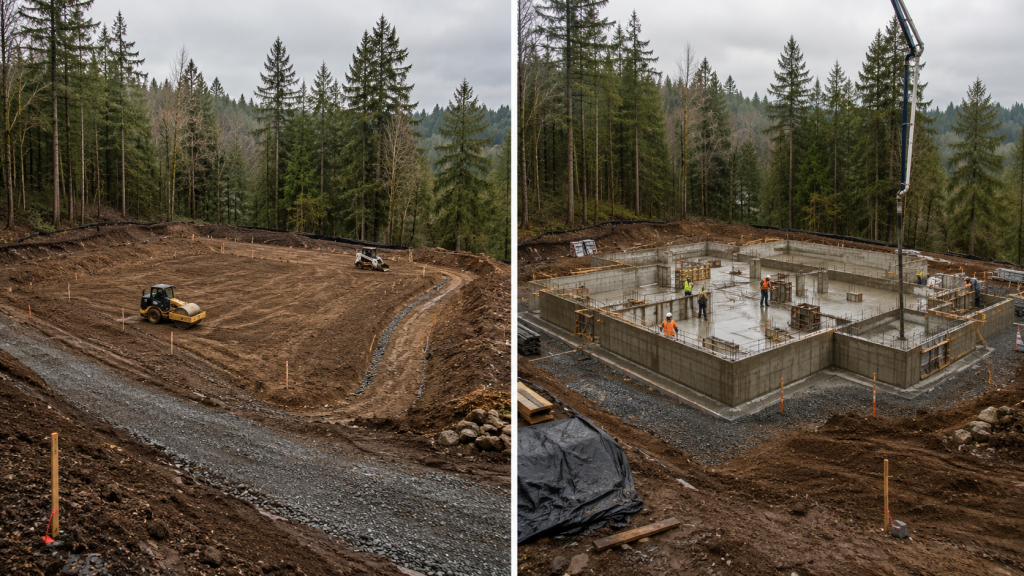
| Happens before foundation begins | Happens after the site is ready |
| Focuses on land conditions | Focuses on supporting the home |
In short, site preparation makes the ground ready to build on. Foundation work is what gets built on it.
Final Takeaway
What is site preparation in construction? It is the essential work that transforms raw land into a safe, stable base for a new home. Skipping or rushing this critical phase often leads to severe future problems, including cracked foundations, standing water, and expensive structural rework.
A thorough upfront site evaluation is vital for protecting your budget and project timeline, especially on challenging, sloped, or wet terrain. Investing in meticulous site preparation ensures a better, more secure construction process from the very start.