

If you visit almost any residential construction site in North America today, the structural method you are most likely seeing is platform framing. From single-family homes to multi-story townhouses, this construction approach has become the foundation of modern wood building.
Platform framing is a structural method in which a building is constructed one floor at a time, with each floor acting as a platform for the walls and structure above it. Instead of long wall studs running continuously from the foundation to the roof, platform and balloon framing differ because platform framing uses story-height walls that rest on the floor system below.
In simple terms, platform framing is a wood construction system where each floor level forms a structural platform that supports the walls of the next story.
This method became the industry standard because it offers a combination of advantages that builders value:
- strong and predictable structural stability
- faster and safer construction on job sites
- built-in fire blocking between floors
- compatibility with modern engineered wood products
Today, platform framing defines much of modern residential construction in North America. It is widely used in residential construction because it balances structural strength, cost efficiency, and construction speed.
What Is Platform Framing – Platform Framing Definition
A clear platform framing definition begins with understanding how the structure is assembled.
Platform framing is a wood framing method where each story of a building is constructed as a separate level, and the floor system of that level serves as a structural platform for the walls above. The walls do not extend through multiple floors. Instead, they are framed individually for each story.
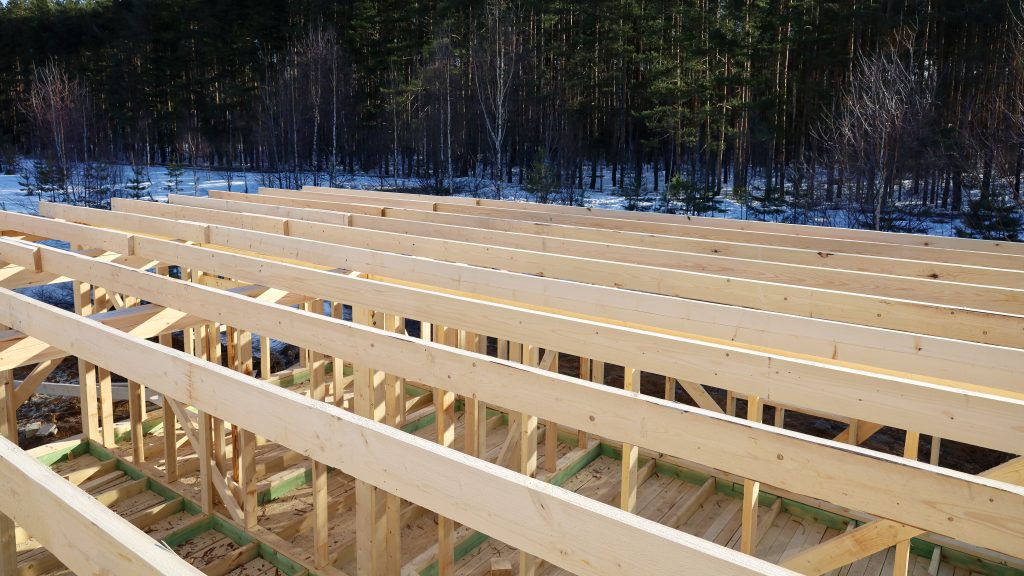
In practice, the construction process follows a repeating structural sequence. Builders begin by constructing a floor system on top of the foundation. Once the floor is sheathed with structural panels such as plywood or oriented strand board, it becomes a rigid platform. Wall sections are then assembled on top of that platform and raised into place.
This process continues upward as the structure grows. After the walls of the first story are completed, another floor system is built on top of those walls, creating the platform for the second story.
The result is a stacked structural system where loads move downward through multiple layers of framing:
Roof → top plates → studs → bottom plates → floor system → foundation
Because each level is supported by a complete floor structure, platform framing allows builders to maintain structural alignment while working from stable surfaces during construction.
For a broader understanding of framing systems used in residential construction, see our related guide on Types of Wood Framing.
How Platform Framing Construction Works (Step-by-Step)
To understand platform framing construction, it helps to look at how a building is assembled from the ground up. The system works through a sequence of structural stages that repeat for each story of the building.
1. Foundation and Sill Plate
Every platform-framed structure begins with a foundation, typically made from poured concrete or concrete block. The foundation supports the entire weight of the building and transfers loads safely into the ground.
Once the concrete foundation cures, the first structural framing element is installed: the sill plate.
The sill plate is the first major connection point in the wood framing system, sitting directly on the foundation wall. It forms the base of the wood framing system and anchors the structure to the foundation. Builders secure sill plates using anchor bolts embedded in the concrete.
Several details are important at this stage:
- Pressure-treated lumber is typically used for sill plates to resist moisture and decay.
- A gasket or membrane is often installed between the concrete and wood to reduce air leakage and moisture transfer.
- Anchor bolts help prevent the structure from shifting during wind or seismic events.
At this point, the building’s vertical load path begins.
2. First Floor Framing
After the sill plates are secured, builders construct the first floor framing system.
This system typically consists of:
- floor joists (dimensional lumber or engineered I-joists)
- rim boards or rim joists along the perimeter
- blocking or bridging to stabilize joists
- structural subfloor panels
The joists span across the foundation walls and support the subfloor sheathing. Once the subfloor panels are installed and properly fastened, they create a strong and rigid deck.
This deck becomes the first structural platform in the building.
Beyond supporting loads, the floor sheathing acts as a horizontal diaphragm, which helps resist lateral forces such as wind or seismic movement.
3. Wall Framing on the Platform
With the floor platform complete, builders can begin framing the walls.
Wall sections are typically assembled horizontally on the subfloor before being raised into place. This approach allows builders to work efficiently while maintaining precise alignment of structural components.
Typical wall framing components include:
- a bottom plate attached to the subfloor
- vertical studs spaced at 16 or 24 inches on center
- headers above doors and windows to support loads
- double top plates that tie intersecting walls together
- structural wall sheathing
After the wall sections are framed, they are lifted upright and secured to the floor platform. The double top plate distributes loads across studs and connects walls together for structural stability.
This stage establishes the primary vertical support system for the building.
4. Second Floor Construction
Once the first-floor walls are complete, the process repeats.
Builders install a second floor framing system on top of the first-story walls. This system includes floor joists, rim boards, blocking, and subfloor sheathing, just like the first floor.
The new floor becomes another structural platform, and the walls for the next story are built on top of it.
This stacking process continues upward, creating a structure made of layered platforms. Each floor contributes to the overall strength and stability of the building.
Platform Framing Diagram (Visual Breakdown)
A platform framing diagram helps illustrate how the structural components of a building are layered together.
A typical diagram shows the following elements:
- concrete foundation
- sill plate
- floor joists
- subfloor platform
- stud walls
- double top plates
- additional floor platforms stacked above
Many diagrams also include arrows showing the load path, which indicates how gravity loads move downward through the structure until they reach the foundation.
These visual representations make it easier to understand how each component contributes to the building’s structural system.
Platform Framing Details That Affect Structural Performance
While platform framing appears straightforward, several structural details determine how well a building performs over time.
Load Path
The load path is one of the most important concepts in structural design. It describes how weight moves through the structure.
In a platform-framed building, loads follow a vertical sequence:
Roof loads transfer into the top plates of the walls.
The loads then move through wall studs into the bottom plates.
From there, the loads are distributed into the floor framing system and ultimately into the foundation.
Maintaining a continuous load path ensures that no structural element is overloaded.
Floor Diaphragm Action
The subfloor panels installed over floor joists perform a critical structural function.
When nailed correctly, these panels create a floor diaphragm that adds rigidity to the structure. The diaphragm helps prevent racking and distributes lateral loads across the building.
Without this structural sheathing, the building would be far more vulnerable to movement caused by wind or earthquakes.
Fire Blocking
One of the key advantages of platform framing is its contribution to fire safety.
Because each floor interrupts the vertical wall cavity, the structure naturally includes fire blocking. This helps slow the upward spread of flames and smoke within the walls.
This characteristic played a major role in the widespread adoption of platform framing in modern building codes.
Vertical Shrinkage
Wood naturally shrinks as it dries and adjusts to its environment. In platform framing, horizontal components such as floor joists and plates can experience small amounts of shrinkage.
In most residential structures, this movement is minor and rarely causes structural issues. However, in taller wood buildings engineers account for cumulative shrinkage when designing wall systems and finishes.
Shear Walls and Seismic Design
In earthquake-prone areas, walls must resist horizontal forces generated by seismic activity.
Certain wall sections are designed as shear walls, which use structural sheathing and specific nailing patterns to transfer lateral loads into the foundation.
These requirements are defined by building codes such as the International Code Council, which publishes the International Residential Code used across much of the United States.
Why Platform Framing Became the Modern Standard
Platform framing did not become the dominant construction method by accident. Over time, builders recognized that it offered several clear advantages compared with earlier framing systems.
Some of the reasons it became the standard include:
- Standard lumber lengths make materials easier to source and handle.
- Faster construction allows builders to frame structures efficiently.
- Safer job sites because workers build walls on stable platforms rather than scaffolding.
- Improved fire safety due to built-in floor fire blocking.
- Compatibility with engineered wood products such as LVL beams and I-joists.
Because of these benefits, platform framing is now used in the vast majority of residential buildings in North America.
Common Mistakes in Platform Framing
Although the method is widely used, errors during construction can weaken the structural system.
Some of the most common framing mistakes include:
- Improper installation of rim boards or rim joists
- Misalignment of studs between floors
- Incorrect nailing patterns for structural sheathing
- Weak ledger connections for decks
- Inadequate shear wall bracing
Proper inspection and adherence to building codes help ensure that platform-framed structures perform as intended.
Platform Framing in the Pacific Northwest / Washington
Construction conditions vary across regions, and the Pacific Northwest presents several unique challenges for builders.
One major concern is moisture management. Frequent rainfall means framing materials must often be protected during construction to prevent water damage.
Another factor is seismic design. Washington State building codes require structures to include adequate shear walls and hold-down hardware to resist earthquake forces.
Additional regional considerations include:
- higher wind loads in coastal areas
- increased use of engineered lumber products
- roof framing designed to handle snow loads in mountainous regions
These factors influence how platform framing is detailed and constructed in the region.
When Platform Framing Is Not Enough
While platform framing works well for most residential buildings, some structures require different framing systems.
Examples include:
- very tall buildings where steel framing is more practical
- heavy timber construction designed for large open spans
- post-frame structures used for agricultural buildings
Each structural system is chosen based on the building’s size, purpose, and structural requirements.
Final Summary
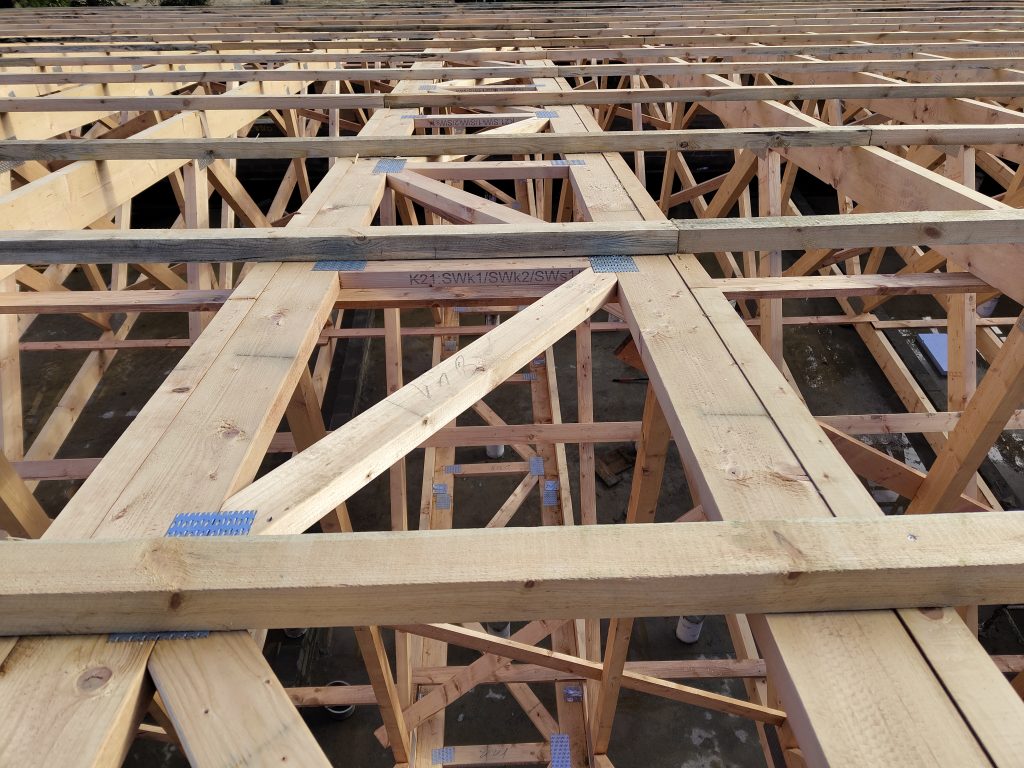
Platform framing is more than simply building a house one floor at a time. It is a carefully designed structural system that organizes a building into stacked platforms, allowing loads to move safely through the structure.
This method has become the backbone of modern residential construction because it combines efficiency with structural reliability.
By using standardized lumber, engineered wood products, and well-defined load paths, platform framing provides builders with a system that is practical, safe, and compatible with modern building codes.
Understanding how platform framing works helps homeowners, contractors, and developers better appreciate the structural systems that support the buildings we live and work in every day.
If you found this guide useful, consider sharing it or exploring our related resources on residential framing systems.