

Brand-new homes are rarely perfect. Despite official permits and builder warranties, minor oversights and major structural issues frequently slip through the cracks. Tight construction schedules and dozens of different subcontractors mean that mistakes are simply bound to happen.
The real question isn’t whether to inspect your build, but when to schedule home inspection for new construction so you catch issues while they are still cheap and easy to fix. This guide breaks down every critical checkpoint in order, outlining exactly when to call an inspector and what they will evaluate.
When to Schedule Home Inspection for New Construction
To protect your investment, schedule a new construction home inspection at four critical milestones: pre-pour, pre-drywall, final walkthrough, and the 11-month mark.
First, the pre-pour inspection evaluates foundation footings and under-slab plumbing before concrete permanently buries them. Once the structure is up, the pre-drywall inspection checks framing, electrical routes, and HVAC lines while the wall cavities remain open and accessible. The third milestone occurs just before closing, using a final walkthrough to test all completed mechanical systems, appliances, and cosmetic finishes.
Finally, the 11-month warranty inspection takes place right before your one-year builder coverage expires. This delayed check catches structural settling, drywall cracks, and hidden leaks that only surface after a full cycle of seasonal weather shifts. Missing any of these specific checkpoints shifts the financial burden of builder mistakes directly to you, making precise timing essential to fix defects while the builder is still legally obligated to pay.
Why New Construction Homes Still Need Inspections
It’s tempting to assume that a brand-new home, built to current code and signed off by the city, doesn’t need an independent inspection. Three things make that assumption risky:
New doesn’t mean defect-free
Framing errors, misrouted wiring, and poorly sealed HVAC ductwork are all things a crew can miss under deadline pressure. These mistakes rarely announce themselves until a wall is opened up or a system fails.
Code inspections aren’t the same as private inspections
A municipal inspector confirms that the home meets the minimum code requirements. They aren’t evaluating workmanship, checking whether a duct run was sized correctly for airflow, or testing whether every outlet actually works. A private inspector works for you, not the permitting office.
Subcontractor handoffs create gaps
A new build typically involves separate crews for framing, plumbing, electrical, HVAC, and finish work. When five different trades touch a house at different times, small miscommunications are common and tend to hide behind drywall.
Scheduling inspections at the right points in the build turns those hidden risks into a documented repair list your builder can act on before the home becomes your legal and financial responsibility.
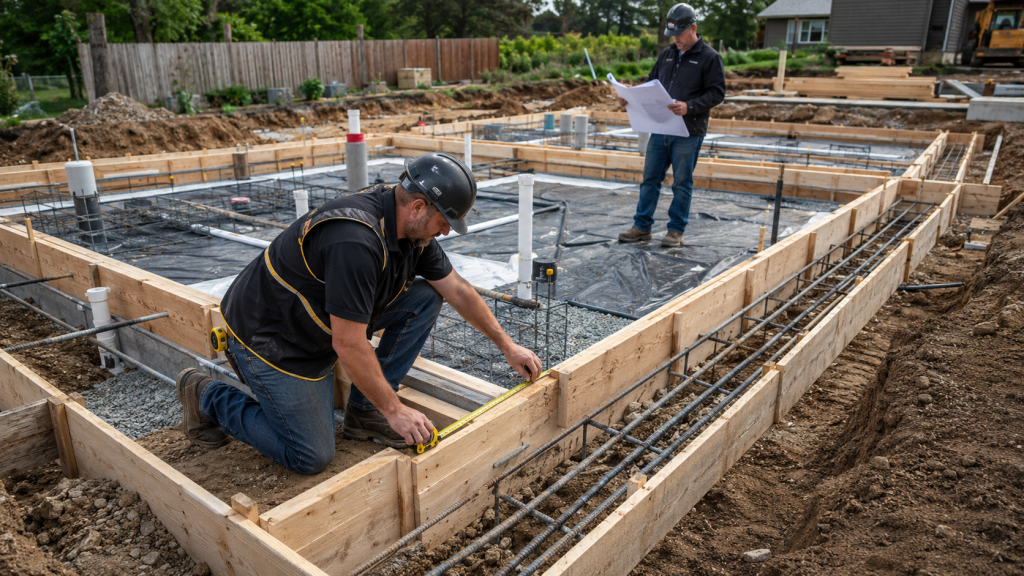
New Home Construction Phase Inspections
As mentioned above, there are four checkpoints where an inspection delivers real value. Missing any one of them means losing your only window to catch that phase’s defects while they’re still visible and inexpensive to fix.
Pre-pour (foundation) inspection
Pre-pour inspection is the most commonly skipped inspection, and the one with the least room for a do-over. Once concrete goes down, everything underneath it is sealed for the life of the house. A grading mistake or improperly spaced rebar found at this stage costs an hour of rework. Found five years later as a foundation crack, it costs thousands.
What it checks: Site preparation and soil compaction, footing trench depth and width, rebar placement and spacing, plumbing sleeves and pipe casings, drainage paths and grading, and moisture/vapor barriers.
Best timing: After the forms and reinforcement are set, but before concrete is poured.
Pre-drywall inspection
A pre-drywall inspection is widely considered the single most valuable inspection in the entire process, because it’s the last time these systems are visible before they’re sealed behind walls for good. A misrouted wire, a plumbing line pitched the wrong direction, or a gap in fire blocking is a quick fix here, and an expensive, disruptive one to correct later, if it’s ever caught at all.
What it checks: Framing accuracy and lumber condition, roof structure, plumbing and electrical rough-ins, HVAC ductwork, fire blocking, structural connectors and fasteners, and window and door flashing.
Best timing: After all rough-in work is complete, but before insulation and drywall go up.
Final / pre-closing inspection
Pre-closing inspection functions like a standard resale home inspection, testing systems the way you’ll actually use them day to day. Scheduling it with enough lead time matters because it gives you room to get the report, share it with your builder, and confirm repairs are actually completed before you sign anything. A final inspection scheduled 24 hours before closing leaves no time to negotiate or verify fixes.
What it checks: HVAC performance; plumbing pressure and drainage; every electrical outlet and fixture; appliances; roofing and exterior components; grading and drainage; doors; windows; stairs and railings; interior finishes; and safety devices like smoke and CO detectors.
Best timing: After construction is substantially complete, ideally one to two weeks before your closing date, not the day before.
11-month warranty inspection
Some defects simply don’t exist at closing yet. Foundations settle, materials expand and contract through a full summer and winter, and systems reveal weaknesses only after sustained use. Scheduling this inspection with a buffer before the warranty deadline means any issue found will still qualify for a free repair, rather than coming out of your pocket the following year.
What it checks: Settling cracks, new leaks, drainage or grading changes, HVAC or plumbing issues that surface with use, doors and windows that no longer align, and finish defects that only appear after months of occupancy and a full seasonal cycle.
Best timing: Around month 10 or 11 of your builder’s one-year warranty, before that coverage expires.
The rule that ties all four inspection phases together is to inspect major work before it gets covered up and before the builder’s obligation to fix it expires.
New Construction Home Inspection Checklist
Use this as a quick-reference checklist across all four phases:
- Foundation and structural framing
- Roof structure and roofing materials
- Windows and doors (installation and flashing)
- Exterior siding and weather barriers
- Plumbing rough-ins and fixtures
- Electrical rough-ins, outlets, and panel
- HVAC system and ductwork
- Insulation and attic ventilation
- Drainage and site grading
- Stairs and railings
- Interior finishes and trim
- Appliances and fixtures
- Safety devices (smoke/CO detectors)
- Punch-list items and prior repair verification
Should You Hire a Home Inspector for New Construction?
Yes. The reasoning comes down to who each party actually represents in the building process.
Who is looking out for whom?
- Municipal/code inspectors – Confirm the home meets baseline building codes; they do not evaluate workmanship quality or long-term system performance.
- The builder’s internal quality check – Confirms the home meets the company’s own standards; this is useful but not independent.
- A third-party home inspector – Works exclusively for you, the homeowner; they have no incentive to overlook anything.
- The final walkthrough with your builder – Typically focuses on visible, cosmetic punch-list items; it is not a technical evaluation of systems and structure.
How to coordinate with your builder
If you are planning phase inspections, loop your builder in early. Most reputable builders will accommodate a third-party inspector without pushback. In fact, many welcome the extra set of eyes. It gives them a chance to fix issues while the crew is still on-site rather than after a complaint call.
If a builder resists access for outside inspections entirely, treat that as a major red flag. Use it as a reason for a direct conversation before you proceed.
Code Inspection vs. Third-Party Inspection
| Inspection Type | Main Purpose |
| Municipal/code inspection | Confirms minimum code compliance |
| Builder quality check | Confirms the builder’s internal standards |
| Third-party home inspection | Independent review, working for the homeowner |
| Final walkthrough | Documents visible, cosmetic punch-list items |
How a Quality Builder Handles Inspection Checkpoints
A builder confident in their work treats each phase inspection as a scheduling item, not an inconvenience. That typically looks like:
- Building inspection windows directly into the construction timeline, rather than treating them as delays to work around
- Giving you or your inspector advance notice before each phase is about to be sealed up (pour date, drywall date)
- Responding to a documented repair list promptly, while the relevant crew is still active on-site
- Treating an independent inspection as a second layer of quality control, not a challenge to their credibility
If a builder pushes back hard on any of this, it’s a signal worth taking seriously. Reputable builders generally see phase inspections as protecting their reputation as much as your investment.
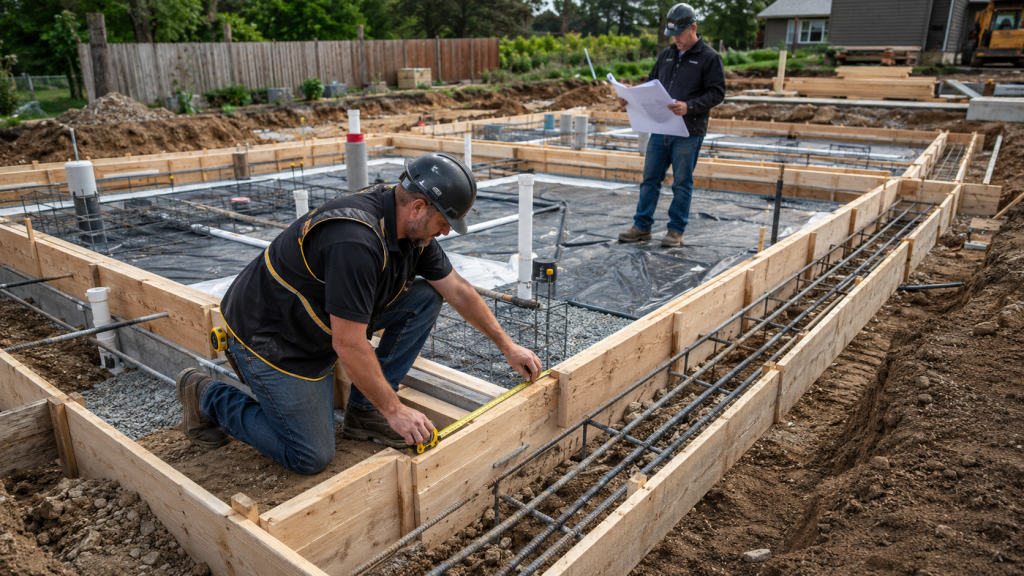
Final Takeaway
Understanding when to schedule home inspection for new construction is simple in theory, but easily missed in practice. The golden rule is to inspect major work before it gets covered up and before the property officially becomes your responsibility. This strategy breaks down into four essential checkpoints: pre-pour, pre-drywall, final walkthrough, and the 11-month warranty inspection. Each milestone catches a specific category of issue while it is still visible, documented, and entirely the builder’s problem to fix.
Skipping any of these steps will not save you money. It merely delays the discovery of costly defects until they are hidden behind walls, more expensive to repair, and much harder to hold anyone accountable for.
Frequently Asked Questions
When should I schedule a home inspection for new construction?
Schedule inspections before foundation work is covered by concrete, before drywall goes up, before closing, and again around month 10-11, before your builder’s warranty expires.
What is a pre-drywall inspection?
A pre-drywall inspection checks framing, plumbing, electrical, HVAC, roof structure, and other systems that are about to be sealed behind walls – the last chance to see them before insulation and drywall go in.
Do I need a home inspection on a new construction home?
Yes. New homes can still have construction defects, missed installation details, or system issues that code inspections and builder walkthroughs don’t catch.
What is included in a new construction home inspection checklist?
Foundation, framing, roof, plumbing, electrical, HVAC, insulation, drainage, doors, windows, interior finishes, and safety items – across all four inspection phases.
Is a final walkthrough the same as a home inspection?
No. A walkthrough typically covers visible, cosmetic punch-list items. A home inspection is a more thorough, technical evaluation of systems, structure, and safety.