

Building a brand-new house is an exciting journey that marks a major milestone for any property buyer. Unlike purchasing a pre-owned property, a fresh build requires navigating unique construction phases, safety inspections, and legal permits. Mastering this complex timeline is essential for coordinating your moving trucks and packing schedule.
So, when can you move into a new construction home? The exact date depends on a strict sequence of structural milestones, legal approvals, and financial steps. To guide your transition, this article explores how final inspections shape your timeline, whether you can move in before the punch list is complete, what happens during the official builder handoff, and when to safely schedule your movers.
When Can You Move Into a New Construction Home?
You can usually move into a new construction home once construction is complete, final inspections are passed, the local authority issues a Certificate of Occupancy (CO), and you close on the home. The CO confirms the property meets required safety and building codes.
Final utility connections, lender requirements, inspections, or minor repairs can delay move-in. Plan your move around the confirmed closing date and occupancy approval, not the builder’s estimated completion date.
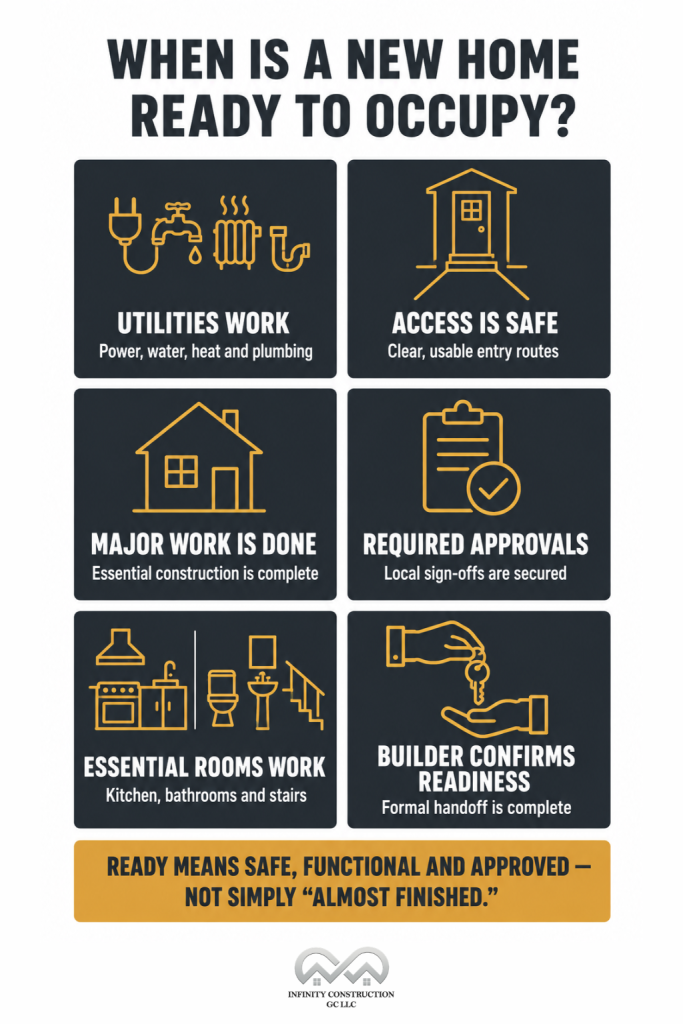
What Must Be Finished Before You Move In?
Before a builder hands you the keys, the home doesn’t need to be flawless, but it does need to be livable. That means essential systems, safety features, and major construction work must be complete and functional, even if a few cosmetic details remain.
Working power, water, heating, and plumbing
Electricity, water, heating, and plumbing must be connected and working properly. These systems are essential for basic comfort, sanitation, and safe occupancy.
Safe access to the home
Walkways and entrances should be clear and safe, with functioning exterior doors and locks. There should be no active construction hazards between the street and your front door.
Completed major construction work
Major work such as framing, drywall, flooring, and structural components should be finished. A home that is still “mostly done” in these areas is not ready for normal occupancy.
Required inspections and sign-offs
All inspections and approvals required by your local building department must be completed. In most cases, this includes receiving the approval or Certificate of Occupancy needed to legally live in the home.
Usable kitchen, bathrooms, stairs, doors, and windows
Essential areas and features should be functional from day one. You should be able to use the kitchen and bathrooms, safely navigate stairs, and properly open, close, and lock doors and windows.
Final cleanup and move-in readiness
Construction debris should be removed, and floors and other surfaces should be cleaned or prepared for move-in. The home doesn’t need to be perfectly finished, but it should be reasonably safe and ready for everyday use.
Builder confirmation
The home builder should formally confirm that the home is ready for occupancy and complete the handoff. Don’t rely solely on a projected construction schedule or assume the home is ready because it looks nearly finished.
If these basics aren’t complete, you’re not looking at a move-in-ready home; you’re looking at a construction site with a mailing address.
How Final Inspections Affect Move-In Timing
Final inspections are the gatekeeper between construction and occupancy. They confirm that the home meets required safety and building codes before anyone can live in it. Electrical, plumbing, mechanical, and building inspections typically must all pass before occupancy is authorized, making inspections a key part of the final approval process rather than a formality.
Timing depends on your local jurisdiction, as inspection scheduling, staffing, and turnaround times vary by city and county, and builders have limited control over the municipality’s schedule. Minor code issues may require repairs and a reinspection, often adding a day or two. Because a failed or delayed inspection can legally prevent occupancy, the move-in date is ultimately determined by the last required inspection to pass.
Can You Move In Before the Punch List Is Complete?
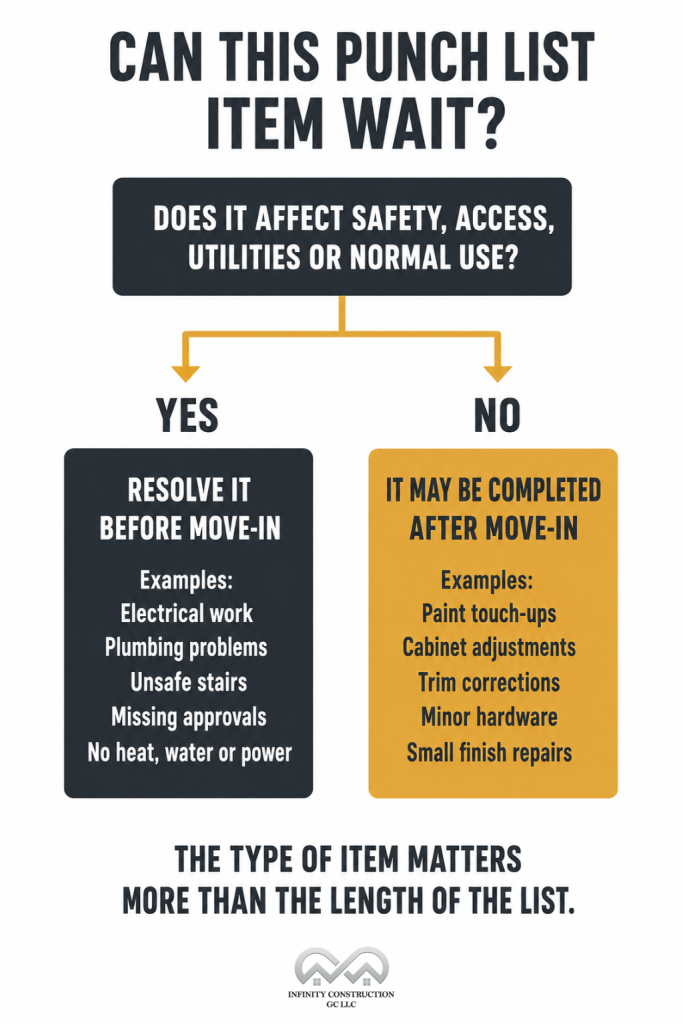
Sometimes, but it depends entirely on what’s still on the list, not how long the list is.
A punch list is the set of minor items identified during the final walkthrough that still need attention. Having one isn’t unusual; nearly every new build has some.
Minor items that typically don’t delay move-in
- Paint touch-ups
- Cabinet adjustments
- Trim corrections
- Missing hardware (handles, knobs, hooks)
- Small finish repairs
Items that typically should delay move-in
- Incomplete electrical or plumbing work
- Unsafe stairs or railings
- Missing required inspections
- No functioning heat, water, or power
- Blocked or unsafe access to the home
- Major unfinished rooms
If an item affects safety, access, utilities, or normal use of the home, wait to move in. If not, it’s cosmetic and usually doesn’t require a delay.
Why Move-In Dates Can Shift Near the End
Even well-managed builds can see their projected completion date move in the final stretch. This isn’t a sign something’s wrong. It’s usually the accumulation of several small, ordinary factors, including:
- Inspection scheduling with local authorities
- Final corrections identified during walkthroughs
- Utility connection timing (especially new hookups vs. transfers)
- Weather delays
- Material delays
- Trade scheduling conflicts (multiple subcontractors needing sequential access)
- Last-minute homeowner-requested changes
- Site cleanup or final access issues
None of these individually tend to cause major delays. But because they often stack near the end of a build, the last two weeks of a project are typically where a homeowner’s expected date and actual date diverge most.
What Happens During Builder Handoff?
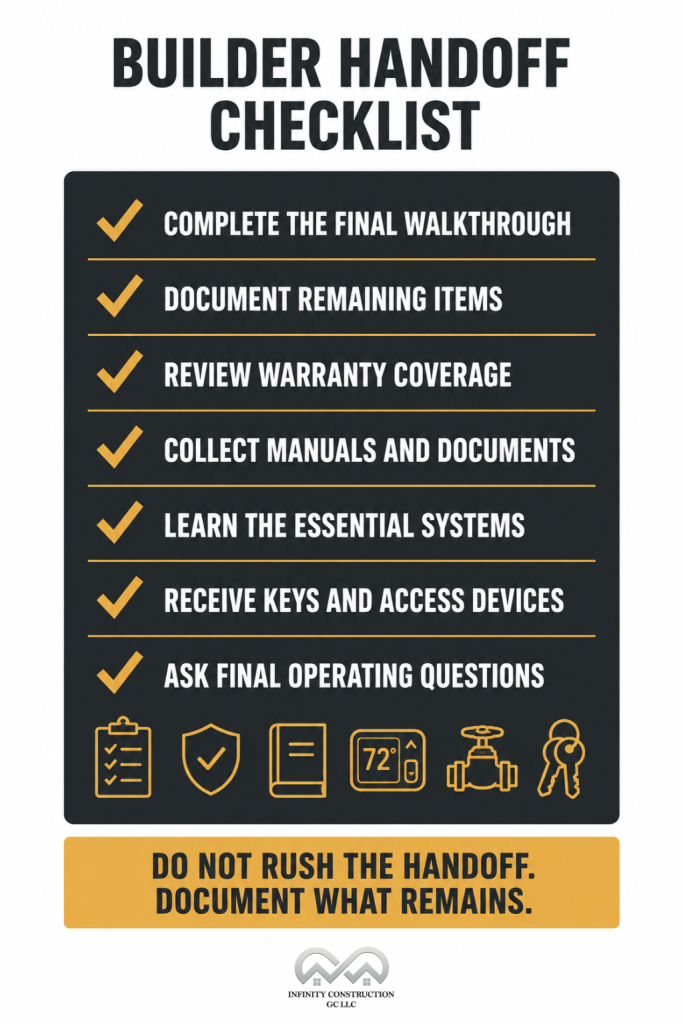
Builder handoff is the formal transition from construction to a livable home and plays an important role in determining when you can move in. During the handoff, you and the builder typically complete a final room-by-room walkthrough, review the punch list, and document any remaining work.
The builder should also provide warranty details, manuals and product documents for appliances, HVAC systems, water heaters, and other equipment. You’ll usually receive explanations of essential systems, such as the thermostat, breaker panel, and shut-off valves, along with keys, garage remotes, smart-lock access, or alarm codes. It’s also your last structured opportunity to ask questions before taking possession.
A rushed handoff can lead to problems after move-in. A thorough walkthrough helps you identify issues early and understand how the home’s systems work before you’re on your own.
When Should You Schedule Movers?
Schedule movers based on a confirmed move-in date, not a projected completion date. Wait for the builder to confirm the home is ready, and leave a few days to a week for final inspections or last-minute touch-ups.
Before movers arrive, confirm that utilities are active and the site is safe to access, with driveways, walkways, and entrances clear of equipment and debris. Avoid relying on an unofficial date such as “should be done by the 15th”. A short buffer can prevent rebooking fees, hotel costs, or movers arriving before you can legally enter the home.
Final Takeaway
Knowing when can you move into a new construction home depends on when the property is safe, functional, connected to utilities, and legally approved, not simply when a calendar says so. In a custom home build, your move-in date should always come from your builder’s final readiness confirmation, rather than guesswork, projected schedules, or assumptions carried over from resale home closings.
Talk to your builder early about how they define “ready”, ask what their handoff process looks like, and build a reasonable buffer into your own moving plans to ensure you transition into a finished home rather than an active construction site.