

Carpentry is far from a single, uniform skill set. In reality, residential construction and remodeling rely on several distinct types of carpentry, each demanding specialized training, tools, and expertise. From the structural framing that holds a house together to the intricate trim work that gives it character, every specialty serves a vital purpose in building or renovating a home.
Understanding these different specialties is essential whether you are planning a new build, a kitchen remodel, or a historic renovation. This guide breaks down different types of carpentry and explains what each involves, helping you hire the right professional and ensure your project meets both structural standards and your aesthetic vision.
What Is Carpentry?
Carpentry is the skilled trade of cutting, shaping, and installing wood and other building materials to build or repair structures. For homeowners, carpentry impacts every part of a house:
- Structural framing – Building the core walls, floors, and roof support
- Interior finishes – Crafting custom cabinets, shelving, doors, and decorative trim
- Material variety – Working with traditional lumber, modern composites, and hardware
Ultimately, professional carpentry ensures your home is structurally safe, durable, and visually beautiful.
How Many Types of Carpentry Are There?
While carpentry branches into many specialties, understanding what are the 2 types of carpentry at the core of the trade helps clarify the building process. The entire industry is built upon these two primary categories:
- Rough carpentry – Structural, load-bearing work completed before walls are closed up
- Finish carpentry – Detail-oriented visual work completed after the structure is built
Residential home improvement relies on several distinct specialties within these two pillars. The most common types of carpentry for home projects include framing, trim and decorative work, cabinetmaking, remodeling, and historical restoration. Hiring the right specialist ensures your specific project is durable and high-quality.
Rough carpentry – The structural backbone
Rough carpentry forms the backbone of any construction project. It is the work that happens first and on which everything else depends. Understanding the differences between rough carpentry and finish carpentry helps clarify why each phase requires a different set of skills and techniques.
Key tasks in rough carpentry include:
- Framing walls and roof systems
- Installing floor systems and subfloors
- Setting posts, beams, and rafters
- Laying out structural support systems
- Working with lumber, engineered wood, steel, and composite materials
Rough carpentry doesn’t require a polished finish, but it demands a precise understanding of load distribution, building codes, and structural engineering principles. A mistake at this stage can compromise the safety of the entire structure.
Framing carpentry
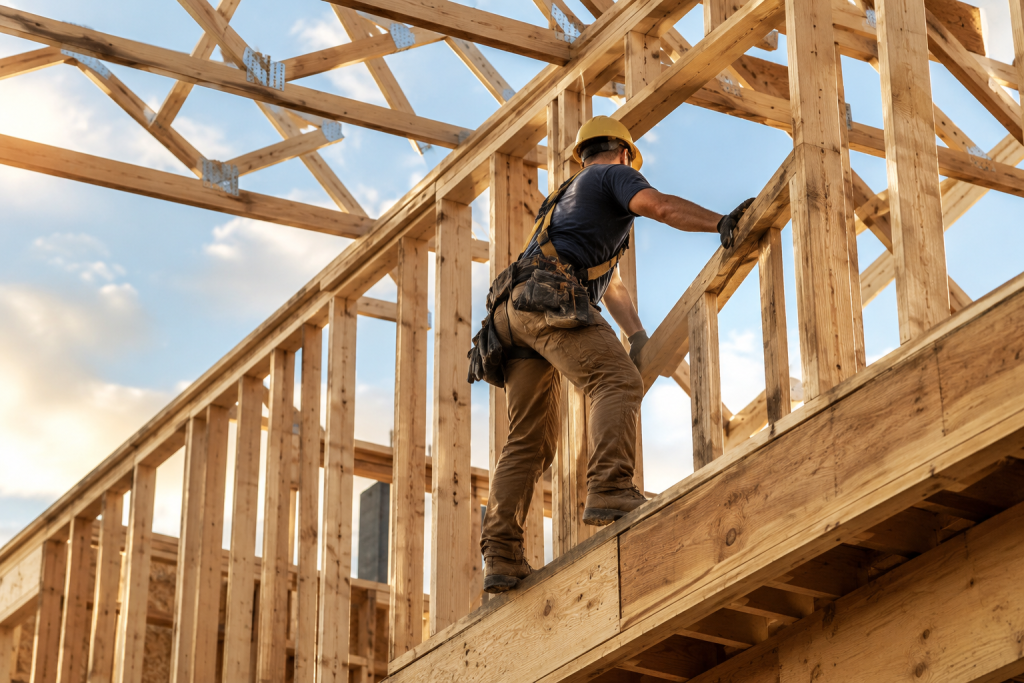
Framing carpenters are a specialized subset of rough carpentry. They focus exclusively on wood framing, building the structure’s frame and creating the load-bearing skeleton that supports the entire home. While a rough carpenter may handle a variety of structural tasks, a framer focuses on the building’s skeleton: walls, floors, and roof systems.
In residential construction, framing carpenters are typically among the first tradespeople on site. They work from architectural blueprints to erect wall frames, install floor joists and ceiling joists, and construct roof framing systems, including trusses and rafters.
Framing precision is critical. Even minor deviations from plumb, level, or square at the framing stage can create cascading problems for every trade that follows, from drywall and insulation to windows and doors. Quality framers work quickly without sacrificing accuracy, which is why they are often contracted individually for specific projects rather than employed on a general basis.
Finish carpentry – The visible details
If rough carpentry builds the skeleton, finish carpentry gives the home its personality. Finish carpenters work after the structural phase is complete, once drywall is up and the space is ready to be refined, installing the elements that make a room feel finished, polished, and livable.
Finish carpentry includes:
- Interior and exterior door installation
- Window casing and trim
- Stair systems and railings
- Built-in shelving and storage units
- Crown molding and decorative transitions
- Baseboards and floor transitions
Finish carpenters require a much higher level of precision and attention to detail than rough carpenters. Their work is visible, so any gaps, misalignments, or uneven joints will be noticed. They combine carpentry skills with an eye for design, ensuring that every installation is both structurally sound and visually refined.
Finish carpentry is one of the most common specialties in residential remodeling, particularly for homeowners looking to update interiors without a full structural renovation.
Trim and decorative carpentry
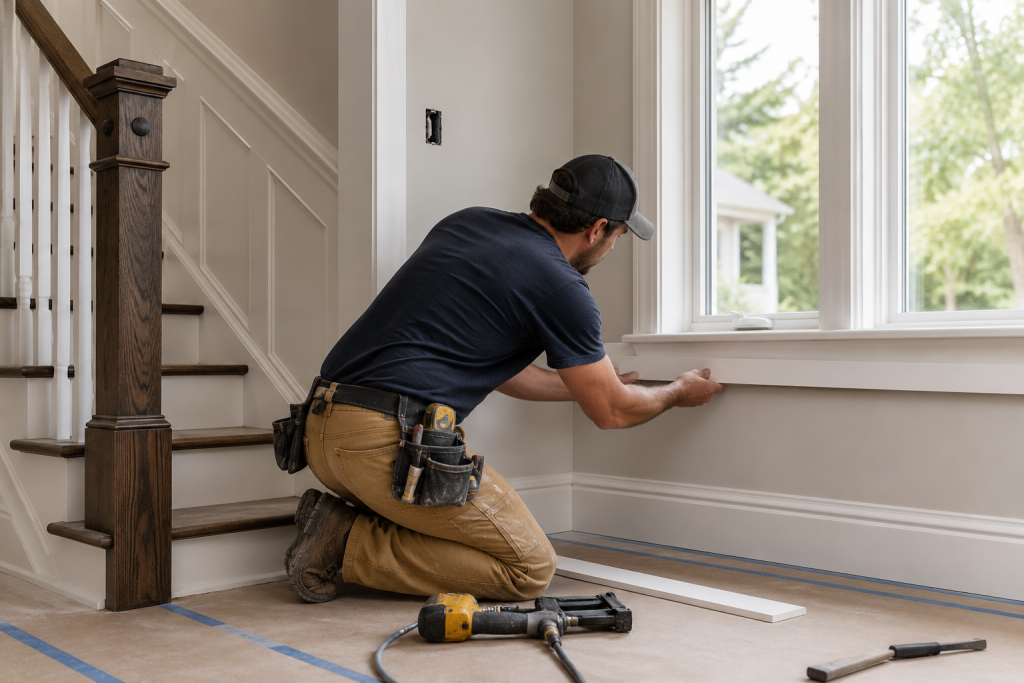
Trim carpentry is a specialized branch of finish carpentry that focuses on decorative wood elements that define a space’s architectural character. While a general finish carpenter installs doors and stairs, a trim carpenter works almost exclusively on the intricate moldings and profiles that give a room visual depth and craftsmanship.
Trim carpentry specialties include:
- Crown molding – the decorative transition between walls and ceilings
- Baseboards – the trim at the base of walls where they meet the floor
- Chair rails and wainscoting – wall paneling and horizontal dividers
- Door and window casings – the decorative frames around openings
- Mantels and fireplace surrounds
- Coffered ceilings and panel molding
Trim carpenters are meticulous craftspeople. Their work involves precise angle cuts, tight joints, and flawless paint-readiness. For high-end custom homes or historic renovation projects, skilled trim carpentry can dramatically elevate a space’s overall aesthetic value.
Remodeling and custom carpentry
Remodeling carpentry bridges the gap between structural work and finish craftsmanship. It is the type of carpentry most homeowners encounter when updating, expanding, or customizing their living space.
Remodeling carpenters handle a wide range of tasks:
- Structural modifications – removing or relocating walls
- Room additions and garage conversions
- Custom built-ins for home offices, libraries, or entertainment spaces
- Deck and outdoor structure construction
- Installing custom wood details in renovated kitchens, bathrooms, or living areas
Custom carpentry is a subset of this category that emphasizes bespoke, client-specific woodwork. Rather than installing prefabricated components, custom carpenters design and build pieces tailored to the client’s exact dimensions, style, and material preferences. This can include custom furniture, one-of-a-kind shelving systems, or unique architectural features that cannot be sourced off the shelf.
For homeowners looking to add lasting value and personalization to their property, remodeling and custom carpentry offers some of the highest return on investment in the construction trade.
Why Carpentry Matters in Residential Construction
Carpentry is the backbone of the entire building process. Framers establish the structural skeleton that every other trade depends on, while finish carpenters and cabinetmakers shape the actual living spaces, defining both the functionality and character of your home.
The quality of carpentry work at every stage directly impacts:
- Structural integrity and long-term durability
- Energy efficiency – proper framing and sealing reduces thermal bridging and air leakage
- Aesthetic quality – visible finish work sets the tone for the entire interior
- Resale value – well-crafted carpentry is a recognized marker of construction quality
- Code compliance – framing and structural carpentry must meet local building standards
Substandard work creates issues that compound over time. A poorly framed wall can lead to cracked drywall, sticking doors, and structural settling, while bad trim work reveals gaps and collects moisture. Investing in skilled carpentry at every stage is one of the most cost-effective decisions a homeowner can make to ensure their home remains safe, efficient, and beautiful.
How to Choose the Right Carpenter for Your Project
Match your project needs with the correct specialty to ensure high-quality results.
- Structural work and additions – Hire a framing or rough carpenter skilled in building codes, blueprints, and load-bearing walls.
- Roof construction – Seek a specialist experienced with truss systems, rafter calculations, and waterproofing.
- Interior finishes and doors – Choose a finish carpenter with a strong portfolio of stair systems and built-ins.
- Trim and molding – Select a dedicated trim carpenter with precise cutting and mitering skills.
- Kitchen and bathroom remodels – Hire a cabinetmaker or remodeling carpenter experienced in custom cabinetry and design.
- Historic restoration – Use a preservation carpenter trained in period-appropriate techniques and materials.
Before hiring any professional, always verify their licensing and insurance, review past portfolios, and check references.
Conclusion
Carpentry is the foundation of residential construction, split between rough structural work and visible finish details. Understanding the specific types of carpentry, from framing to custom cabinetry, equips homeowners to make smarter hiring decisions and set realistic expectations for any home renovation.
Skilled carpentry is a long-term investment in your home’s durability, efficiency, and resale value. Choosing the right specialist for your project ensures safe, compliant, and beautiful results that will last for decades.