

As construction enters its final stages, the focus shifts to painting walls, installing flooring, and completing the exterior. Builders refer to many of these details as “finishes”, but the term can mean different things to builders, designers, and homeowners. These differences can lead to confusion about which materials and features are included in a construction project.
For homeowners reviewing proposals or planning their interiors, understanding exactly what are finishes in a house and how do they affect the overall project is important. This guide covers the different types of finishes, how they differ from fixtures and structural work, and how to make informed choices without exceeding your budget or delaying construction.
What Are Finishes in a House?
Home finishes are the visible materials and surface treatments that complete parts of a house after the underlying structure and systems are built. Framing, plumbing, and wiring come first. Finishes cover them, protect them, and give the home its look and feel.
The term applies both inside and outside the house. Interior finishes include paint, flooring, tile, trim, and cabinetry. Exterior finishes include siding or cladding, exterior paint or stain, and visible trim. Similar phrases, such as home finishes, finish materials, surface treatments, and finish work, all point to the same idea.
One caution matters more than any definition – your contract and specifications decide what “finishes” means for your project. Some builders include cabinets and countertops in the finishes category, and others price them separately. Always read the scope, not just the label.
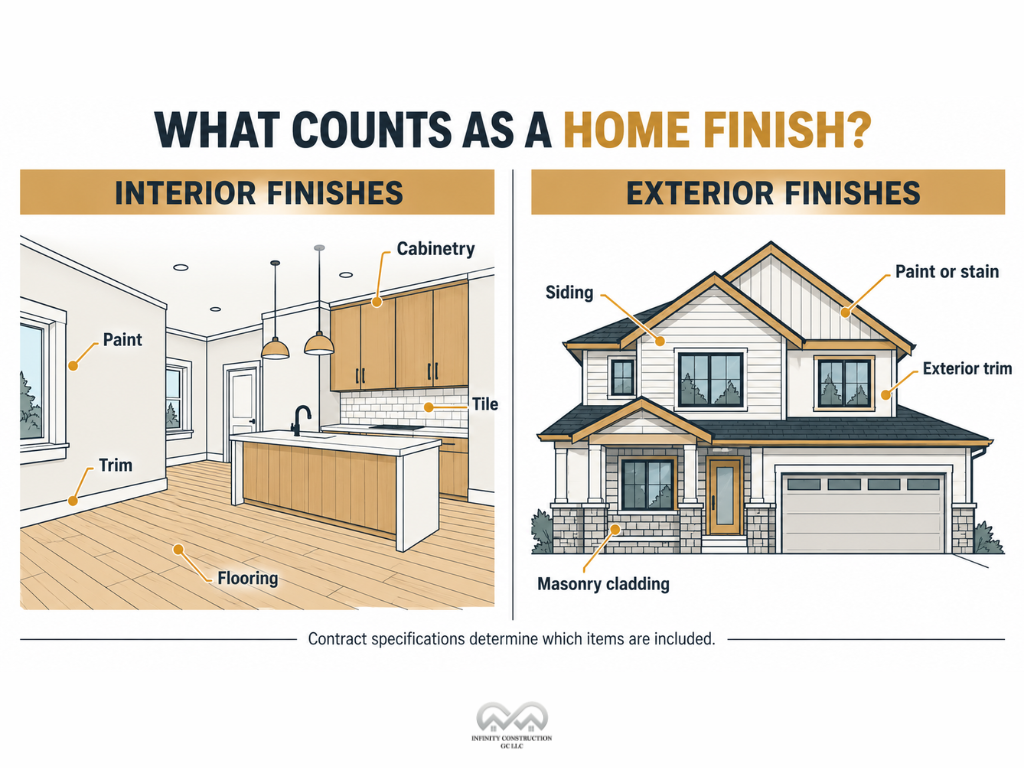
What Counts as an Interior Finish?
Walls and ceilings
Paint, wall coverings, plaster treatments, and other specified surface treatments all count as interior finishes on walls and ceilings. Specialty options include polished (Venetian) plaster, microcement, and textured wallpaper. The finish you pick also changes how a room feels. Gloss reflects more light and shows more wear, while matte hides imperfections and gives a softer look.
Keep in mind that drywall installation and its finished surface may appear as separate line items in a proposal. The wall surface you see is the end of a multi-step process, and a good skim coat and careful sanding show up most clearly once paint goes on and light hits the wall at an angle.
Floors and tiled surfaces
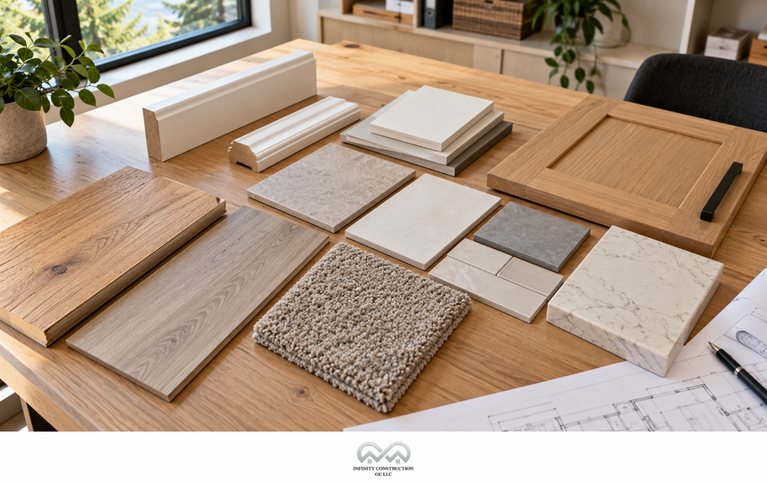
Flooring, tile, and the visible transitions between them belong here. Common options include hardwood, carpet, tile, and luxury vinyl plank (LVP). Each one trades off differently:
- Hardwood – Durable and timeless, but it can scratch
- Carpet – Warm and quiet, which suits bedrooms and family rooms
- Tile – Water resistant and easy to maintain, though hard and cool underfoot
- LVP – Affordable and durable, and it imitates pricier materials
Appearance is only part of the decision. The room’s use matters, and so do the installation requirements underneath. Tiles in a bathroom need a properly prepared, sloped, and waterproofed base. A floor that looks perfect in a showroom can fail in a wet room if the substrate is wrong.
Trim, doors, cabinetry, and countertops
Baseboards, casings, interior doors, cabinets, and countertops shape how a finished room looks and works. Terminology varies here. A builder may price cabinets, doors, or countertops as separate categories even though homeowners discuss them as part of the home’s finishes. Ask how your proposal groups these items before you compare bids.
What Counts as an Exterior Finish?
Exterior finishes include siding, cladding, exterior paint or stain, trim, and other visible surfaces. These materials form part of the exterior assembly, contributing to the home’s appearance and protection against weather.
Common materials include stucco, brick, stone veneer, vinyl, wood, fiber cement, composite, and aluminum. Each has different maintenance needs, costs, and performance characteristics. For example, wood typically requires periodic staining or sealing, while fiber cement resists rot and insect damage.
In Western Washington, frequent rain, damp conditions, and shade make moisture exposure especially important. Walls exposed to wind-driven rain may need more attention than sheltered surfaces. The best choice depends on exposure, maintenance requirements, budget, and local design guidelines.
According to the National Association of Home Builders, stucco was the primary siding on 28% of new U.S. single-family homes started in 2021, compared with 24% for vinyl. Regional differences further show why local climate matters when selecting exterior finishes.
Finishes vs. Fixtures vs. Structural Work
This distinction prevents many budget surprises.
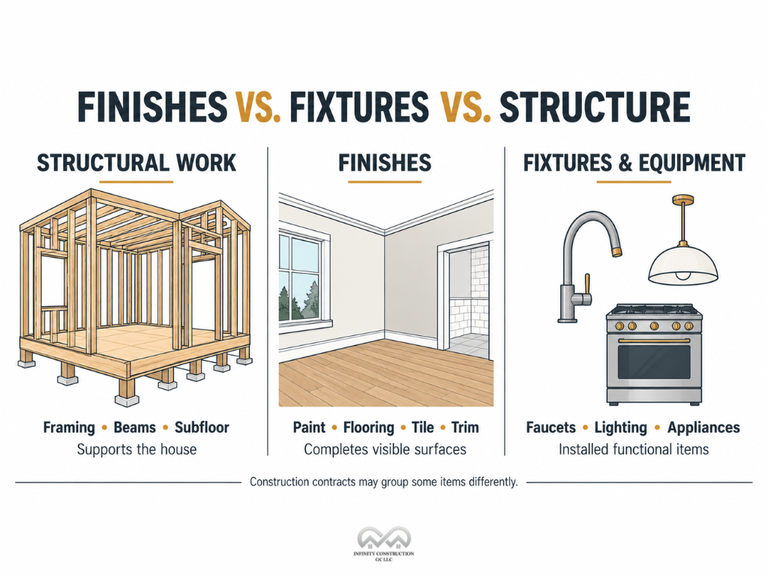
| Term | Typical Examples | Why the Distinction Matters |
| Structural Work | Framing, beams, subfloors | Supports the house |
| Finishes | Paint, flooring, tile, trim | Completes visible surfaces |
| Fixtures and Equipment | Faucets, light fixtures, appliances | May be selected and priced separately |
Structural work provides the framework that supports the house, while finishes complete its visible surfaces. Fixtures and equipment, such as faucets, lighting, and appliances, are typically selected and priced separately. However, construction contracts may group some of these items under “finishes”, so it’s important to confirm exactly what’s included.
How Are Custom Home Finishes Selected?
Custom home finishes allow homeowners to select materials, colors, and details that suit their preferences and everyday needs. However, choosing customized home finishes requires careful planning to ensure the selections fit the project’s budget and construction schedule.
Start with how each space will be used
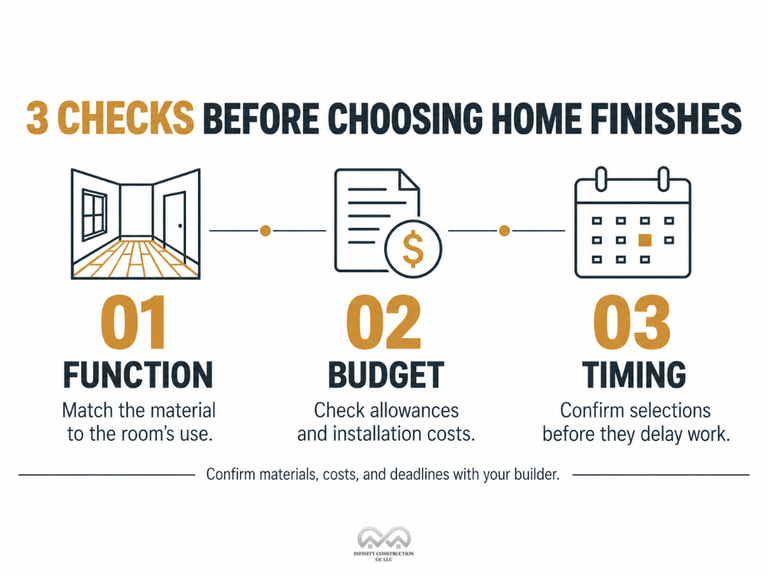
Begin with function. A kitchen needs surfaces that handle heat, spills, and constant cleaning. A bathroom needs water resistance. A living area might favor comfort and acoustics, and an entryway needs to survive mud and traffic. Ask how durable, how easy to clean, and how much maintenance each option requires before you consider color.
Check what the construction budget actually allows
Many contracts use allowances. An allowance is a budgeted amount for an item that hasn’t been fully selected. If you choose something above the allowance, or if your selection needs extra installation work, the final price changes. A heavier stone countertop, for instance, may need added support or a different fabrication process.
Ask your builder three things: What does each allowance cover? Does it include installation? What happens if my selection costs more or less?
Make selections before they hold up other work
Not every finish must be locked in before framing begins, but some choices affect other trades. Two concrete examples:
- Flooring thickness affects how floors transition between rooms and where doors sit, so the choice should be settled before installation.
- Cabinetry and countertops need coordinated dimensions, so appliance sizes, sink choice, and layouts should be agreed before fabrication.
Late changes can cause extra costs or schedule delays. A written decision list, covering flooring types, tile formats, paint colors, lighting types, and switch and socket heights, keeps everyone aligned.
When Are Finishes Installed During a Home Build?
Finish work generally follows the relevant structural, rough-in, and surface-preparation work. Plumbing and electrical routes go in before walls close. Walls are prepared before paint or wall coverings. Substrates are prepared and given time to dry before flooring or tile goes over them.
Installation order differs by material and room. A bathroom with waterproofing and tile follows a different sequence than a bedroom with paint and carpet, and builders usually finish dusty or damaging work before final paint to protect completed surfaces. Your builder’s schedule will show the exact order for your project.
Frequently Asked Questions
Are cabinets and countertops considered finishes?
Often, yes. Homeowners and designers usually treat them as finishes because they shape the completed look of a room. Builders, however, may price them as separate categories. Check how your proposal lists them.
Are appliances included in a builder’s finish allowance?
Not always. Appliances typically fall under fixtures and equipment and may be selected and priced separately. Ask your builder to state in writing whether appliances sit inside a finish allowance, in their own allowance, or outside the contract.
Can home finishes be changed after construction starts?
Often, but with consequences. Changes before ordering or installation are usually simpler. After installation, a change can affect cost, lead time, and other trades. Changes that alter dimensions, plumbing, electrical points, or substrate preparation tend to cost the most, so settle those choices early.
Final Takeaway
So, what are finishes in a house? They are the visible materials and surface treatments that turn a finished structure into a home you want to live in, and the best finishes do more than look good in a sample. They hold up to how you live, suit your climate, fit your budget, and coordinate with the construction underneath. Treat each choice as part of a system: substrate, preparation, finish, and detail. A strong finish on a weak base will disappoint, and a modest finish on a well-prepared base can last.
Before you commit to any selection, confirm in writing what your contract counts as finishes, which items sit under allowances, and when each decision is due. Those three answers prevent most budget surprises and schedule delays, and they leave you free to enjoy the part of the build that makes it feel like yours.