

Ask ten homeowners to explain the difference between woodworking and carpentry, and most will shrug — both trades use wood, both use saws, and both require serious skill. But if you hire the wrong one for your project, you’ll waste time, money, and patience. Understanding carpentry vs woodworking isn’t just semantics; it determines who frames your addition, who builds your custom vanity, and who you call when a project falls somewhere in between.
Homeowners confuse the two because carpenters and woodworkers share overlapping tools, raw materials, and even some techniques — measuring, cutting, joining. But the purpose behind the work is fundamentally different. Carpentry is tied to structural building and installation: framing, trim, stairs, the bones and finish of a home. Woodworking is the craft of building standalone wood products: furniture, cabinetry, and decorative pieces, usually shaped in a workshop before they ever reach a job site.
By the end of this guide, you’ll know exactly what separates these two trades, where they overlap, and — most importantly — which professional to call for your next project.
What Is Carpentry?
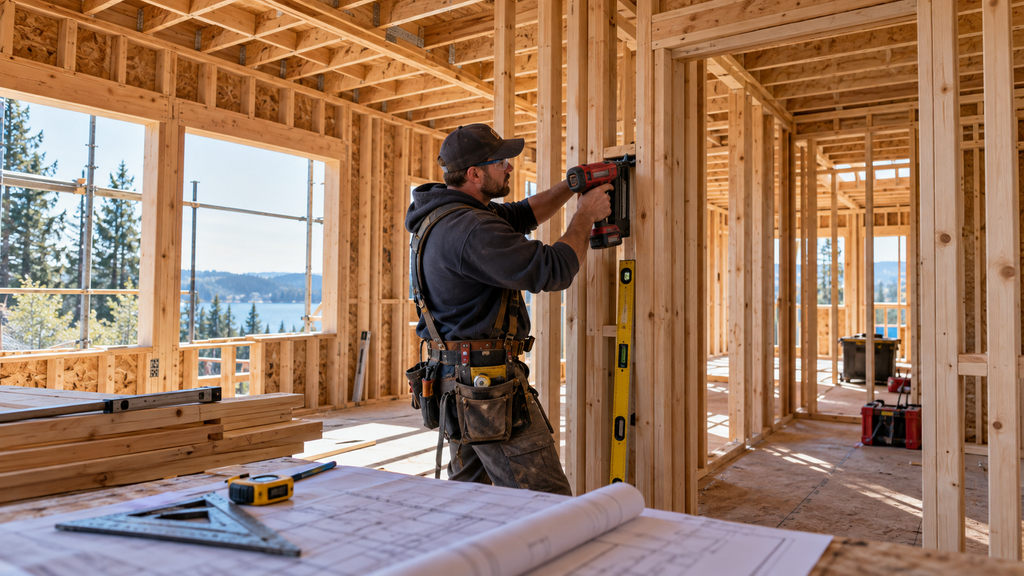
Carpentry is a construction trade centered on building and installing the structural and finish elements of a home or commercial building. Carpenters typically work on-site, following blueprints and builder specifications to bring a structure from framework to finished walls.
Core carpentry tasks include:
- Framing — constructing the structural skeleton of a building (walls, floors, roof systems)
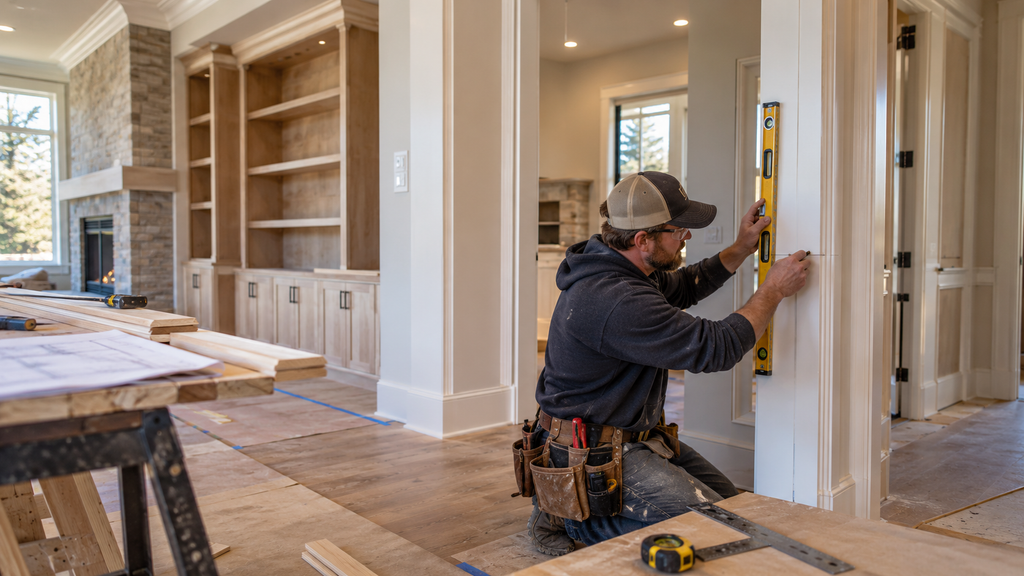
- Trim and molding installation — baseboards, crown molding, door and window casing
- Stair systems — building and installing stairs, railings, and balusters
- Door and window installation
- Built-in carpentry — cabinets, shelving, and millwork fixed permanently into a structure
Because carpentry is integrated so tightly into a building’s structure, carpenters must be able to read blueprints, understand load-bearing requirements, and coordinate with electricians, plumbers, and general contractors. Precision matters, but so does speed — carpenters work under construction timelines, not open-ended creative ones.
What Is Woodworking?
Woodworking is the craft of designing and building standalone wood products — furniture, cabinetry, decorative objects, and custom fabrication — usually completed in a workshop rather than on a job site.
Common woodworking specialties include:
- Furniture making — tables, chairs, case goods
- Cabinetry — kitchen, bathroom, and custom storage pieces built off-site, then delivered
- Decorative wood products — carved details, inlays, turned components
- Custom wood fabrication — one-off pieces built to a client’s exact specifications
Woodworkers often rely on power equipment — table saws, planers, jointers, sanders, and increasingly CNC routers — to achieve precise, repeatable cuts on smaller-scale pieces. Their work tends to demand more artistic judgment: grain matching, finish selection, and joinery that will be seen and handled up close, not hidden behind drywall.
It’s worth being clear: neither trade is “lesser.” Carpentry requires structural knowledge and physical stamina that woodworking doesn’t always demand; woodworking requires an artistic and technical precision that construction timelines rarely allow for. They’re different disciplines solving different problems.
Carpentry vs Woodworking: Main Differences
The clearest way to understand woodworking vs carpentry is through five lenses:
| Factor | Carpentry | Woodworking |
| Purpose | Construction and installation | Fabrication and craftsmanship |
| Output | Structural or fixed elements | Standalone, movable products |
| Setting | On-site (job site) | Workshop or shop floor |
| Focus | Practical, structural building | Custom, often decorative pieces |
| Precision demand | High where visible, tolerant where hidden | High throughout — pieces are handled closely |
In short: carpentry builds and installs; woodworking creates. A carpenter frames the wall a built-in bookcase sits against; a woodworker builds the bookcase itself. On many projects, both trades touch the same room without ever doing the same job.
Types of Carpentry in Residential Construction
Carpentry itself isn’t one uniform skill set — it splits into specialties depending on the stage of construction:
Rough Carpentry
Structural work: framing walls, floors, and roof systems, and building concrete forms for foundations. This is the earliest, most physically demanding stage of a build.
Framing Carpentry
A close cousin of rough carpentry, focused specifically on erecting the structural skeleton — studs, joists, rafters — that everything else attaches to.
Finish Carpentry
The detail-oriented final stage: trim, molding, door and window casing, and any visible woodwork that needs a clean, polished appearance.
Trim and Molding Work
Baseboards, crown molding, wainscoting — smaller-scale finish tasks that require an eye for detail closer to a woodworker’s precision than rough framing.
Stair and Railing Installation
A specialized skill combining structural knowledge (stairs must be code-compliant and load-bearing) with finish-level craftsmanship.
Built-In Carpentry
Cabinetry, shelving, and millwork built directly into the structure of a home — this is where carpentry and woodworking overlap most visibly.
Where Carpentry and Woodworking Overlap
Despite their different end goals, carpentry and woodworking draw from the same well of skill:
- Craftsmanship — both trades demand pride in clean, accurate work
- Measuring and precision — “measure twice, cut once” applies equally to a stud wall and a dovetail joint
- Wood knowledge — understanding grain, moisture content, and how different species behave under stress or finish
- Custom projects — built-in bookcases, custom staircases, and architectural millwork require both structural know-how and fine craftsmanship
- Problem-solving — every job site or workshop throws up unexpected material or design challenges
This overlap is why many high-end remodeling projects use carpenters and woodworkers collaboratively: a carpenter frames and installs, while a woodworker fabricates the custom cabinetry or trim that goes inside.
Why Carpentry Matters in Home Construction
Skilled carpentry is the difference between a home that lasts decades and one riddled with problems. Precise framing ensures structural integrity — walls that are plumb, floors that don’t sag, roofs that carry load correctly. Accurate finish carpentry affects everything from how doors close to how a staircase feels underfoot.
In custom home construction and remodeling, carpentry quality directly impacts:
- Structural safety and durability
- Energy efficiency (properly framed and sealed openings)
- Resale value (finish quality is one of the first things buyers notice)
- Long-term maintenance costs (poor framing or installation compounds problems over time)
This is why working with an experienced general contracting team — one that understands both the structural and finish sides of carpentry — matters as much for a full remodel as it does for new construction.
How to Choose Between a Carpenter and a Woodworker
Use this quick framework:
Hire a carpenter if you need:
- Any type of wood framing, additions, or structural repairs
- Trim, molding, or door/window installation
- Stairs, railings, or decking
- Anything permanently fixed into your home’s structure
Hire a woodworker if you need:
- Custom furniture
- Freestanding cabinetry built off-site
- Decorative or artistic wood pieces
- A one-of-a-kind item built to exact specifications, delivered rather than installed on-site
Hire both if your project — like a custom kitchen remodel — needs structural framing and custom-built cabinetry. A general contractor who coordinates both trades saves you from managing two separate hires yourself.
Is Woodworking and Carpentry the Same Thing?
No. Carpentry and woodworking share tools, materials, and foundational skills, but they are not the same trade. Carpentry is structural and installation-focused work carried out on a job site; woodworking is the fabrication of standalone wood products, typically built in a workshop. The confusion comes from the overlap — both work with wood, both demand precision — but the purpose and setting of each trade are distinct.
Final Thoughts on Carpentry vs Woodworking
Carpentry and woodworking are both skilled trades that demand years of practice, but they solve different problems. Carpentry plays a critical role in framing, structural integrity, finish installation, and the overall quality of residential construction. Woodworking brings artistry and custom craftsmanship to standalone pieces that live inside those structures.
On custom home builds and remodels, the two trades frequently overlap — and understanding the difference helps you hire the right professional (or team) the first time.
Planning a remodel or custom build? Explore Infinity Construction GC’s residential construction services to see how our carpentry team handles everything from framing to finish work — or share this guide with a friend who’s still mixing the two up.
FAQ
What is the difference between woodworking and carpentry?
Carpentry is structural, construction-based work done on-site (framing, trim, installation). Woodworking is the craft of building standalone wood products like furniture and cabinetry, usually in a workshop.
Is woodworking and carpentry the same thing?
No. They share tools and wood knowledge, but carpentry focuses on structural building and installation, while woodworking focuses on crafting standalone pieces.
Is carpentry harder than woodworking?
Neither is objectively harder — carpentry demands more physical stamina and structural knowledge, while woodworking demands finer artistic precision. They’re difficult in different ways.
Do carpenters build furniture?
Some do, especially those who specialize in built-in carpentry, but furniture-making is more commonly the domain of woodworkers.
What type of carpentry is used in home construction?
Residential construction typically involves rough carpentry (framing), finish carpentry (trim and molding), and specialty work like stair and railing installation.
What is finish carpentry?
Finish carpentry covers the visible, detail-oriented woodwork in a home — trim, molding, casing, and built-ins — completed after the structural framing is in place.
Do carpenters work on custom homes?
Yes. Carpenters handle framing, structural work, and finish carpentry throughout custom home builds, often coordinating with woodworkers for custom cabinetry or millwork.
Should I hire a carpenter or a woodworker?
If your project is structural or fixed to your home, hire a carpenter. If it’s a standalone, custom-built piece, hire a woodworker. Many remodels need both.