

Hiring a custom home builder is the single most important decision you’ll make in the home-building process—and it’s where most people quietly sabotage their own project. Not because they’re careless, but because they ask the wrong questions, focus on the wrong signals, and underestimate what’s actually at stake.
If you’re researching hiring a custom home builder, wondering how to hire a home builder, or searching for the right questions to ask a builder before hiring, this guide is designed to do one thing: protect you from expensive mistakes and help you choose a builder who can actually deliver.
By the end, you’ll know:
- How to evaluate builders beyond surface-level marketing
- What separates reliable professionals from costly risks
- How to hire a contractor to build a house without budget blowouts or regret
This is the guide homeowners wish they had read before they signed a contract.
Why Hiring the Right Custom Home Builder Matters More Than Design
A custom home is not just a creative project—it’s a high-risk construction, financial, and management undertaking. According to the National Association of Home Builders, construction quality, cost control, and builder experience are the three biggest predictors of homeowner satisfaction—not finishes or square footage.
A weak builder choice leads to:
- Cost overruns from unrealistic estimates
- Delays caused by poor coordination
- Design compromises made too late
- Stressful disputes and change-order fatigue
Hiring the right custom home builder doesn’t just affect how your home looks—it determines how smoothly (or painfully) the entire experience unfolds. Choosing experienced custom home building professionals who manage structure, sequencing, and risk early is what separates smooth projects from expensive failures.
Step 1: Understand What “Custom Home Builder” Really Means
Not all builders who claim to be “custom” actually are.
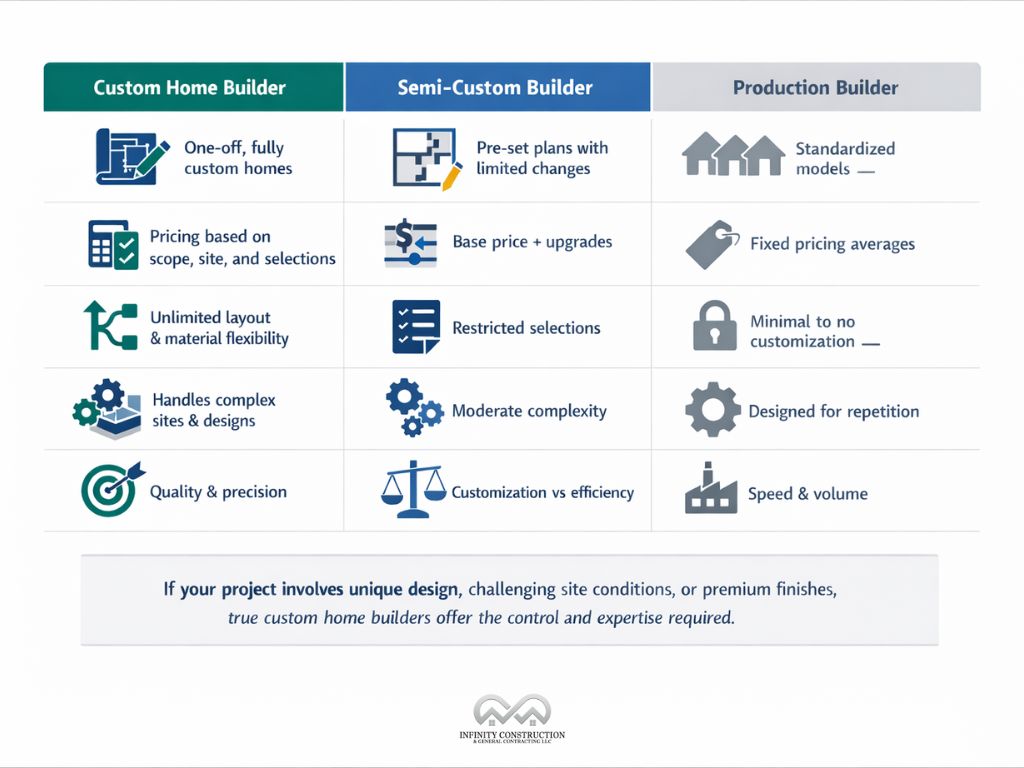
True Custom Home Builder vs. Semi-Custom or Production Builder
A true custom home builder:
- Builds one-off homes, not modified templates
- Prices based on scope, site conditions, and selections—not flat averages
- Manages complex coordination between design, engineering, and construction
This level of coordination is even more critical in larger multi-family framing projects, where structural sequencing affects multiple units.
A semi-custom or production builder:
- Works from preset plans
- Limits material and layout choices
- Optimizes for volume, not individual complexity
If your project involves unique design, challenging site conditions, or premium finishes, hiring a builder without true custom experience is a gamble.
Step 2: How to Hire a Home Builder the Smart Way (Before You Compare Prices)
Most homeowners start by comparing price per square foot. That’s a mistake.
Why Price-Per-Square-Foot Is Misleading
Price per square foot ignores:
- Lot slope, soil conditions, and utilities
- Structural complexity
- Finish level and detailing
- Energy systems and long-term performance
Two homes of equal size can vary by hundreds of thousands of dollars depending on these factors alone.
What to evaluate instead:
- Accuracy of past estimates vs. final costs
- Transparency of allowances
- Change-order frequency
- Documentation quality
A builder who explains why something costs more is more valuable than one who simply bids lower.
Step 3: Questions to Ask a Builder Before Hiring (That Actually Reveal Competence)
Most articles list obvious questions. These are the ones that expose real capability.
1. Are You Licensed, Insured, and Actively Compliant?
Minimum requirements—but non-negotiable.
- General liability insurance
- Workers’ compensation coverage
- State and local licensing
Ask for documentation. Verify it.
2. How Close Do Your Final Costs Typically Land to Initial Estimates?
This question separates professionals from guessers.
Listen for:
- Percentage ranges (not vague reassurances)
- Clear explanations of variables
- Accountability for estimation errors
3. What Is Included in Your Estimate—and What Is Not?
Demand clarity on:
- Site work and utilities
- Permits and inspections
- Design and engineering fees
- Allowance realism
Unclear estimates are the #1 cause of budget shock.
4. How Do You Handle Change Orders?
Change orders aren’t bad—uncontrolled ones are.
Ask:
- How changes are priced
- How they affect schedule
- How decisions are documented
Professional builders welcome this question.
5. Who Will Manage My Project Day to Day?
You need to know:
- Who your point of contact is
- How many projects they manage at once
- How often updates occur
Strong communication prevents small issues from becoming expensive problems.
6. What Is Your Build Timeline—and What Commonly Causes Delays?
Look for realism, not optimism.
Credible builders will discuss:
- Design and permitting timelines
- Weather and supply-chain risks
- Decision-related delays
If a timeline sounds too fast, it probably is. Understanding how long it takes to build a custom home in your region helps you evaluate whether a builder’s timeline is realistic or optimistic.
7. Can I See Homes Similar to Mine—Not Just Your Best Work?
Portfolios should include:
- Comparable size and complexity
- Recent projects
- In-progress builds
Consistency matters more than highlight reels.
8. How Do You Ensure Quality Control?
Ask about:
- Site inspections
- Subcontractor vetting
- Punch-list procedures
Quality control is a system, not a promise.
9. What Warranty Do You Provide—and How Is It Serviced?
At minimum:
- One-year workmanship warranty
- Structural coverage
More important than length is responsiveness.
10. Who Is Not a Good Fit to Work With You?
This is a powerful trust signal.
Builders who say “we’re right for everyone” usually are not.
Step 4: How to Hire a Contractor to Build a House Without Regret
Hiring isn’t about finding the nicest builder—it’s about finding the most disciplined one.
Look for These Signals of a Strong Builder
- Willingness to say no
- Clear minimum budgets
- Fewer projects, not more
- Detailed contracts and documentation
According to industry research cited by Harvard Joint Center for Housing Studies, poorly defined scope and unrealistic expectations are the leading causes of residential construction disputes. Using a structured custom home building checklist during builder interviews keeps conversations grounded in process rather than promises.
Step 5: Contracts, Permits, and Legal Clarity
A solid contract should include:
- Detailed scope of work
- Payment milestones
- Change-order process
- Warranty terms
- Clear dispute resolution language
Never rely on verbal assurances. If it’s not written, it doesn’t exist.
Step 6: Local Knowledge Is Not Optional
A builder unfamiliar with your region can cost you months.
Local expertise affects:
- Permitting speed
- Code compliance
- Climate-appropriate materials
- Subcontractor reliability
Hiring a custom home builder with proven local experience is risk mitigation—not a bonus.
Common Myths About Hiring a Custom Home Builder
Myth: The cheapest bid saves money
Reality: Low bids often hide future change orders
Myth: Custom builders handle everything automatically
Reality: Client decisions heavily affect cost and schedule
Myth: More customization always means better value
Reality: Smart customization balances function, budget, and longevity
Conclusion: Hiring a Custom Home Builder Is a Strategic Decision
Hiring a custom home builder is not about charm, promises, or price tags. It’s about choosing a professional partner who can manage complexity, protect your investment, and deliver what they commit to.
The right questions reveal more than marketing ever will.
If this guide helped clarify how to hire a home builder—or what questions to ask a builder before hiring—share it with someone else planning a build. The right information, at the right time, can save years of frustration. If you’re evaluating options in Western Washington, speaking directly with a disciplined custom home builder before comparing bids can prevent costly assumptions.